


V12 LSx


Thread Starter
Senior Member
Joined: Feb 2009
Posts: 625
Total Cats: 22
From: DF-DUB
 V12 LSx
So some guy on tech is building LSx based V12s. Im still reading the thread, but apparently he is pretty much cutting up two and welding them together. Makes there own crank and cam in house. Said they have already completed a few. Next one is going into a 240z, also its getting a Maggie.
Still reading the thread but thought it might arouse some of you as much as it does me.
Link to the thread here. Dont know how much isnt visible when you aren't a member.
V12 LS1 Build - LS1TECH
Between this and the flat plane crank LSx, they are doin some crazy **** with these LSxs.
Im curious about how smooth it will be with the way the crank is built, but he said the first one that went into the suburban did 525hp on all stock LS1 parts, so it cant be too bad.


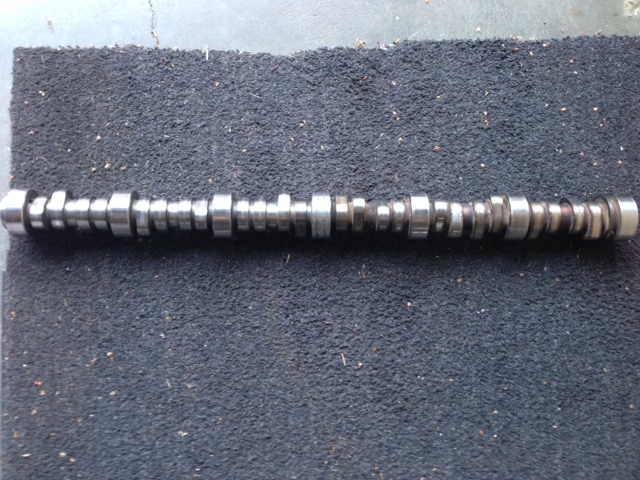
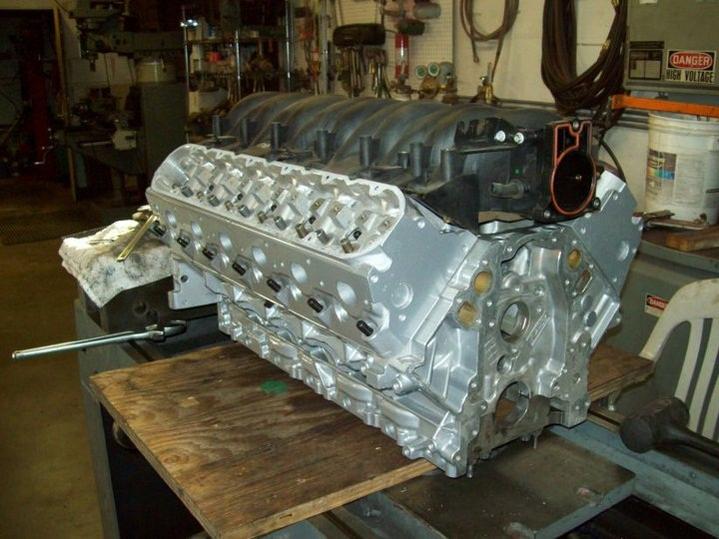

Also for all the gays on here. V4.

Still reading the thread but thought it might arouse some of you as much as it does me.
Link to the thread here. Dont know how much isnt visible when you aren't a member.
V12 LS1 Build - LS1TECH
Between this and the flat plane crank LSx, they are doin some crazy **** with these LSxs.
Im curious about how smooth it will be with the way the crank is built, but he said the first one that went into the suburban did 525hp on all stock LS1 parts, so it cant be too bad.
Also for all the gays on here. V4.
Reply
 2
2

2






Joined: Oct 2011
Posts: 5,717
Total Cats: 830
From: Detroit (the part with no rules or laws)
Soooo, he just "welds them together" and it's all good??
According to him, he just welds inside and out. Seems impossible to me, but what do i know.
According to him, he just welds inside and out. Seems impossible to me, but what do i know.
Reply
0
0


Senior Member
Joined: Nov 2010
Posts: 1,182
Total Cats: 18
From: Pittsburgh PA
Reply
0
0

Joined: Sep 2005
Posts: 34,381
Total Cats: 7,504
From: Chicago. (The less-murder part.)
Didn't we just have this conversation in another thread?
Admittedly, a 3.5l engine is tempting, but the V4 design has certain inherent... disadvantages. (IOW, there's a reason nobody makes them anymore outside of a couple of wacky motorcycle apps.)
Admittedly, a 3.5l engine is tempting, but the V4 design has certain inherent... disadvantages. (IOW, there's a reason nobody makes them anymore outside of a couple of wacky motorcycle apps.)
Reply
0
0
Not sure what thread you mean.
And yeah. A v4 would be a bit much.
I'd really like their GM's 4.3 V6 to be every bit the LSx, just smaller. Anything shorter/lower/further back/lighter than the stock iron four would be interesting.
And yeah. A v4 would be a bit much.
I'd really like their GM's 4.3 V6 to be every bit the LSx, just smaller. Anything shorter/lower/further back/lighter than the stock iron four would be interesting.
Reply
0
0


<This guy doesn't know nuthin' 'bout nuthin' but would be very concerned about harmonics and pulse timing. Crankshafts are typically designed to alternate impulses for inherent smoothness. If the V4 runs rough then the v4 on the front of a V8 will also be rough if still using the V8 rhythm. To say it another way, a v12 built correctly will have a different pulse rhythm than a V8 with a half V8 welded to it. A proper v12 engine is an I6 engine times two. An inline six is inherently smooth. From Wiki:
A V8 plus a half V8 doesn't have this inherent balance designed into it unless you redesign the crank throws entirely by building a new crankshaft. Additionally, the 90 degree vee design is significantly less desirable for a 12 cylinder engine than a 60 degree design from an engineering dynamics standpoint. See this very interesting article (warning: DeLorean Content).
Drawing from the article:

It's not up to OEM standards, but from a "backyard Bubba" angle, it's pretty darn cool.
An inline six engine is in perfect primary and secondary mechanical balance, without the use of a balance shaft. The engine is in primary couple balance because the front and rear trio of cylinders are mirror images, and the pistons move in pairs (but of course, 360° out of phase and on different strokes of the 4-stroke cycle). That is, piston #1 mirrors #6, #2 mirrors #5, and #3 mirrors #4, largely eliminating the polar rocking motion that would otherwise result. Secondary imbalance is avoided because the crankshaft has six crank throws arranged in three planes offset at 120°. The result is that the secondary forces that are caused by differences from purely sinusoidal motion sum to zero.
An inline four cylinder or V6 engine without a balance shaft will experience secondary dynamic imbalance, resulting in engine vibration. As a general rule, the forces arising from any dynamic imbalance increase as the square of the engine speed — for example, if the speed doubles, vibration will increase by a factor of four. In contrast, inline six engines have no primary or secondary imbalances, and with carefully designed crankshaft vibration dampers to absorb torsional vibration, will run more smoothly at the same crankshaft speed (rpm). As engine reciprocating forces increase with the cube of piston bore, straight-six is a preferred configuration for large truck engines.
An inline four cylinder or V6 engine without a balance shaft will experience secondary dynamic imbalance, resulting in engine vibration. As a general rule, the forces arising from any dynamic imbalance increase as the square of the engine speed — for example, if the speed doubles, vibration will increase by a factor of four. In contrast, inline six engines have no primary or secondary imbalances, and with carefully designed crankshaft vibration dampers to absorb torsional vibration, will run more smoothly at the same crankshaft speed (rpm). As engine reciprocating forces increase with the cube of piston bore, straight-six is a preferred configuration for large truck engines.
Drawing from the article:
It's not up to OEM standards, but from a "backyard Bubba" angle, it's pretty darn cool.
Reply
0
0




Junior Member
Joined: Oct 2011
Posts: 277
Total Cats: 58
From: Montreal, QC
For what it's worth, I loved my "wacky motorcycle" with V4. I'm not saying it's necessarily a great idea - the additional head and associated parts alone are a hurdle in the case of DOHC - but the powerband was great and the engine note was fantastic. And that was in an otherwise fairly vanilla (but excellent) bike, a VFR800.
Reply
0
0
Senior Member
Joined: Nov 2010
Posts: 1,182
Total Cats: 18
From: Pittsburgh PA

Reply
0
0

I had a Saab Sonnet with a V4.. Wacky little car but surprisingly quick. Of course it only weighed like fifteen pounds, so a Briggs and Stratton lawnmower engine probably would have been adequate.
Reply
0
0

Junior Member
Joined: Dec 2008
Posts: 73
Total Cats: 3
It sounds like they did exactly that for the LSx V12 that they made for the P-51 race plane, a custom billet crank was made.
Reply
0
0

Joined: Sep 2005
Posts: 34,381
Total Cats: 7,504
From: Chicago. (The less-murder part.)
Because they said they're cutting two cranks apart and welding them?
Serious question:
At this point, why wouldn't you just use an SLA machine to print a wax positive of the engine, and use that to create a completely new investment-cast block and heads (which obey OEM conventions for all the major dimensions and accessory mounts), as opposed to using a bandsaw and welder?
Serious question:
At this point, why wouldn't you just use an SLA machine to print a wax positive of the engine, and use that to create a completely new investment-cast block and heads (which obey OEM conventions for all the major dimensions and accessory mounts), as opposed to using a bandsaw and welder?
Reply
0
0


