


is it possible, 13's?





Thread Starter
I'm Miserable!
iTrader: (5)
Joined: Sep 2005
Posts: 1,589
Total Cats: 0
From: SLC, Utah

Are you guys taking into account the 4500ft elevation? And I no lift shift at the track, so far from babying it. I will see how my 225's do before buying drag radials. And if I don't see at least 260 to the wheels I won't be happy.
Reply
 0
0

0

Joined: Oct 2007
Posts: 6,029
Total Cats: 304
From: The coal ridden hills of Pennsylvania
I don't know what you will put out the wheels, but I can tell you this. If you have a clutch that does NOT slip, there is no reason to not run low 13's with a T3. High 12's are more like it depending on the boost level and the 60' time. Dude, according to calculations, I should run a 13.8 or 13.9 on my T25 with a good clutch and a good 60' time at 7 PSI. With 12-14 psi I WILL be in the in 12's. You got it with a T3, no worries.
Reply
0
0


Joined: Oct 2007
Posts: 6,029
Total Cats: 304
From: The coal ridden hills of Pennsylvania
I have heard that, but I'd say that's from doing things like running slicks & dumping the clutch at high RPM. I babied my car off the line, run a 2.57 60' and I still ran the 1/4 at 100 MPH. You gotta know what makes you happy with your car. Either you launch it hard and have a good timeslip, but risk damage to your rear. Or you be a ***** about the launch and you take what you can get.
Reply
0
0

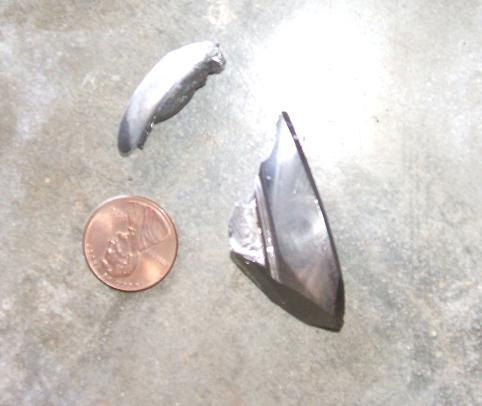
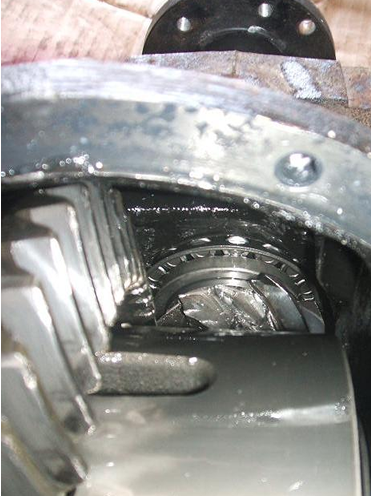
It looks like this:
Reply
0
0

^ That picture above brings up a question I have had about the torsens. It seems to be common knowledge that they are more prone to failure than the non-torsen version. However that picture above shows a pinion failure, and not necessarily a failure within the torsen related assembly itself. I suppose it could have been a torsen related failure that precipitated the pinion failure. But that is an aside.
So when there are 'torsen failures' what is typically failing, the ring and pinion, or something within the torsen unique components themselves? If it tends to be the ring and pinion, then is there something about the torsen that causes higher stress levels on the ring and pinion, such as higher torsen assembly mass (inertia), or better distribution of torque to the wheels (better traction resulting in higher torque load)?
So when there are 'torsen failures' what is typically failing, the ring and pinion, or something within the torsen unique components themselves? If it tends to be the ring and pinion, then is there something about the torsen that causes higher stress levels on the ring and pinion, such as higher torsen assembly mass (inertia), or better distribution of torque to the wheels (better traction resulting in higher torque load)?
Reply
0
0


Senior Member
iTrader: (10)
Joined: Feb 2007
Posts: 1,274
Total Cats: 0
From: South Eastern Wisconsin
^ That picture above brings up a question I have had about the torsens. It seems to be common knowledge that they are more prone to failure than the non-torsen version. However that picture above shows a pinion failure, and not necessarily a failure within the torsen related assembly itself. I suppose it could have been a torsen related failure that precipitated the pinion failure. But that is an aside.
So when there are 'torsen failures' what is typically failing, the ring and pinion, or something within the torsen unique components themselves? If it tends to be the ring and pinion, then is there something about the torsen that causes higher stress levels on the ring and pinion, such as higher torsen assembly mass (inertia), or better distribution of torque to the wheels (better traction resulting in higher torque load)?
So when there are 'torsen failures' what is typically failing, the ring and pinion, or something within the torsen unique components themselves? If it tends to be the ring and pinion, then is there something about the torsen that causes higher stress levels on the ring and pinion, such as higher torsen assembly mass (inertia), or better distribution of torque to the wheels (better traction resulting in higher torque load)?
Reply
0
0

Define "easy"! I'm running about 240 at the wheels. My car is a heavy pig with the hard top, soft top, AC, cruise and power everything. Had Zero 1/4 mile experience. On 225 street tires it took me about 15 runs to get to 13.5 sec at 106. I wouldn't say "easy". You've gotta have some idea what you are doing. Guy's that are experienced at the 1/4? Yeah it would be "easy". Guys with a lightened or low option car? Much easier.
Next season I'm going hunting for a 13 flat. Don't want to set my goals too high!
Next season I'm going hunting for a 13 flat. Don't want to set my goals too high!
Reply
0
0

I ran the 1/8th mile last night at 13psi with a gt2560. The clutch would slip in 3rd pretty bad. With a easy take off, I still pulled 9.5's and 9.6's from 77-80mph. I'm thinking that should be low 14's. I figure I would pull good 13's with good clutch.
Reply
0
0
Thread Starter
I'm Miserable!
iTrader: (5)
Joined: Sep 2005
Posts: 1,589
Total Cats: 0
From: SLC, Utah
Define "easy"! I'm running about 240 at the wheels. My car is a heavy pig with the hard top, soft top, AC, cruise and power everything. Had Zero 1/4 mile experience. On 225 street tires it took me about 15 runs to get to 13.5 sec at 106. I wouldn't say "easy". You've gotta have some idea what you are doing. Guy's that are experienced at the 1/4? Yeah it would be "easy". Guys with a lightened or low option car? Much easier.
Next season I'm going hunting for a 13 flat. Don't want to set my goals too high!
Next season I'm going hunting for a 13 flat. Don't want to set my goals too high!
Reply
0
0


