


Ventilating the crank case


Thread Starter
Junior Member
Joined: Dec 2015
Posts: 238
Total Cats: 79
From: Brisbane, Queensland, Australia
 Ventilating the crank case
Is there a known threshold beyond which venting the crank case via the valve cover becomes inadequate?
Context and background
I have a newly built BPZ3 (vvt) which has dyno time only on it at this stage. After returning from dyno tuning, it developed a profuse leak from the rear main seal which has since been removed, inspected and replaced, resolving the leak (for now).
The seal itself was removed carefully and there was no obvious damage, fault, or reason for it to be leaking.
The engine is producing 460whp, and the engine builder has suggested that the my attempts to vent the valve cover may be futile due to insufficient capacity in the oil/air passageway between sump and cam cover, leading to pressurization of the sump and seal failure.
More on the engine:
Supertech 9:1 pistons with Wiesco rings
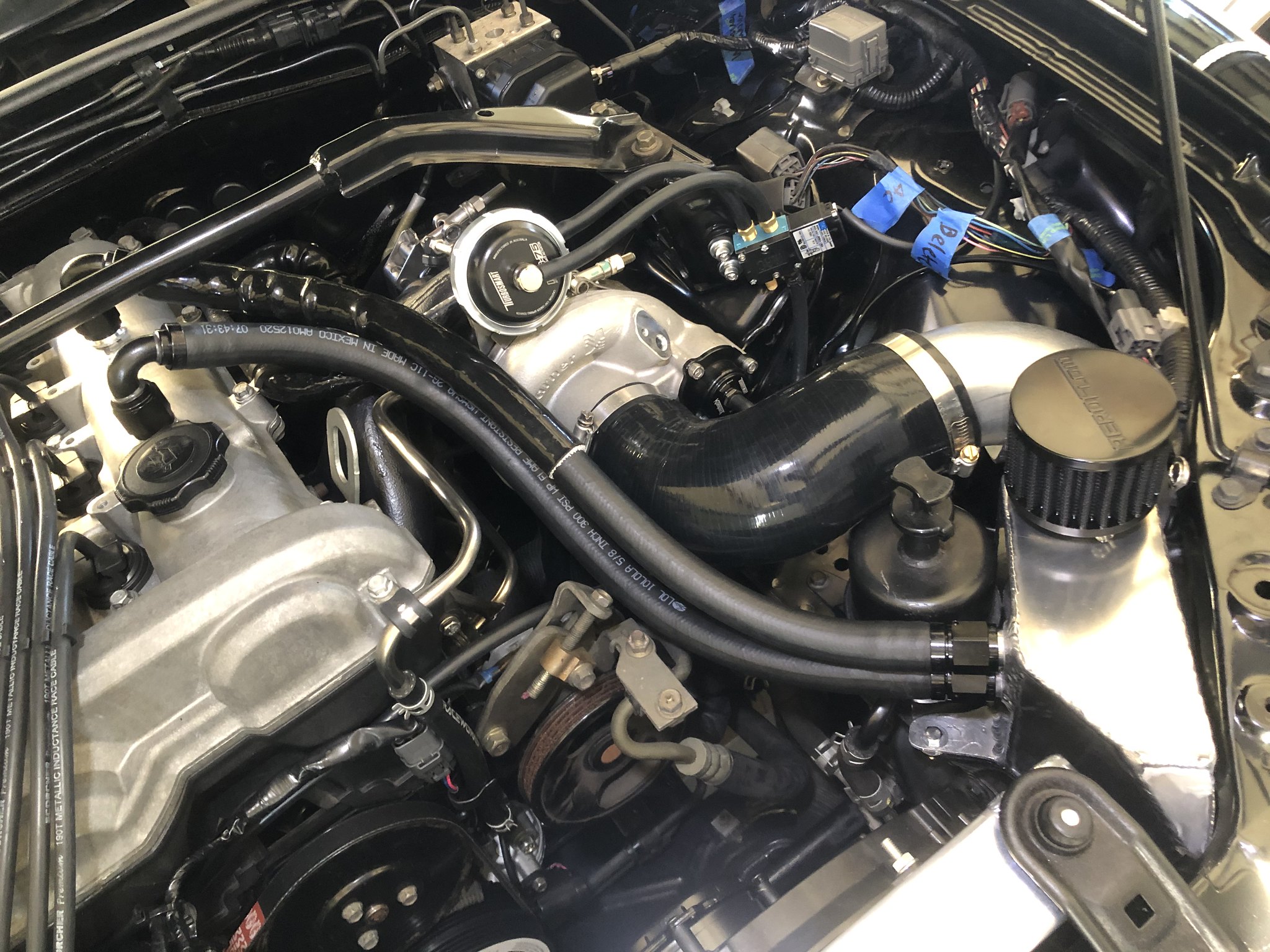
Valve cover has two 10mm holes in the baffling and two 10AN vents to a catch can
Of course, the seal could have failed for any number of reasons, but is it likely or possible that crank case pressure was involved?
Context and background
I have a newly built BPZ3 (vvt) which has dyno time only on it at this stage. After returning from dyno tuning, it developed a profuse leak from the rear main seal which has since been removed, inspected and replaced, resolving the leak (for now).
The seal itself was removed carefully and there was no obvious damage, fault, or reason for it to be leaking.
The engine is producing 460whp, and the engine builder has suggested that the my attempts to vent the valve cover may be futile due to insufficient capacity in the oil/air passageway between sump and cam cover, leading to pressurization of the sump and seal failure.
More on the engine:
Supertech 9:1 pistons with Wiesco rings
Valve cover has two 10mm holes in the baffling and two 10AN vents to a catch can
Of course, the seal could have failed for any number of reasons, but is it likely or possible that crank case pressure was involved?
Reply
 0
0

0


Hook a pressure sensor up to the dipstick tube and take a log during a pull. 460whp is a big number and on the fringes of common knowledge.
Running the ex side port through an air oil separator and then to the turbo inlet after the air filter can help increase flow. The ID of all of the fittings and hoses needs to be maximized.
Oh, and if you are swamping the drain holes between the head and the crankcase, no amount of venting will help. There are 4 of them, and they are large.
Running the ex side port through an air oil separator and then to the turbo inlet after the air filter can help increase flow. The ID of all of the fittings and hoses needs to be maximized.
Oh, and if you are swamping the drain holes between the head and the crankcase, no amount of venting will help. There are 4 of them, and they are large.
Last edited by Ted75zcar; Aug 17, 2021 at 11:44 PM.
Reply
1
1

Elite Member
Joined: Jul 2014
Posts: 1,641
Total Cats: 250
From: Canberra, sort of
You've done the 'tiny hole' mod to the VC?
If the dipstick is not popping out/loose, I'd be surprised if the CC pressure was sufficient to push the seal out, but ...
I'm in a rush atm, so haven't checked, what are the chances high oil pressure (shimmed pump?) is leaking past the bearing and can only escape past the seal? IOW the seal is fine, but it just can't handle the pressure/volume?
If the dipstick is not popping out/loose, I'd be surprised if the CC pressure was sufficient to push the seal out, but ...
I'm in a rush atm, so haven't checked, what are the chances high oil pressure (shimmed pump?) is leaking past the bearing and can only escape past the seal? IOW the seal is fine, but it just can't handle the pressure/volume?
Reply
0
0
Thread Starter
Junior Member
Joined: Dec 2015
Posts: 238
Total Cats: 79
From: Brisbane, Queensland, Australia
Hook a pressure sensor up to the dipstick tube and take a log during a pull. 460whp is a big number and on the fringes of common knowledge.
Running the ex side port through an air oil separator and then to the turbo inlet after the air filter can help increase flow. The ID of all of the fittings and hoses needs to be maximized.
Oh, and if you are swamping the drain holes between the head and the crankcase, no amount of venting will help. There are 4 of them, and they are large.
Running the ex side port through an air oil separator and then to the turbo inlet after the air filter can help increase flow. The ID of all of the fittings and hoses needs to be maximized.
Oh, and if you are swamping the drain holes between the head and the crankcase, no amount of venting will help. There are 4 of them, and they are large.
You've done the 'tiny hole' mod to the VC?
If the dipstick is not popping out/loose, I'd be surprised if the CC pressure was sufficient to push the seal out, but ...
I'm in a rush atm, so haven't checked, what are the chances high oil pressure (shimmed pump?) is leaking past the bearing and can only escape past the seal? IOW the seal is fine, but it just can't handle the pressure/volume?
If the dipstick is not popping out/loose, I'd be surprised if the CC pressure was sufficient to push the seal out, but ...
I'm in a rush atm, so haven't checked, what are the chances high oil pressure (shimmed pump?) is leaking past the bearing and can only escape past the seal? IOW the seal is fine, but it just can't handle the pressure/volume?
I don't know about the 'oil past bearing' idea - but the pump is VVT + two shims, so has higher pressure built in.
Tiny hole mod: yes drilled out to 10mm and a second hole at 10mm added next to it.
Last edited by The Australian; Aug 18, 2021 at 02:41 AM. Reason: missed a question from response
Reply
0
0
Thread Starter
Junior Member
Joined: Dec 2015
Posts: 238
Total Cats: 79
From: Brisbane, Queensland, Australia
Reply
0
0

Junior Member
Joined: Oct 2018
Posts: 128
Total Cats: 36
From: Swansea, Wales (NOT england) - UK.
I know this doesn't translate directly to the 1.8 but mazda's turbo'd B6t in the 323 had a crankcase vent / breather / vapour seperator drain setup that was dropped for 1.8 engines.


the 'pot' has a small hose that iirc feeds to the turbo's inlet to vent pressure.

crancase vented by oilfilter & oil drain back to sump.
this engine was from an old rallycar and had been removed 20+ years ago.
can you get creative & install a port in the cylinderblock to vent (drill & tap etc.)
also, theres a blanking-plug in the oilpump case where a dipstick tube would be fitted in transverse / fwd installations, it's ~ 3/8" / 10mm but maybe helpfull as a test to relieve crankcase pressures?

Rich.
the 'pot' has a small hose that iirc feeds to the turbo's inlet to vent pressure.
crancase vented by oilfilter & oil drain back to sump.
this engine was from an old rallycar and had been removed 20+ years ago.
can you get creative & install a port in the cylinderblock to vent (drill & tap etc.)
also, theres a blanking-plug in the oilpump case where a dipstick tube would be fitted in transverse / fwd installations, it's ~ 3/8" / 10mm but maybe helpfull as a test to relieve crankcase pressures?
Rich.
Reply
0
0
As far as the fittings, it is the ID you have to watch. For example, the ex side port on the VC needs to be drilled out to support the ID of even an AN8. There are NPT to AN adapters out there that will take a 1/4" npt to 10AN. I frequently see such fittings used on catch cans. You can lose a ton of flow through a fitting with a small ID.
Reply
0
0
Thread Starter
Junior Member
Joined: Dec 2015
Posts: 238
Total Cats: 79
From: Brisbane, Queensland, Australia
Reply
2
2


Another way to test for internal pressure is drill and tap a hole in a spare oil filler cap . Attach a small hose barb fitting there. For a gauge I stumbled across using a gauge for a blood pressure cuff. Cheap, very accurate, and can easily read less than 1 psi.
Reply
1
1


Thread
Thread Starter
Forum
Replies
Last Post


