When you click on links to various merchants on this site and make a purchase, this can result in this site earning a commission. Affiliate programs and affiliations include, but are not limited to, the eBay Partner Network.
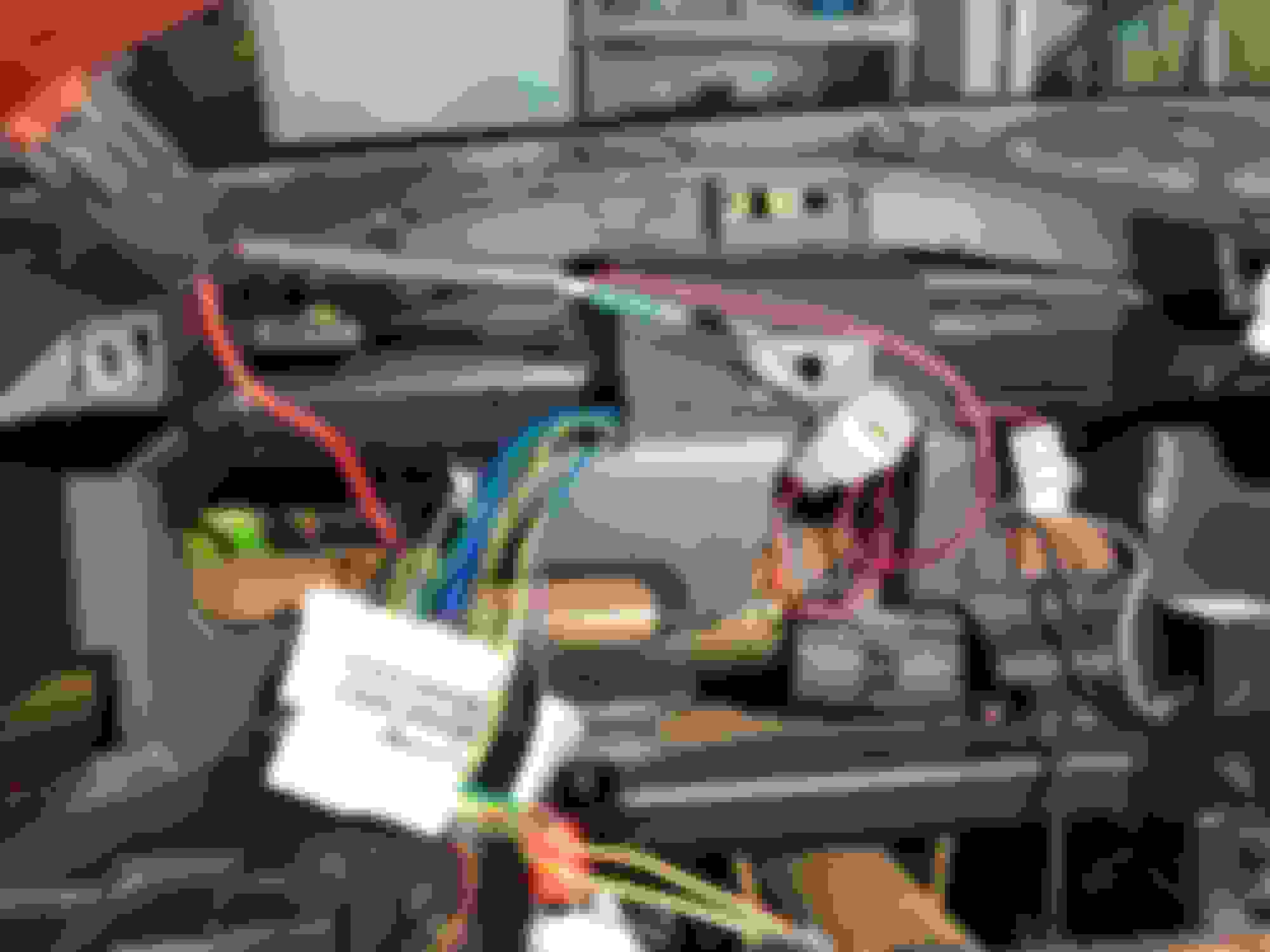
Although there were a few threads that mentioned it, I haven't seen one dedicated to this topic. Anyway, I pulled out the stock gauge cluster in my 1990 miata in order to install aftermarket gauges. Shortly thereafter the alternator stopped working. The car would start, but would run on battery power for a minute or so and die. I did some research and it turns out that the alternator needs the stock gauge cluster in order to function. If you get rid of the stock gauge cluster you need to connect the black/yellow wire to the white/black wire (in the back of the gauge cluster) and put a 180 ohm resistor and diode in between them (with the diode "pointing" to the white/black wire) like this (ignore the red wire and fuse... you can't really tell but that goes directly to the black/yellow wire in my car):
When I was trying to track down a rattle behind the dash in my 1992, I removed the gauge cluster and drove around town. A few times. No issues, but maybe I just got lucky.
Title is more than a bit misleading. There are probably thousands of NA race cars running around sans cluster without this diode/resistor in, including several I've built. The issue is alternator charging. At idle, it relies on the current draw from the battery light to energize the field. If you blip the throttle at all, it will also energize the field.
IOW, this only affects the car at idle. Rev the motor once and the alternator will start charging. Cool idea, but not required.
BTW - your car should idle off battery power for a very long time with no other electrical loads on it. At idle, the full system pulls maybe 20-25A, most of which is the coils and fuel pump. A healthy car battery should support that for at least an hour, maybe longer. If it dies after a minute, your battery is trashed.



 Don't Drive Without The Stock Gauge Cluster!

 -1
-1