


Oil Temp Sensor Location


Thread Starter
Elite Member
iTrader: (46)
Joined: Dec 2007
Posts: 4,729
Total Cats: 166
From: Nebraska
 Oil Temp Sensor Location
Other than tapping another hole in my pan right after tapping, flushing and refilling with new oil for the turbo drain, where are all of you locating your oil temp sensor?
If the pan is the only option where did you tap it? Sensor is a 3/8 npt that came with the Maxigauges.
If the pan is the only option where did you tap it? Sensor is a 3/8 npt that came with the Maxigauges.
Reply
 0
0

0




I will be tapping my pan for a GM coolant temp sensor to use for oil temp. Make sure that you tap the pan on the passengers side. It is a pita to deal with a temp sensor wire around your hot manifold.
Reply
0
0

what about the oil feed ports on the back of head??
There was some discussion about using these as an oil feed port for a turbo but don't see why they couldn't be used for oil temp.
There was some discussion about using these as an oil feed port for a turbo but don't see why they couldn't be used for oil temp.
Reply
0
0

If you guys have the pan off the engine, the way to do it is a weld bung
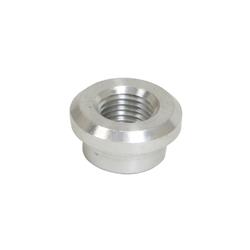
The pan is so thin that I just wasn't comfortable with like 1 thread worth of engagement. I added 1/2" NPT for oil return on the drivers side and 1/8" NPT for temp on the passenger side below the baffle. I was worried with the sensor interfering with the subframe but I guess I'll figure it out shortly.

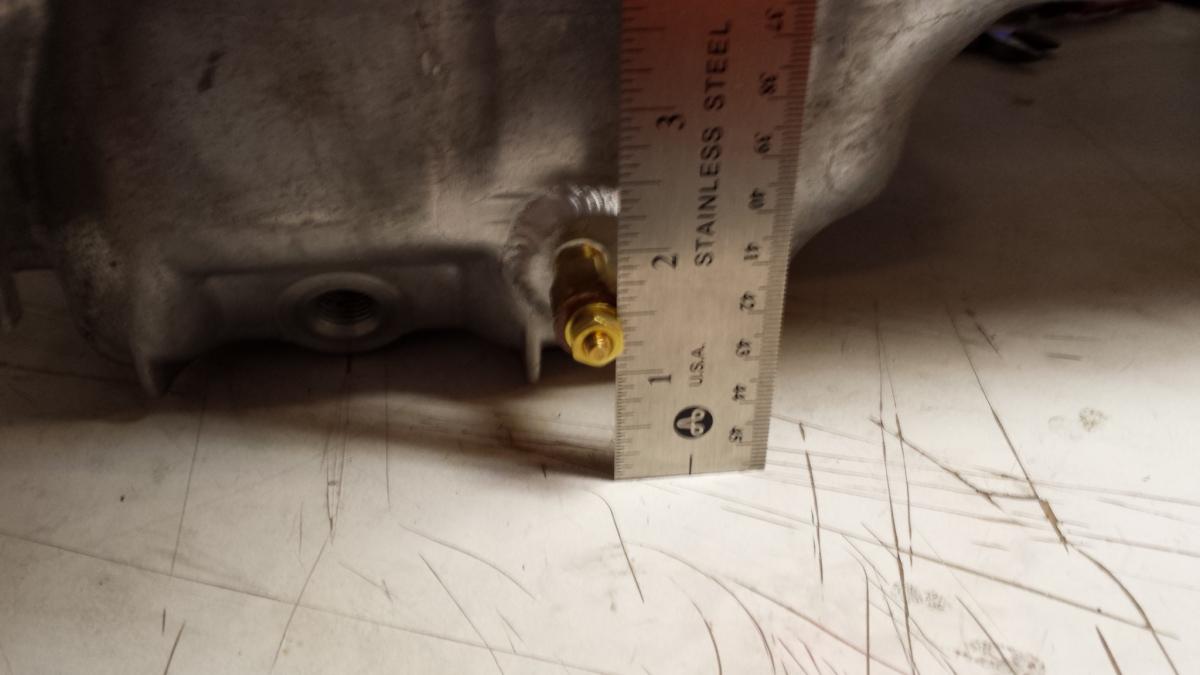
Top of the sensor is 1.5" below the baffle. I do wish this sensor was a bit shorter though.
The pan is so thin that I just wasn't comfortable with like 1 thread worth of engagement. I added 1/2" NPT for oil return on the drivers side and 1/8" NPT for temp on the passenger side below the baffle. I was worried with the sensor interfering with the subframe but I guess I'll figure it out shortly.
Top of the sensor is 1.5" below the baffle. I do wish this sensor was a bit shorter though.
Last edited by EO2K; Mar 31, 2014 at 05:57 PM.
Reply
0
0

Wow that bung would have made life easier, I used an aluminum half coupler when I welded mine on. To the drivers side rear of the pan... because thats what Hustler said in this one post one time and it seemed legit.
Reply
0
0

Mine's like the mirror image of yours on the drivers side, but in the same set of ribs as the oil plug. It may have hit the subframe a little bit while dropping the engine in.
Reply
0
0
If it hits I have a spare weld bung, but its not something I look forward correcting.
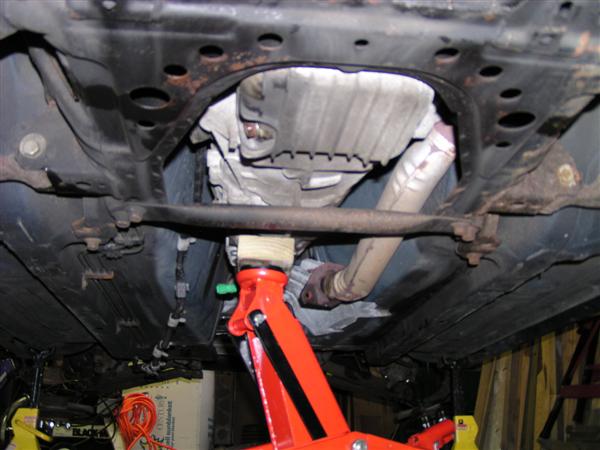
Not my pic, but its gonna be damn close at any rate.
Also, don't even think I welded that myself. Mad props to Gesso for being a TIG ninja
Not my pic, but its gonna be damn close at any rate.
Also, don't even think I welded that myself. Mad props to Gesso for being a TIG ninja
Reply
0
0


I can't see your image, but I'm starting to think that's what I should have done. Problem is, I don't know how much oil is actually sitting in the pan at 7,000rpm and I wanted to get it as low as possible.
Image working for anyone else?
Image working for anyone else?
Reply
0
0


Newb
Joined: Oct 2014
Posts: 32
Total Cats: -20
Reply
-1
-1
That position is below the low level mark and it is pretty stable on the track so I believe that it is an accurate reading, not sure how much oil is in the pan at 7k but I hope that it would have a couple inches worth or I would be seeing oil pressure drop on the straights.
That location has the hottest oil in the engine and that is what I want to keep an eye on.
That location has the hottest oil in the engine and that is what I want to keep an eye on.
Reply
1
1

Elite Member
Joined: Jul 2014
Posts: 1,616
Total Cats: 249
From: Canberra, sort of
That position is below the low level mark and it is pretty stable on the track so I believe that it is an accurate reading, not sure how much oil is in the pan at 7k but I hope that it would have a couple inches worth or I would be seeing oil pressure drop on the straights.
That location has the hottest oil in the engine and that is what I want to keep an eye on.
That location has the hottest oil in the engine and that is what I want to keep an eye on.
 . I have always used a location downstream of the pump, but I am not convinced that a few degrees one way or the other is enough to get excited about - unless you are right on the upper temperature limit for your oil, in which case sensor location is not something to dwell on, and more cooling is your focus.
I am about to install temperature and pressure sensors on the inlet side of my cooler in a engine>cooler>filter>engine setup. Next time the engine is out I might look at an alternative (or additional?) sensor location in the sump or on the sandwich plate.
Reply
0
0
I agree that the pump will increase the oil temp when pressurizing, my sandwich plate is a Moro with a 170f thermostat and did not have a temp sensor port so I wanted to stay away from measuring oil temp before the oil cooler because the cooler does not see oil flow until the thermostat opens.
I do try not to romp on it until I see the oil temp coming up and is over 100f (that can take a while in cool weather) so the oil temp in the sump or sandwich plate is not a bad thing IMO
I do try not to romp on it until I see the oil temp coming up and is over 100f (that can take a while in cool weather) so the oil temp in the sump or sandwich plate is not a bad thing IMO
Reply
0
0


another option is to drill and tap the oil drain bolt. Volvo did this using VDO sensors years ago. I'm using this, but I feel this location is cooler than what the rest of the motor is seeing.
Reply
0
0


Joined: Sep 2005
Posts: 34,414
Total Cats: 7,531
From: Chicago. (The less-murder part.)
I'd be wary of putting a sensor in that location, where it's so exposed. One stray rock or chunk of ice would easily snap any temperature sensor I can recall seeing.
Reply
0
0


