


Turbo Exploded carnage pics


Thread Starter


Joined: Nov 2008
Posts: 22,157
Total Cats: 3,536
From: Tampa, Florida
 Turbo Exploded carnage pics
One of my customers showed me his latest part that needed replacing. It is a Borg Warner (I think) turbo off of an articulated wheel loader made by John Deere. I thought you guys would appreciate the carnage more than most people.
Post mortem indicates that the turbine shaft, though bent, still turns and is not seized. Id does drag a bit, but I would expect that from looking at it. As of now, the initial cause is up for speculation. My apologies for not having pics of the turbine side.
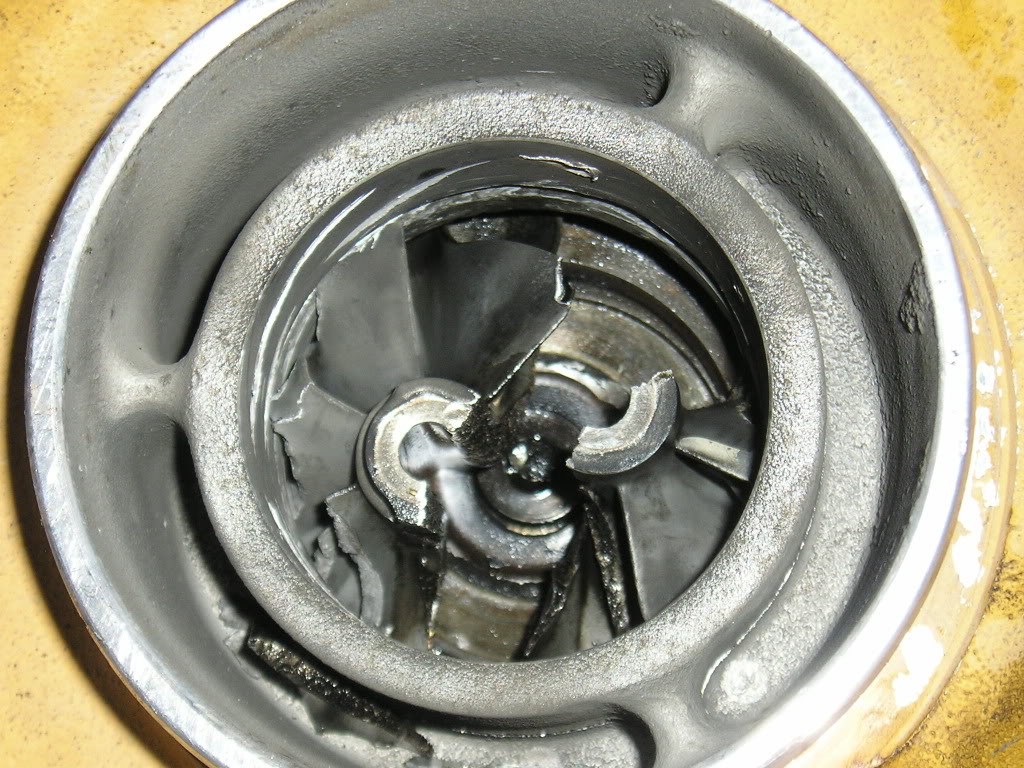
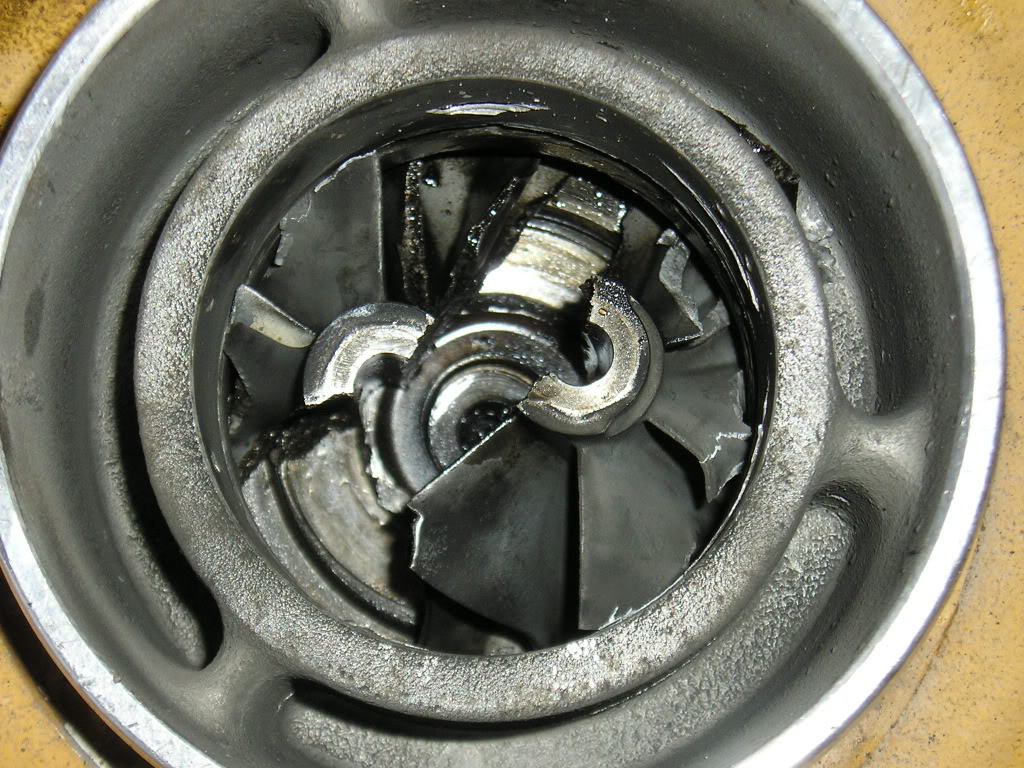
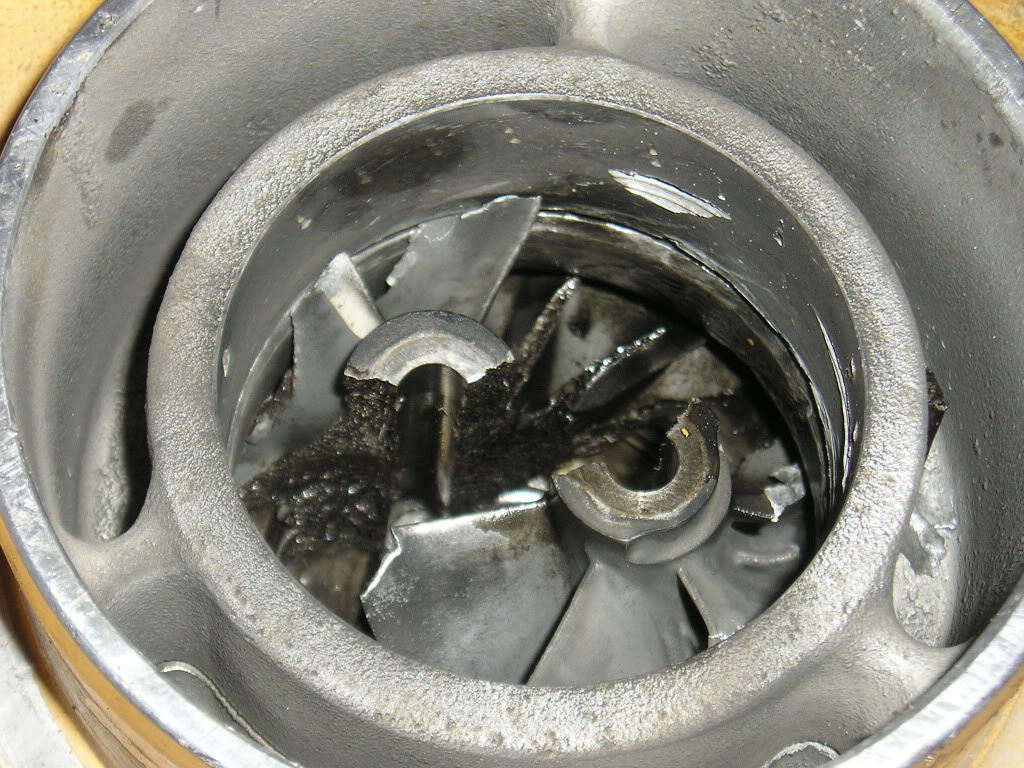
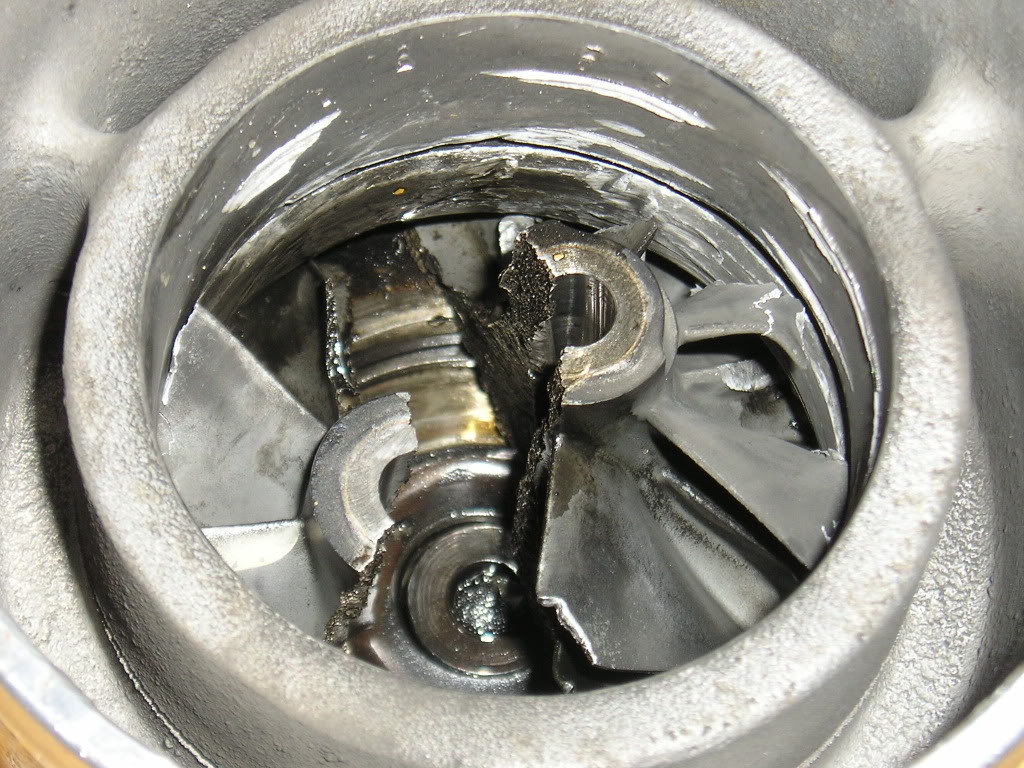
His intercooler has to be replaced because it is full of metal and oil.
Post mortem indicates that the turbine shaft, though bent, still turns and is not seized. Id does drag a bit, but I would expect that from looking at it. As of now, the initial cause is up for speculation. My apologies for not having pics of the turbine side.
His intercooler has to be replaced because it is full of metal and oil.
Reply
 0
0

0


This picture really raises my kersplosion expectations for my borg turbo.
JKav, I don't understand. By low/high excursions do you mean a situation like not using a BOV?
JKav, I don't understand. By low/high excursions do you mean a situation like not using a BOV?
Reply
0
0
No, I mean situations like if you run a turbo to high boost pressure (aka speed) and back to very little boost and repeat this several thousand times. You'll never seen LCF on a gasoline application, boost/speeds/duty cycle are far too low to stress the wheel that way. It's on diesel applications like transit buses and loaders that see only full whack, and then nothing, and then full whack, over and over again for their entire lives that experience LCF.
LCF is why some diesel apps went to billet wheels, and then titanium. Billet wheels in the aftermarket are for ease of manufacturing in low volume, and bling.
LCF is why some diesel apps went to billet wheels, and then titanium. Billet wheels in the aftermarket are for ease of manufacturing in low volume, and bling.
Reply
0
0
No, I mean situations like if you run a turbo to high boost pressure (aka speed) and back to very little boost and repeat this several thousand times. You'll never seen LCF on a gasoline application, boost/speeds/duty cycle are far too low to stress the wheel that way. It's on diesel applications like transit buses and loaders that see only full whack, and then nothing, and then full whack, over and over again for their entire lives that experience LCF.
LCF is why some diesel apps went to billet wheels, and then titanium. Billet wheels in the aftermarket are for ease of manufacturing in low volume, and bling.
LCF is why some diesel apps went to billet wheels, and then titanium. Billet wheels in the aftermarket are for ease of manufacturing in low volume, and bling.
Ah ok, thank you for the explanation. I never thought about the diesel application.
Reply
0
0



Thread Starter
Joined: Nov 2008
Posts: 22,157
Total Cats: 3,536
From: Tampa, Florida
Naw, dude it's running great. Hell, we didn't even take it off to take the picture.
And yes, this was on a wheel loader that probably went from vacuum to 40-50 psi and back to vacuum constantly for years of operation. I did not realize that could contribute to this type of failure. Pretty cool.
And yes, this was on a wheel loader that probably went from vacuum to 40-50 psi and back to vacuum constantly for years of operation. I did not realize that could contribute to this type of failure. Pretty cool.
Reply
0
0

Wow that looks great. This looks bad on borg warner but when you look at most stock diesel turbos they are small compared to engine size and they run them at around 30 psi and up so I can see after years of construction this could happen. It is after all just a cast aluminum wheel.
Reply
0
0

Thread
Thread Starter
Forum
Replies
Last Post


