


Engine temps vs. wear


Thread Starter
Elite Member
iTrader: (5)
Joined: Dec 2010
Posts: 1,961
Total Cats: 48
From: Raleigh, NC
 Engine temps vs. wear
So I am curious on theories for engine wear vs oil temp vs coolant temp.
Currently I am running a no T-stat reroute and an oil cooler on the car. Generally speaking on track my oil temps will get up to 190-ish, while coolant temperatures will run between 120-180 depending on the track and speed.
should I be worried about engine wear if my coolant temps are running low, even though oil temps are normal? I am assuming oil temp is a pretty good indicator of bearing temps, and coolant is probably more accurate for piston/cylinder walls, etc.
what do you guys think?
Also, what do you guys think about methods of blocking off the mouth of the car? does one method work better than another? for example taping off the outside vs. making a block off plate directly in front of the radiator?
Currently I am running a no T-stat reroute and an oil cooler on the car. Generally speaking on track my oil temps will get up to 190-ish, while coolant temperatures will run between 120-180 depending on the track and speed.
should I be worried about engine wear if my coolant temps are running low, even though oil temps are normal? I am assuming oil temp is a pretty good indicator of bearing temps, and coolant is probably more accurate for piston/cylinder walls, etc.
what do you guys think?
Also, what do you guys think about methods of blocking off the mouth of the car? does one method work better than another? for example taping off the outside vs. making a block off plate directly in front of the radiator?
Reply
 0
0

0

Senior Member
Joined: Sep 2013
Posts: 923
Total Cats: 67
I told you over this weekend that operating the engine below 170F or so will greatly increase piston ring wear and that you'll wind up killing a few orders of magnitude for "cycles" (like 10^6 vs 10^9). I know just enough to get me into trouble when it comes to material science/engineering, so I'm hoping that a few guys come in and drop some knowledge bombs.
Reply
0
0

You'd probably have to run a bunch of CFD sims to know for sure, but my guess is that the difference in drag in blocking off the mouth vs the rad will negligible. I don't see why one way would be more or less effective as the other as far as cooling (or lack thereof) effect.
Reply
0
0
Thread Starter
Elite Member
iTrader: (5)
Joined: Dec 2010
Posts: 1,961
Total Cats: 48
From: Raleigh, NC
I told you over this weekend that operating the engine below 170F or so will greatly increase piston ring wear and that you'll wind up killing a few orders of magnitude for "cycles" (like 10^6 vs 10^9). I know just enough to get me into trouble when it comes to material science/engineering, so I'm hoping that a few guys come in and drop some knowledge bombs.

Reply
0
0

You'd probably have to run a bunch of CFD sims to know for sure, but my guess is that the difference in drag in blocking off the mouth vs the rad will negligible. I don't see why one way would be more or less effective as the other as far as cooling (or lack thereof) effect.
The easier solution to this problem is to install a thermostat.
Reply
0
0



Reply
0
0


This stuff has been studied countless times for roughly a century. There is no mystery.
There is a good relationship between ECT and cylinder wear. The difference between 140F and 180F is probably a factor of 2 or 3 times the wear.
There is a good relationship between ECT and cylinder wear. The difference between 140F and 180F is probably a factor of 2 or 3 times the wear.
Reply
0
0
Thread Starter
Elite Member
iTrader: (5)
Joined: Dec 2010
Posts: 1,961
Total Cats: 48
From: Raleigh, NC
So, is the suggestion to buy an inline t-stat housing? In that case, the gutted t-stat in the back of the engine becomes useless (so I should remove it the next time the engine is out)?
Reply
0
0

Do you expect to have regular issues with the thermostat going out? I know they will die occasionally, but in the 15 years I've been driving I've never had one go out. I wouldn't think it's really a wear item that you'd expect to be replacing regularly or anything.
Even if it does go out, or you want to replace it as a preventative measure, getting to it on the back of the head isn't so difficult that it's worth being concerned about, IMO.
Even if it does go out, or you want to replace it as a preventative measure, getting to it on the back of the head isn't so difficult that it's worth being concerned about, IMO.
Reply
0
0
Yeah, my 160f never failed in 5 years (drivability sucked), so when I finally replaced it with a 180f unit, the trick was taking off the three PPF bolt on the back of the transmission and jacking it up there, which pried it away from the fire wall. Worked like a charm.
COPs help too, which give you a little extra room.
COPs help too, which give you a little extra room.
Reply
0
0

Weigh number of times you'd swap a thermostat vs. I've ran into issues running a thermostat AND being overcooled in the Pacific Northwest. Had I gone more prepared I would have brought something to block the rad as well.
Reply
0
0
Thread Starter
Elite Member
iTrader: (5)
Joined: Dec 2010
Posts: 1,961
Total Cats: 48
From: Raleigh, NC
dunno, t-stats seemed like a once every year or two item (to me initially), but with everyone else it seems much longer. So if they do last longer, I am sure you will pull the engine out atleast once every few years.
I think if I was running enduros I would probably run an inline or a gutted t-stat. With that said, I am going to try curly's suggestion and see if that works well for replacing it.
I think if I was running enduros I would probably run an inline or a gutted t-stat. With that said, I am going to try curly's suggestion and see if that works well for replacing it.
Reply
0
0

What kind of thermostats are you using? Do they have "slick 50" stamped on them? I've never had a problem that was fixed by replacing a thermostat - I have replaced many thermostats, using different temperature ranges, different flow-through hole sizes, etc., and they have never fixed the problems; they have only ever shifted the symptoms. I know of *one* person who has had a thermostat fail on them *one* time.
Thermostats really are the one good *solution* to thermal issues with your engine and cooling system; they are rarely, if ever, the problem.
Engines love thermostats; get that engine a thermostat.
Thermostats really are the one good *solution* to thermal issues with your engine and cooling system; they are rarely, if ever, the problem.
Engines love thermostats; get that engine a thermostat.
Reply
0
0
What kind of thermostats are you using? Do they have "slick 50" stamped on them? I've never had a problem that was fixed by replacing a thermostat - I have replaced many thermostats, using different temperature ranges, different flow-through hole sizes, etc., and they have never fixed the problems; they have only ever shifted the symptoms. I know of *one* person who has had a thermostat fail on them *one* time.
Thermostats really are the one good *solution* to thermal issues with your engine and cooling system; they are rarely, if ever, the problem.
Engines love thermostats; get that engine a thermostat.
Thermostats really are the one good *solution* to thermal issues with your engine and cooling system; they are rarely, if ever, the problem.
Engines love thermostats; get that engine a thermostat.
Usually they fail open but in the event that the car overheats, the wax element inside the thermostat can get stuck closed and you'll see temps starting to climb.
Reply
0
0

This. Depending on if you have a heater core in the car still, look into how to route coolant piping without a heater as well. This might cause issues if not done properly.
Reply
0
0

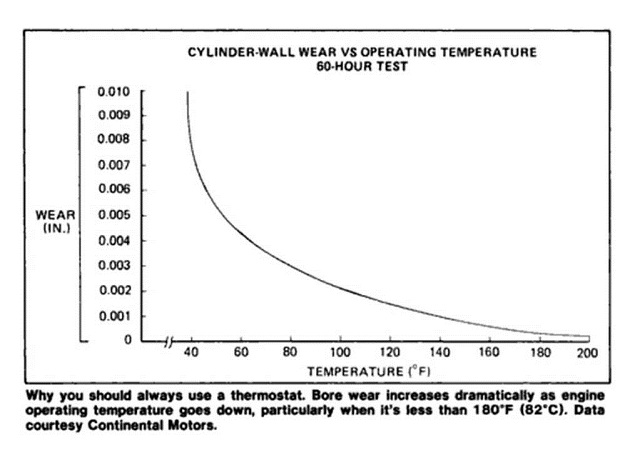

Good timing for this thread. I have not been running a thermostat and just replaced my motor with a stout build. New thermostat is on the way. Do most of you guys run 180's?
Reply
0
0
180 or 190 here - put a 160 in at one point to try and correct problem; the engine and oil simply warmed up more slowly, and the problem remained unchanged. 180-190 is probably the sweet spot.
Reply
0
0


