When you click on links to various merchants on this site and make a purchase, this can result in this site earning a commission. Affiliate programs and affiliations include, but are not limited to, the eBay Partner Network.
Are these coolers found in 98-05 gen with the 1.8L? This is what I've seen from searching, but a confirmation would definitely save me a bit of time at the yard.
It is on a little 20HP diesel motor. A little cooling will go a long ways, especially when there was not engine oil cooler from the factory.
Waste of time in this application. Engine oil will essentially stay at block temperature unless you heat it up in the engine bearings with a bunch of RPM. Diesel tractors don't have a bunch of RPM. I wouldn't even bother on a street car, let alone a tractor.
Yes, I have measure it. It is about 230 when you shoot the oil filter or pan with an IR gun. It isn't to heat up the oil, it is to help keep it a little cooler under load. It'll run at full throttle for an hour or so at a time regardless of ambient temperature. Full RPM is 3500.
It isn't to heat the oil, it is to help keep it a little cooler under full load. I could careless about the warming capabilities of the unit when it is cold. I have a block heater for that if I so choose to warm everything up before starting it. I don't see how it wouldn't help with 160F coolant running through the "warmer" when the oil is 230F or so (give or take 10)
It helps and and it is a good idea. It will make the engine last longer and it will moderate the temperature of the engine oil.
Thanks! That was my thought exactly. I'm trying to find some coolant diagrams on the proper way to pipe one of these in. The coolant system on my machine is extremely simple. Thermostat --> coolant fill reservoir --> radiator --> cylinder head / engine block --> waterpump --> thermo housing (back to beginning). There is no built in bypass or other coolant hoses for any accessories etc....
Complexity? It is 2 hoses, a T at the thermo coolant temp bung, and a T back in to the coolant prior to the pump. That's quite simple. There are almost identical engines with oil coolers in designed for them that are nearly identical to this one. They won't work because of the configuration this engine is setup for/in, so I needed a cooler that is slightly different.
Regardless, I'm headed to the yard today to go get one of these and I'll post back and let those know how effective it is (or not). I expect it to work just fine though and will serve as a dual purpose to help keep temps down closer to block temperature and help warm it up faster and more thoroughly as well, which could be equally as important for longevity.
Yes, I have measure it. It is about 230 when you shoot the oil filter or pan with an IR gun. It isn't to heat up the oil, it is to help keep it a little cooler under load. It'll run at full throttle for an hour or so at a time regardless of ambient temperature. Full RPM is 3500.
It isn't to heat the oil, it is to help keep it a little cooler under full load. I could careless about the warming capabilities of the unit when it is cold. I have a block heater for that if I so choose to warm everything up before starting it. I don't see how it wouldn't help with 160F coolant running through the "warmer" when the oil is 230F or so (give or take 10)
Ok, here we go.
Using an IR thermometer does not provide an accurate measurement of oil temperature for the same reasons you don't use one to gauge tire temps.
A block heater is a coolant heater. Oil and coolant aren't linked unless there is a, wait for it, oil warmer. Oil will take forever to warm up from normal driving, without an oil warmer, in cold weather.
You don't understand heat transfer. Heat transfer approaches zero as you approach temperature equilibrium. The only time any significant heat transfer is occurring is when your coolant is 80*C and your oil is 20*C. When you're beating on it, and TW is 105C and Toil is 120C, there is nothing beneficial happening. In this situation the only heat transfer occurring is working against you. Your water temp is increasing and your oil temp is just peachy with plenty of margin. Result is power down due to further ignition retard for knocking due to increasing TW.
IR gun obviously doesn't tell me exactly what's going on, but if it read 180* then I wouldn't have ended up here.
A block heater will heat the water, the block, and in turn the oil.
You contradict yourself. If the water temp is increasing because it is going through the oil cooler/warmer then you have to pulling heat out of the oil otherwise it would not do that. Just saying. Please don't make me bust out the thermodynamics book that's sitting on my shelf.
I'm not looking to make the oil 50F cooler, but something to help keep it down a little and that's all. If I wanted something more drastic then I'd get a more serious oil cooler. In fact, John Deere actually uses this exact same setup in an almost identical engine in a larger tractor.
Anyways, I'm not here to argue anymore. I have already sourced the cooler (today) and will be installing it. Thanks for all of those that helped and provided constructive criticism. I may be back to let you all know how it worked, but I won't be back on the forum until then. No use flaming on as I won't see it. Thanks again everyone, you've been extremely helpful.
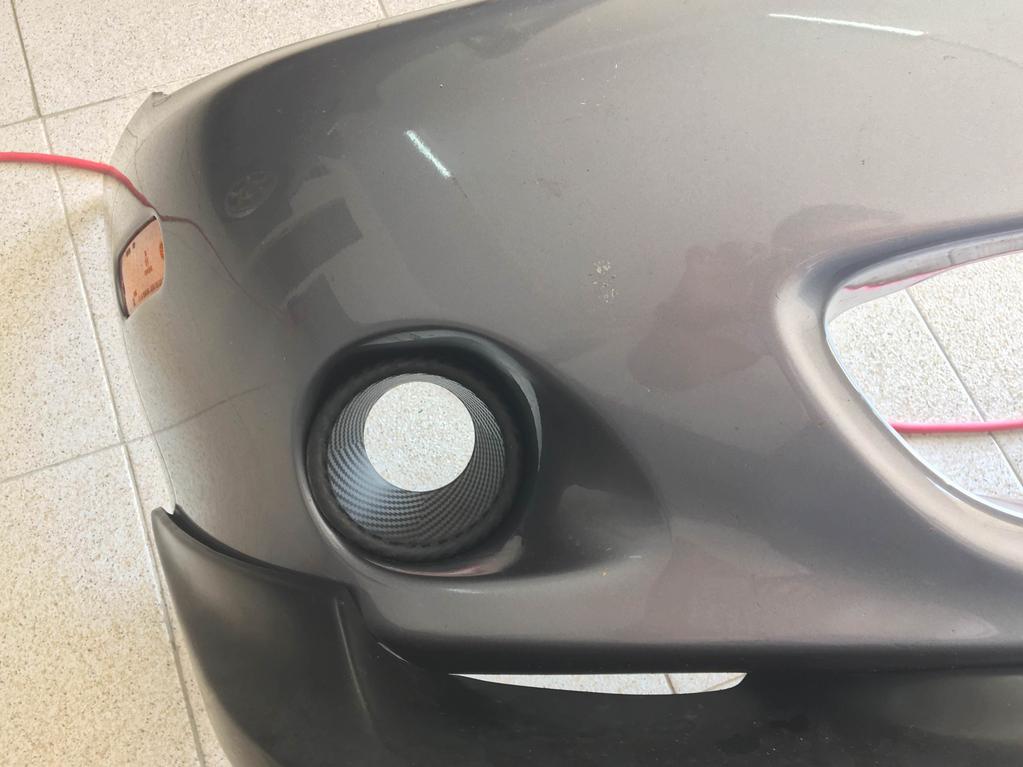
I started mocking up the oil cooler today in my NB2, replaced the fog light cover with this to get some air flow:
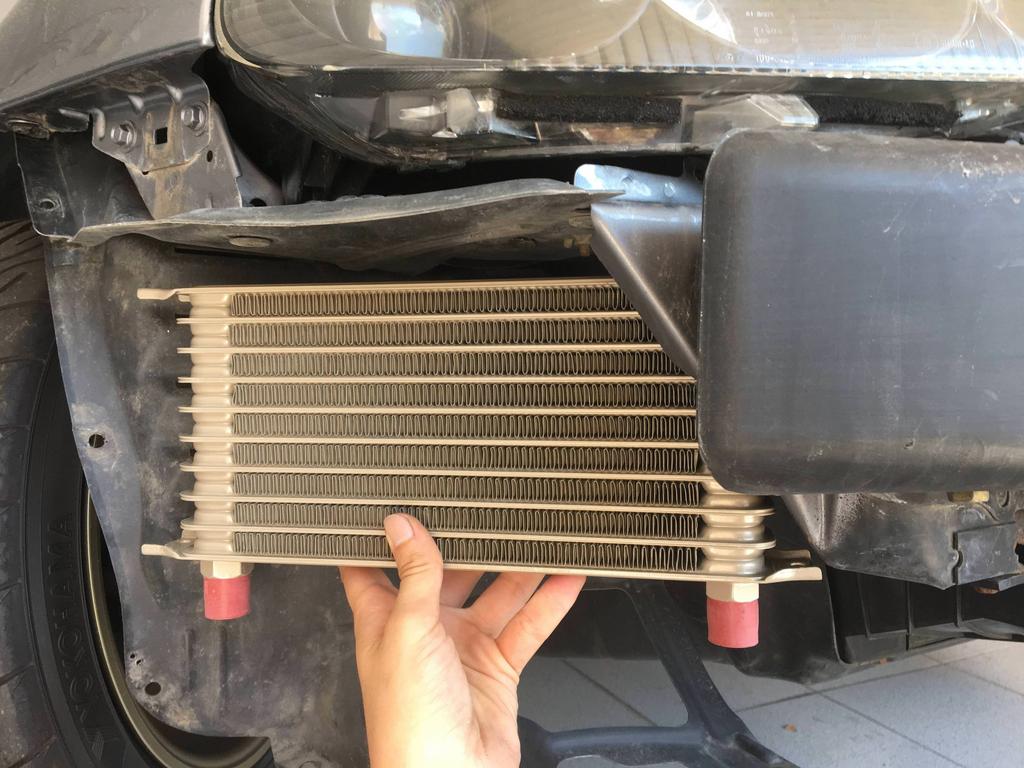
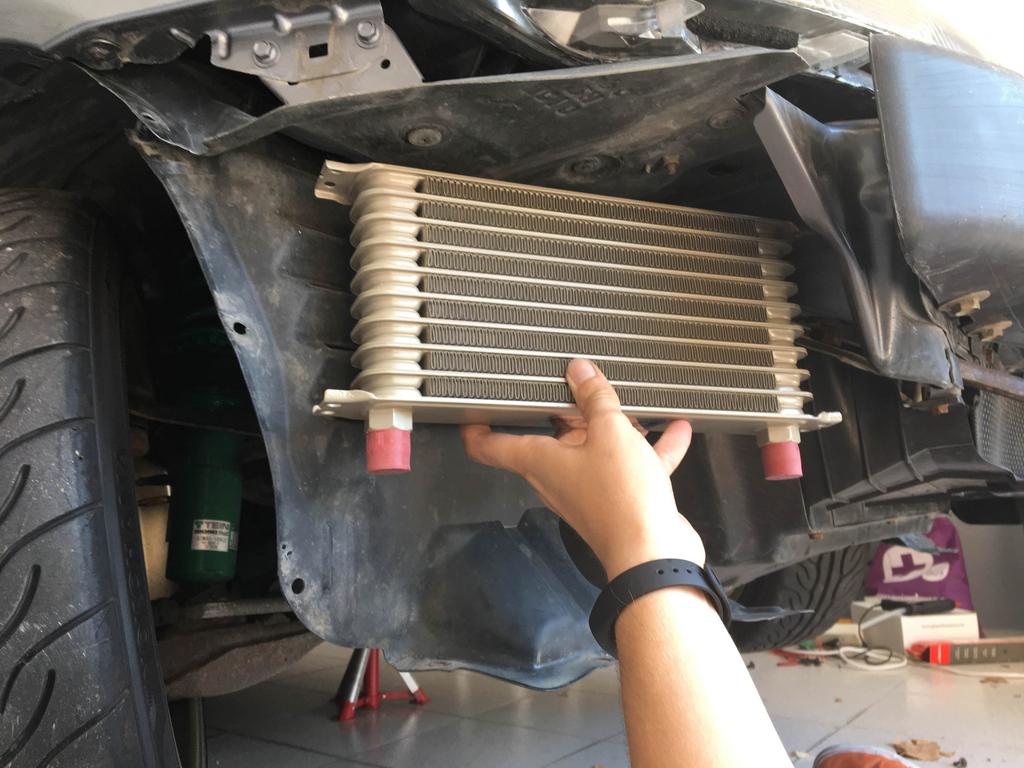
But I don't know if the oil cooler I bought is too big. Do you think I can make it fit? I am also gathering parts for a turbo and I'm worried the piping might interfere:
Your intercooler plumbing will take up a lot of real estate and there aren't too many options routing the coldside so figure that out first before going too far with the oil cooler install since that'll dictate what will and wont fit.
I mounted my cooler in the same location with the hoses off the bottom. The topic of the inlet location came up in my build thread and it was pointed out that the oil is thick enough to push the air out. I verified this with an IR heat gun, temps were even across the core.




 0
0