When you click on links to various merchants on this site and make a purchase, this can result in this site earning a commission. Affiliate programs and affiliations include, but are not limited to, the eBay Partner Network.
So I've been reading a lot lately about fueling and AFR target maps.
A whole lot of information, but for me it looks like there is some contradicting information.
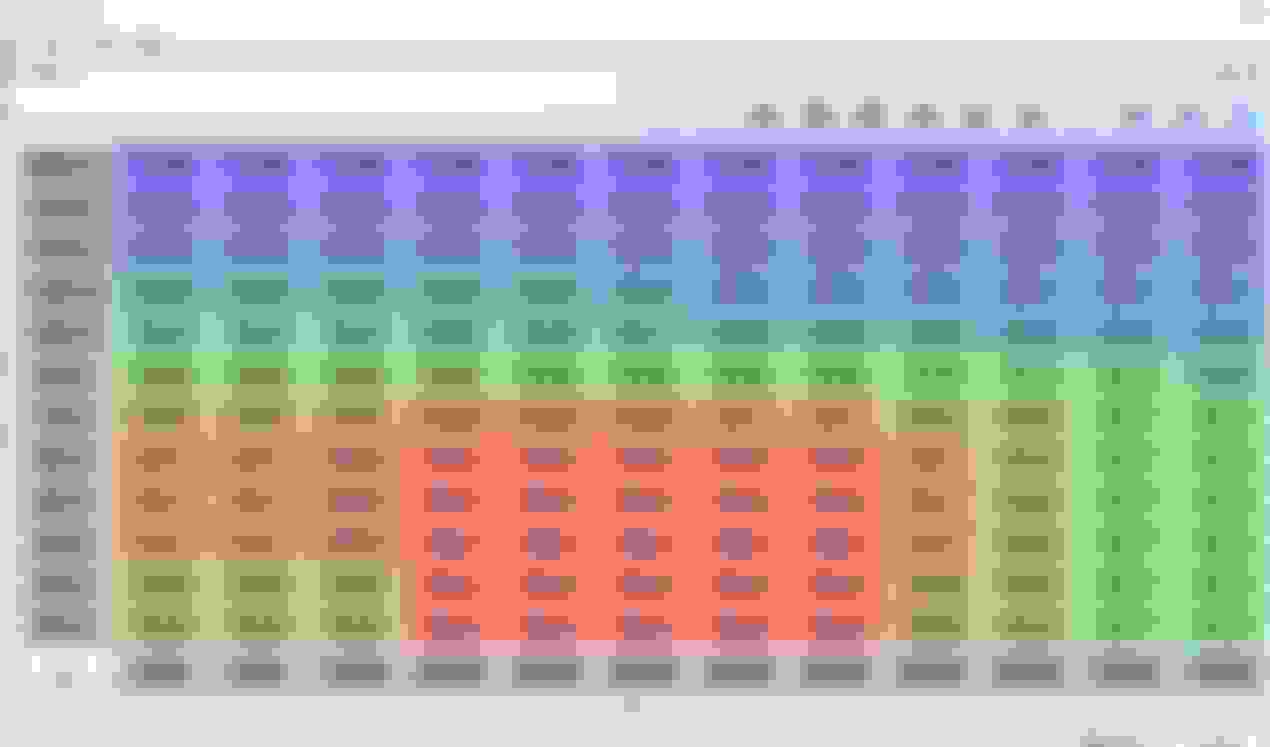
Main question is; what AFR should I target around 100 kPa (under 12 AFR?)
I make a lot of highway miles, so I want to have the tune optimized for cruising (mpg) but safe when I go on the throttle.
'92 1.6 with Kraken turbo kit, Garrett 2554R, 3" downpipe, 700cc bosch and 0.7 bar boost, running euro95/ron95 fuel (91 PON I guess).
MS3.
Hope to get some feedback on the maps. Thanks a lot!
Do yourself a favor and invest in educating yourself instead of asking the masses. You will get between 4 and 9 incorrect or inaccurate answers for every correct answer. Believe nothing on FaceBook.
There are numerous reviewed for accuracy books out there, here are a few I would recommend.
Unfortunately, people get tired of answering these types of questions and refer many to do more studying. Tuning is very application specific so without becoming very knowledgeable/experienced there will always be some benefit from learning what others have done with similar applications.
Tuning for economy requires that you go for a cruise at the speeds that you run for long periods at a constant rate. I often run country roads at 45-50mph and the freeway at 65-75mph. Log these and look at which cells you use. Tune them to the max AFR that your system will allow, which is mostly based on your spark plug gap. Leaner mixtures require a larger gap. E.g. if your output is high which requires a small plug gap of .025" then you will be limited to 14.5-15.0 for this application. Leaner than ideal will result in a lean surge which will cause an incorrect reading from the O2 sensor. The miss causes the mixture to show lean. With a lower output you might be able to run a gap of .030-.035 which might accommodate 15-16afr. Lean mixtures burn slower and require more advance to coincide with the specific cruise afr cells. Not enough timing will increase the EGT.
Specifically, at 15:1 these engines might only need 32degs and at 16:1 maybe 38deg. I personally recommend just targeting 15 with 32deg and for higher outputs on gas 14/28-30. I do not recommend carrying the cells into the higher rpm range past the cruise area. Often, I see someone will carry the cruise area all the way to redline. If your cruise is from 3krpm to 4.5krpm than after 4.5krpm the afr should be more reasonable. Often this area is used to accelerate under higher load when shifting.
For power with gasoline the general rule of thumb to reduce combustion temps is an afr below 12:1. At 100kpa there is an increase in the pumping efficiency, increase in contribution from the turbo and output relative to NA. In lower load situations it might not be an issue but running top gear up a hill at 100kpa will be a different story. I always here of tunes that were great until they weren't, sometimes even after much use. Mainly because the initial usage was X and then there was usage 1.2X or X+. I always have two tunes. One for the street and a more conservative tune for track days. Sometimes much more conservative.
If it were my car I’d personally target 11.6:1, but since you’re only running 0.7bar there’s no reason why up to 12:1 wouldn’t be fine. For 100kpa, 12.6:1 is what I always targeted, but up to 13.0:1 would be still be fine.
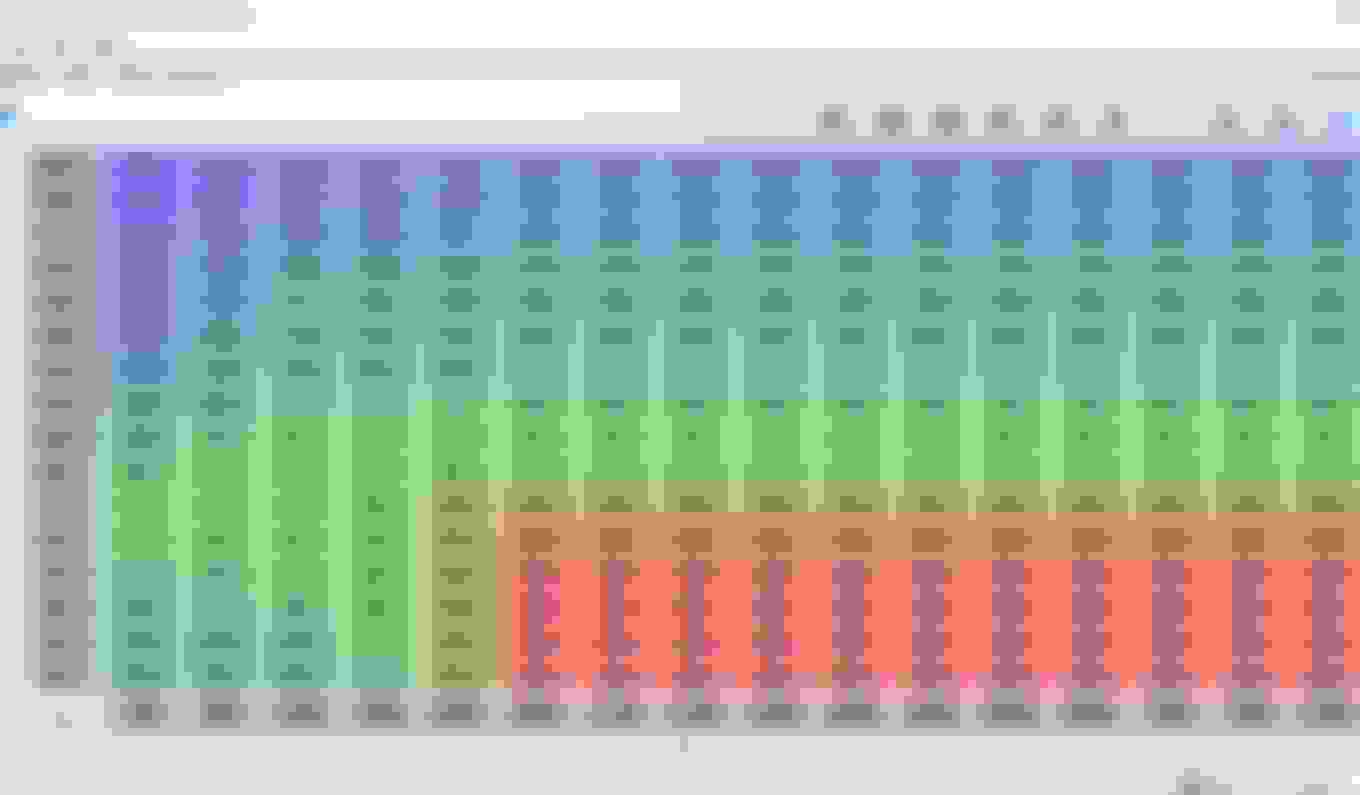
Only thing I’d recommend changing is add more timing in as rpm’s increase. You have a small turbo that is already going to result in low end grunt and then it will want to fall off on the top end. Albeit, at only 0.7 bar this shouldn’t be too noticeable. Regardless, by adding more timing in the top end you’ll keep the torque from falling off as hard. If the timing in your midrange is safe, the timing on the top end is leaving a lot on the table. This also applies to lower load cells too, if AFR targets are consistent. (Edit in bold)
I’ve attached a random example to show what would be considered normal. Ignore the absolute numbers, but take note of how the ignition advance increases as RPMs do too.
Last edited by Watterson02; Jun 25, 2024 at 01:48 PM.
This is not correct. The timing does not have to increase with the rpm and especially from anomalies. The timing is mainly relative to the combustion event and engine speed. The longer the event the more timing is required and conversely shorter requires less.
It is true that cycle time is reduced with engine speed which dictates a need to increase the timing. This is a basic trend that is only true if combustion is a constant. When you have an area that has a lean mixture, high AFR there will be a need to increase the timing to compensate for the slower combustion process. Once out of the lean cruise region on the map the timing should be adjusted for the AFR. I do not recommend running the lean cruise AFR all the way to redline. Therefore, the timing should not increase incrementally from this anomaly.
Originally Posted by Watterson02
If it were my car I’d personally target 11.6:1, but since you’re only running 0.7bar there’s no reason why up to 12:1 wouldn’t be fine. For 100kpa, 12.6:1 is what I always targeted, but up to 13.0:1 would be still be fine.
Only thing I’d recommend changing is add more timing in as rpm’s increase. You have a small turbo that is already going to result in low end grunt and then it will want to fall off on the top end. Albeit, at only 0.7 bar this shouldn’t be too noticeable. Regardless, by adding more timing in the top end you’ll keep the torque from falling off as hard. If the timing in your midrange is safe, the timing on the top end is leaving a lot on the table. This also applies to lower load cells too.
I’ve attached a random example to show what would be considered normal. Ignore the absolute numbers, but take note of how the ignition advance increases as RPMs do too.
This is not correct. The timing does not have to increase with the rpm and especially from anomalies. The timing is mainly relative to the combustion event and engine speed. The longer the event the more timing is required and conversely shorter requires less.
It is true that cycle time is reduced with engine speed which dictates a need to increase the timing. This is a basic trend that is only true if combustion is a constant. When you have an area that has a lean mixture, high AFR there will be a need to increase the timing to compensate for the slower combustion process. Once out of the lean cruise region on the map the timing should be adjusted for the AFR. I do not recommend running the lean cruise AFR all the way to redline. Therefore, the timing should not increase incrementally from this anomaly.
I edited my post since you’re correct when AFR targets change alongside rpms. It still very much so applies to full throttle where the target AFR is consistent though. Regardless, those high load cells were more of my concern when writing that than the low load cells.
Ok, the high load cells typically will increase from left to right. There are times that I will increase the timing in an out of sequence trend to increase torque in specific areas. Usually off idle or pre boost and then back to the general trend.
Originally Posted by Watterson02
I edited my post since you’re correct when AFR targets change alongside rpms. It still very much so applies to full throttle where the target AFR is consistent though. Regardless, those high load cells were more of my concern when writing that than the low load cells.
Although I did not respond earlier, I did read up with all your reactions and feedback. Great info. I used it to adjust the maps and are planning to go for a test drive in the weekend.
Will report back with the results, but if there is anymore feedback on the improved maps, happy to hear it.



 100th topic about AFR targets (1.6 gt2554r)


 0
0