


22PSI, 260WHP/246WTQ, WTF?


Actually, it's evolutionary from the days of pistons the size of large coffee cans powering bombers full of scared-18 year olds fighting *****. Alcohol was used as an anti-freeze agent to handle the temperatures those aircraft encountered.
Reply
 0
0

0

Thread Starter
Junior Member
iTrader: (5)
Joined: Oct 2011
Posts: 400
Total Cats: 23
From: San Diego, CA
And some pictures for your viewing pleasure.
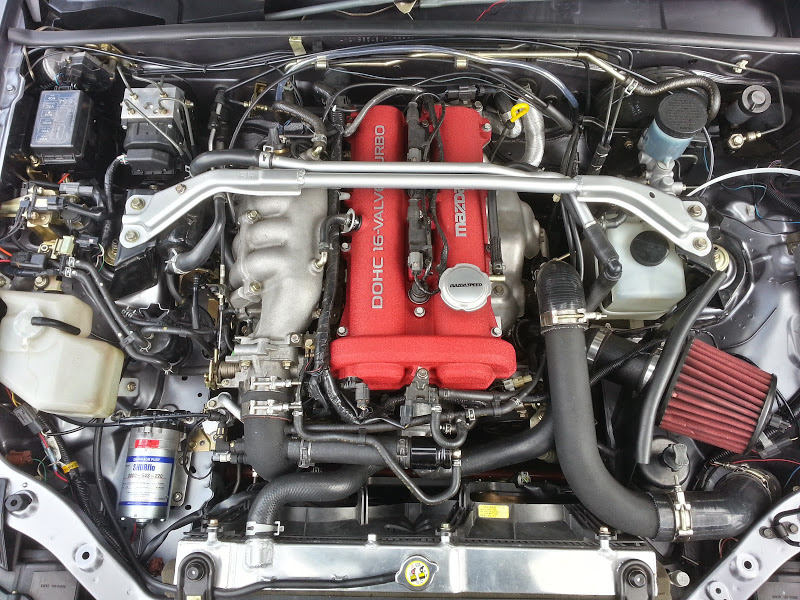
Need to clean up a few loose wires still (oil temp, det can hose, old spray motor leads). Red/black wires very top by wipers is temp motor spray activation LED.
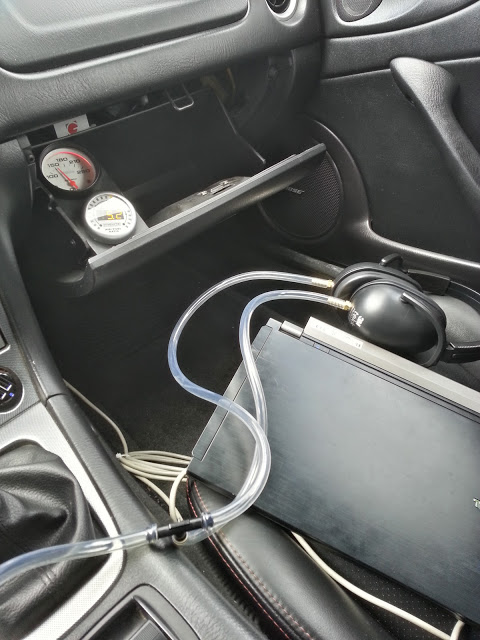
My tuning tools.
Need to clean up a few loose wires still (oil temp, det can hose, old spray motor leads). Red/black wires very top by wipers is temp motor spray activation LED.
My tuning tools.
Reply
0
0

Just spitballing here:
How low on the block is the mount bracket? And is there any chance you are actually picking up some noise from the chassis or engine movement instead of actual knock?
I'm not at all familiar with the NB 1.8, but on the NA 1.6 the vestigial knock sensor mount (carried over from the GTX) is just under the head, between cyls 2&3.
How low on the block is the mount bracket? And is there any chance you are actually picking up some noise from the chassis or engine movement instead of actual knock?
I'm not at all familiar with the NB 1.8, but on the NA 1.6 the vestigial knock sensor mount (carried over from the GTX) is just under the head, between cyls 2&3.
Reply
0
0

Nope nope nope
You have that completely *** backwards
Almost everybody running water/meth injection would be better off with just water (with a touch of alcohol added to kill algae). The meth is evolutionary baggage from the days of carbs and turbos and no intercoolers.
You have that completely *** backwards
Almost everybody running water/meth injection would be better off with just water (with a touch of alcohol added to kill algae). The meth is evolutionary baggage from the days of carbs and turbos and no intercoolers.
I would peg it at about 250 rw-dynojet-hp but I have not been able to get it on a dyno since putting in the clutch that wouldn't slip at 16 psi and the 3.6 gears.
Last edited by vteckiller2000; Apr 5, 2014 at 05:51 PM.
Reply
0
0
Thread Starter
Junior Member
iTrader: (5)
Joined: Oct 2011
Posts: 400
Total Cats: 23
From: San Diego, CA
I've got those 2 upper rows set like that for testing knock. I set the timing in boost and know exactly what it's going to be. No interpolation between this and that. Once I much better understand what my motor wants, I'll make them look better.
Reply
0
0

It blows my mind that people still do a 50/50 mix and then either pull fuel out of their tune or just deal with black smoke belching 10.0:1 AFRs.
All the Mustang retards do this and then **** their pants when anybody (me) tries to suggest otherwise. Telling them not to mix meth in makes them almost as mad as the idea of gays marrying.
Reply
0
0
Thread Starter
Junior Member
iTrader: (5)
Joined: Oct 2011
Posts: 400
Total Cats: 23
From: San Diego, CA
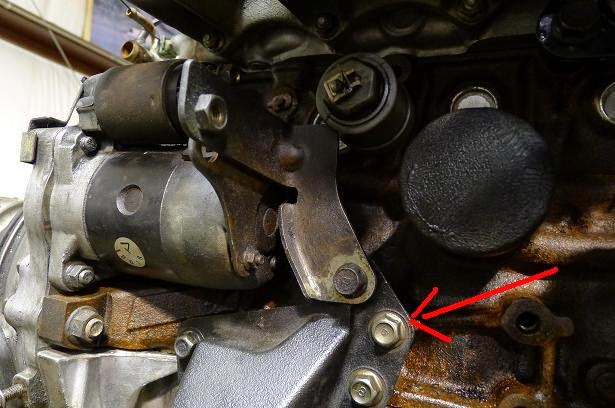
Just spitballing here:
How low on the block is the mount bracket? And is there any chance you are actually picking up some noise from the chassis or engine movement instead of actual knock?
I'm not at all familiar with the NB 1.8, but on the NA 1.6 the vestigial knock sensor mount (carried over from the GTX) is just under the head, between cyls 2&3.
How low on the block is the mount bracket? And is there any chance you are actually picking up some noise from the chassis or engine movement instead of actual knock?
I'm not at all familiar with the NB 1.8, but on the NA 1.6 the vestigial knock sensor mount (carried over from the GTX) is just under the head, between cyls 2&3.
Reply
0
0

slmhofy - your ms.com thread references a small 16G:
"MHI (Mitsubishi Heavy Industries) - TD05H (frame size) - small 16G (compressor size)
For simplicity, the term “16G” is used in referencing anything having to do with the Mitsubishi turbo in the rest of this article."
Are you running a small 16G or an EVOIII 16G wheel?
"MHI (Mitsubishi Heavy Industries) - TD05H (frame size) - small 16G (compressor size)
For simplicity, the term “16G” is used in referencing anything having to do with the Mitsubishi turbo in the rest of this article."
Are you running a small 16G or an EVOIII 16G wheel?
Reply
0
0
What did you do the the head/combustion chambers? You simply should not have knock where you are in this engine. You have some sort of mechanical problem causing knock or the perception of knock.
Reply
0
0
Yep, I've already been in contact with him, to a small extent. I am running the BNR EVOIII 16G modified MSM turbo.
Ok, I see now you are running the EVOIII wheel - thanks for the clarification.
For clarification for others in the thread - I'm basically running the same turbo as slmhofy. I'm right at 300whp on 91oct at 5200' altitude. I do however have a ported head and VVT. Would that make up for a 40whp difference? I don't know.
Ok, I see now you are running the EVOIII wheel - thanks for the clarification.
For clarification for others in the thread - I'm basically running the same turbo as slmhofy. I'm right at 300whp on 91oct at 5200' altitude. I do however have a ported head and VVT. Would that make up for a 40whp difference? I don't know.
Reply
0
0
Thread Starter
Junior Member
iTrader: (5)
Joined: Oct 2011
Posts: 400
Total Cats: 23
From: San Diego, CA
How audible should the ping/knock be with det cans?
I originally had the cheap *** Harbor Freight stethoscope setup, but that **** would hurt my hears. Physically and through how loud the engine noise was. With this setup now, it's much more quieter. Just wondering how loud the PING should be when it does show up. Is it muffled, faint, loud, sharp. Just want to be sure of what I'm trying not to hear.
I originally had the cheap *** Harbor Freight stethoscope setup, but that **** would hurt my hears. Physically and through how loud the engine noise was. With this setup now, it's much more quieter. Just wondering how loud the PING should be when it does show up. Is it muffled, faint, loud, sharp. Just want to be sure of what I'm trying not to hear.
Reply
0
0
How audible should the ping/knock be with det cans?
I originally had the cheap *** Harbor Freight stethoscope setup, but that **** would hurt my hears. Physically and through how loud the engine noise was. With this setup now, it's much more quieter. Just wondering how loud the PING should be when it does show up. Is it muffled, faint, loud, sharp. Just want to be sure of what I'm trying not to hear.
I originally had the cheap *** Harbor Freight stethoscope setup, but that **** would hurt my hears. Physically and through how loud the engine noise was. With this setup now, it's much more quieter. Just wondering how loud the PING should be when it does show up. Is it muffled, faint, loud, sharp. Just want to be sure of what I'm trying not to hear.
Reply
0
0
It seems that the consensus thus far is that you ought to be able to run more timing, so ensuring that you are actually hearing knock (since you don't have a knock sensor to log) would be beneficial. If you are hearing other crap through the cans and limiting the timing because of that, you are leaving a lot on the table.
My : I'd move the tube to a "dedicated" location with no other attachments, perhaps the bung above the oil pressure sending unit if that is threaded. The less you have interfering with the signal the cleaner it'll be.
Do you have a real oil pressure gauge? A lot of people say they see the needle will bounce with detonation, are you seeing that?
My
: I'd move the tube to a "dedicated" location with no other attachments, perhaps the bung above the oil pressure sending unit if that is threaded. The less you have interfering with the signal the cleaner it'll be. Do you have a real oil pressure gauge? A lot of people say they see the needle will bounce with detonation, are you seeing that?
Reply
0
0


Joined: Oct 2011
Posts: 5,732
Total Cats: 830
From: Detroit (the part with no rules or laws)
Hmm...
So i read through this thread and i don't understand.
22psi and only 260hp?
Caused by bad tune and crappy hotside parts?
Still doesn't seem right.
He's not running much less timing than i did when i made 260hp at only 12psi. Granted i have a different turbo, but i still have a cast log manifold, and cast turndown / mixing housing...
So i read through this thread and i don't understand.
22psi and only 260hp?
Caused by bad tune and crappy hotside parts?
Still doesn't seem right.
He's not running much less timing than i did when i made 260hp at only 12psi. Granted i have a different turbo, but i still have a cast log manifold, and cast turndown / mixing housing...
Reply
0
0
Thread Starter
Junior Member
iTrader: (5)
Joined: Oct 2011
Posts: 400
Total Cats: 23
From: San Diego, CA
It seems that the consensus thus far is that you ought to be able to run more timing, so ensuring that you are actually hearing knock (since you don't have a knock sensor to log) would be beneficial. If you are hearing other crap through the cans and limiting the timing because of that, you are leaving a lot on the table.
My : I'd move the tube to a "dedicated" location with no other attachments, perhaps the bung above the oil pressure sending unit if that is threaded. The less you have interfering with the signal the cleaner it'll be.
Do you have a real oil pressure gauge? A lot of people say they see the needle will bounce with detonation, are you seeing that?
My
: I'd move the tube to a "dedicated" location with no other attachments, perhaps the bung above the oil pressure sending unit if that is threaded. The less you have interfering with the signal the cleaner it'll be. Do you have a real oil pressure gauge? A lot of people say they see the needle will bounce with detonation, are you seeing that?
And I have a real oil pressure Sender, and the gauge has been modified to more accurately show pressure differentials, but the gauge is still internally dampened, which I think would make it very numb to knock. It reacts pretty slowly to pressure changes.
Reply
0
0
I will look into moving the detcan tube.
And I have a real oil pressure Sender, and the gauge has been modified to more accurately show pressure differentials, but the gauge is still internally dampened, which I think would make it very numb to knock. It reacts pretty slowly to pressure changes.
And I have a real oil pressure Sender, and the gauge has been modified to more accurately show pressure differentials, but the gauge is still internally dampened, which I think would make it very numb to knock. It reacts pretty slowly to pressure changes.
Reply
0
0

Engines don't knock AND make more power. If you think it's false knock (which it likely is), rent an hour or two of dyno time, add a degree or so at a time and watch the power increase. When the gains start slowing down, you're good.
Then throw away your det cans.
Then throw away your det cans.
Reply
0
0
Thread Starter
Junior Member
iTrader: (5)
Joined: Oct 2011
Posts: 400
Total Cats: 23
From: San Diego, CA
Engines don't knock AND make more power. If you think it's false knock (which it likely is), rent an hour or two of dyno time, add a degree or so at a time and watch the power increase. When the gains start slowing down, you're good.
Then throw away your det cans.
Then throw away your det cans.
So if everything else is working correctly, our engines should stop making power by adding more timing at full boost before it knocks?
Reply
0
0
Whether it knocks or not is relative to the fuel being used, or rather the octane content.
It's possible to have more octane than a engine requires and adding timing will just put you on the back side of the MBT peak. In that case you will generally lose power and not hear any knock. This is because the flame front is moving too slowly and still never reaches the piston on the top of the up stroke.
My post was in regards to your original post where you said "increasing timing improves my engine's performance, but I hear knock" (paraphrasing).
If increasing timing improves power, then it's not knocking. Whatever you're hearing is something else in the drivetrain that is resonating near the same frequency.
The fact that performance is increasing, means that your timing was too conservative and the flame front was chasing the piston down the bore. Increasing the timing allows the flame front to reach the piston just as it starts to make the down stroke on the combustion cycle, making use of all of the fuel's thermal energy. Catching the piston at this very moment is referred to as MBT (maximum brake torque). Generally we tune to just before MBT, for safety.
Knock happens when the ignition timing is too aggressive and the expanding flame front hits the piston as it's still on the up stroke (compression). The pressure of the flame front pressing against the piston, that is still moving up, means that a large mount of the thermal energy of the fuel is wasted trying to stop the pistons up stroke. So you will see less power output on a dyno and you will very likely hear knock as the engines internal tolerances are overcome and hard parts are actually touching each other. This is what generally causes spun rod bearings and catastrophic engine failures.
So, engines don't knock AND make more power.
It's possible to have more octane than a engine requires and adding timing will just put you on the back side of the MBT peak. In that case you will generally lose power and not hear any knock. This is because the flame front is moving too slowly and still never reaches the piston on the top of the up stroke.
My post was in regards to your original post where you said "increasing timing improves my engine's performance, but I hear knock" (paraphrasing).
If increasing timing improves power, then it's not knocking. Whatever you're hearing is something else in the drivetrain that is resonating near the same frequency.
The fact that performance is increasing, means that your timing was too conservative and the flame front was chasing the piston down the bore. Increasing the timing allows the flame front to reach the piston just as it starts to make the down stroke on the combustion cycle, making use of all of the fuel's thermal energy. Catching the piston at this very moment is referred to as MBT (maximum brake torque). Generally we tune to just before MBT, for safety.
Knock happens when the ignition timing is too aggressive and the expanding flame front hits the piston as it's still on the up stroke (compression). The pressure of the flame front pressing against the piston, that is still moving up, means that a large mount of the thermal energy of the fuel is wasted trying to stop the pistons up stroke. So you will see less power output on a dyno and you will very likely hear knock as the engines internal tolerances are overcome and hard parts are actually touching each other. This is what generally causes spun rod bearings and catastrophic engine failures.
So, engines don't knock AND make more power.
Reply
4
4


