


MSM Exhaust Manifold Pressure Test


Thread Starter
Junior Member
iTrader: (5)
Joined: Oct 2011
Posts: 400
Total Cats: 23
From: San Diego, CA
 MSM Exhaust Manifold Pressure Test
I've always wondered what the back pressure was in the exhaust manifold. I know others have done some tests measuring the back pressure in the downpipe/exhaust, but I've never seen anything done between the turbine and head.
This just seems like one of those things you actually have to measure to have a good understand of what's happening with the whole system.
In the big picture, it doesn't really matter what it is. It's not like I have an option to change the A/R in my turbine housing. But none the less, I wanted to see what it was doing.
Also this isn't exactly apples to apples with a stock MSM. Mine has been machined to fit an TD05 16G turbine wheel. The Inducer is the same size but the Exducer is 5mm larger. 3" Artech all the way back.
Anyone care to guess at the results?
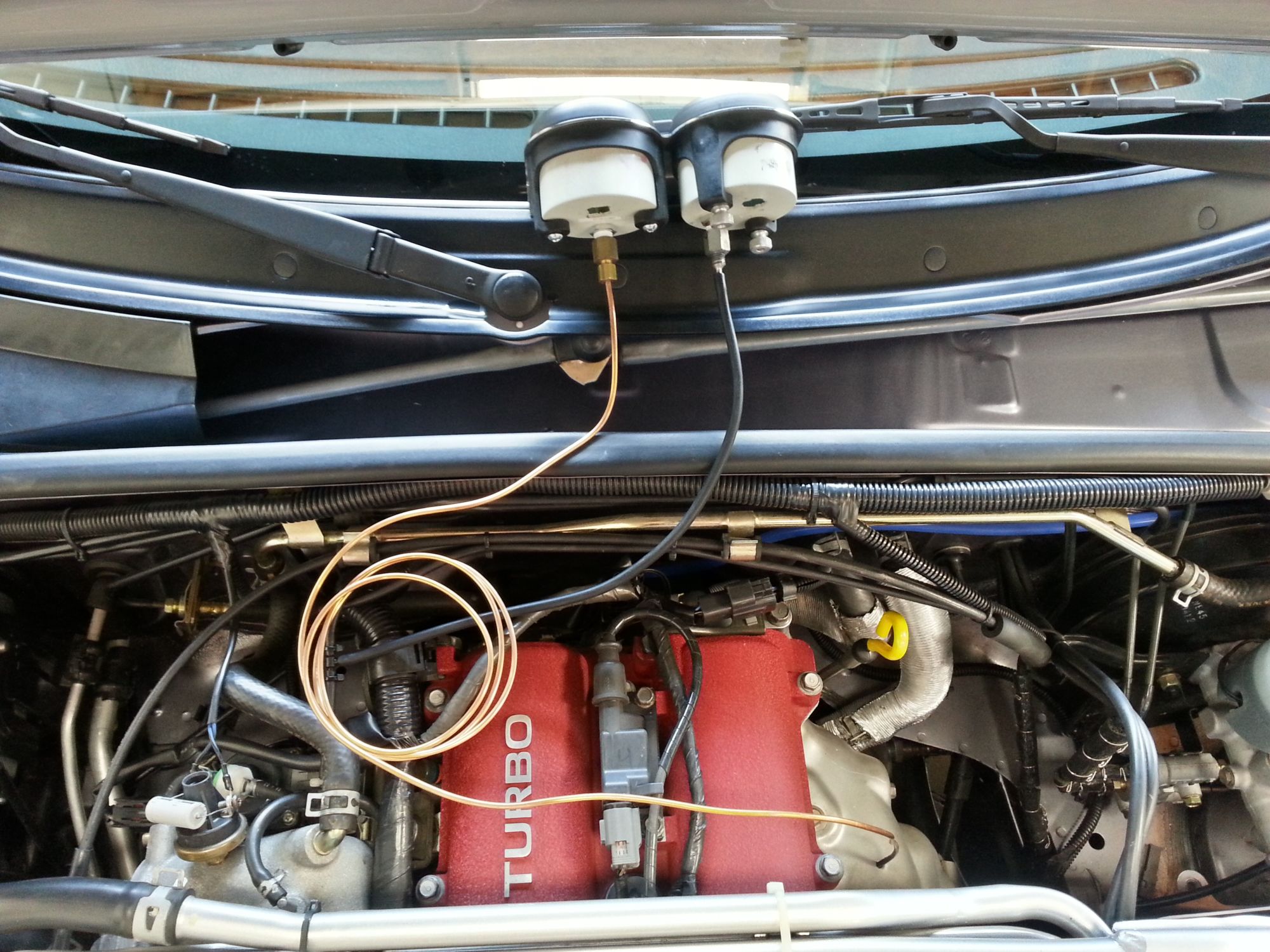
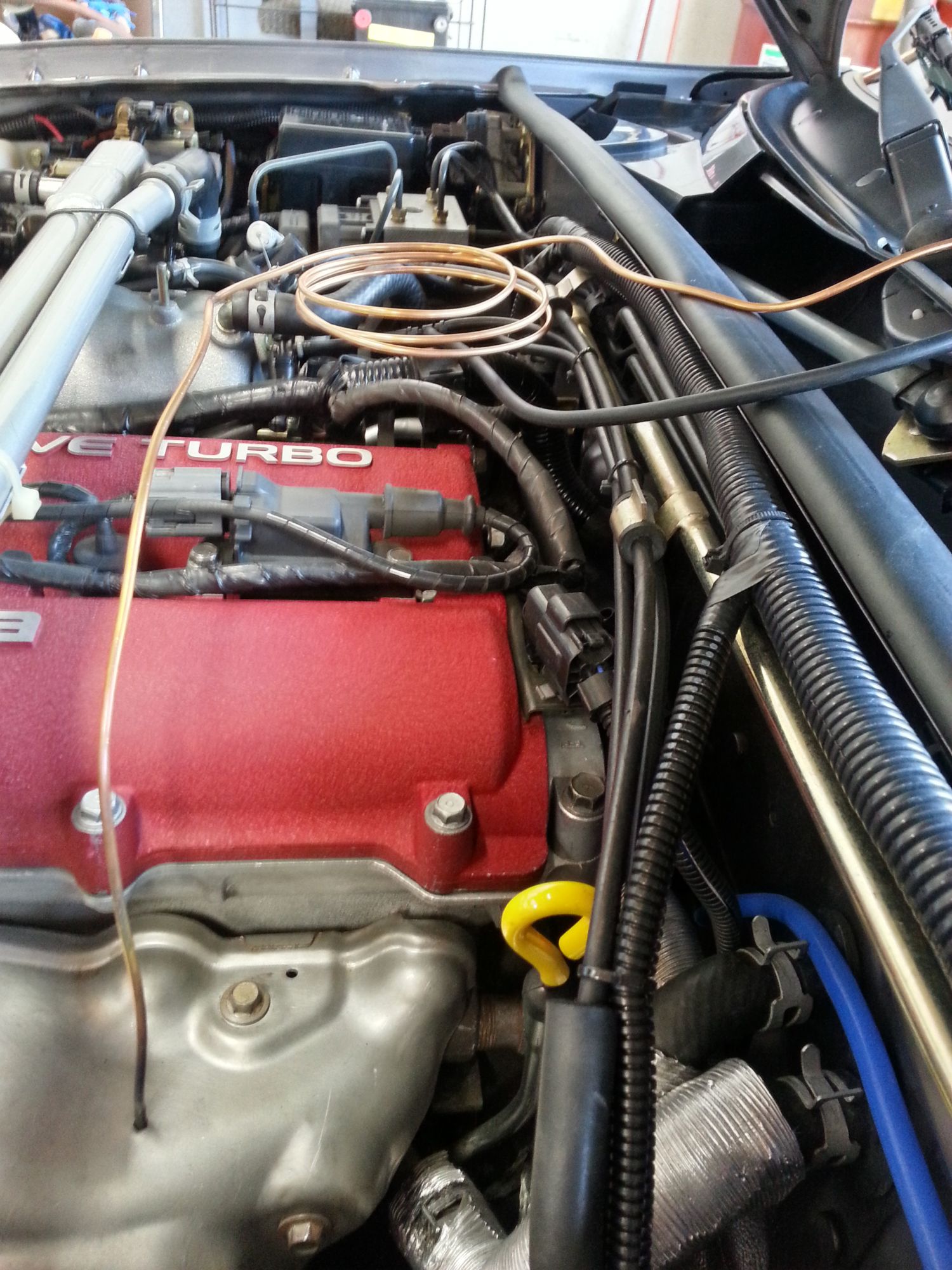
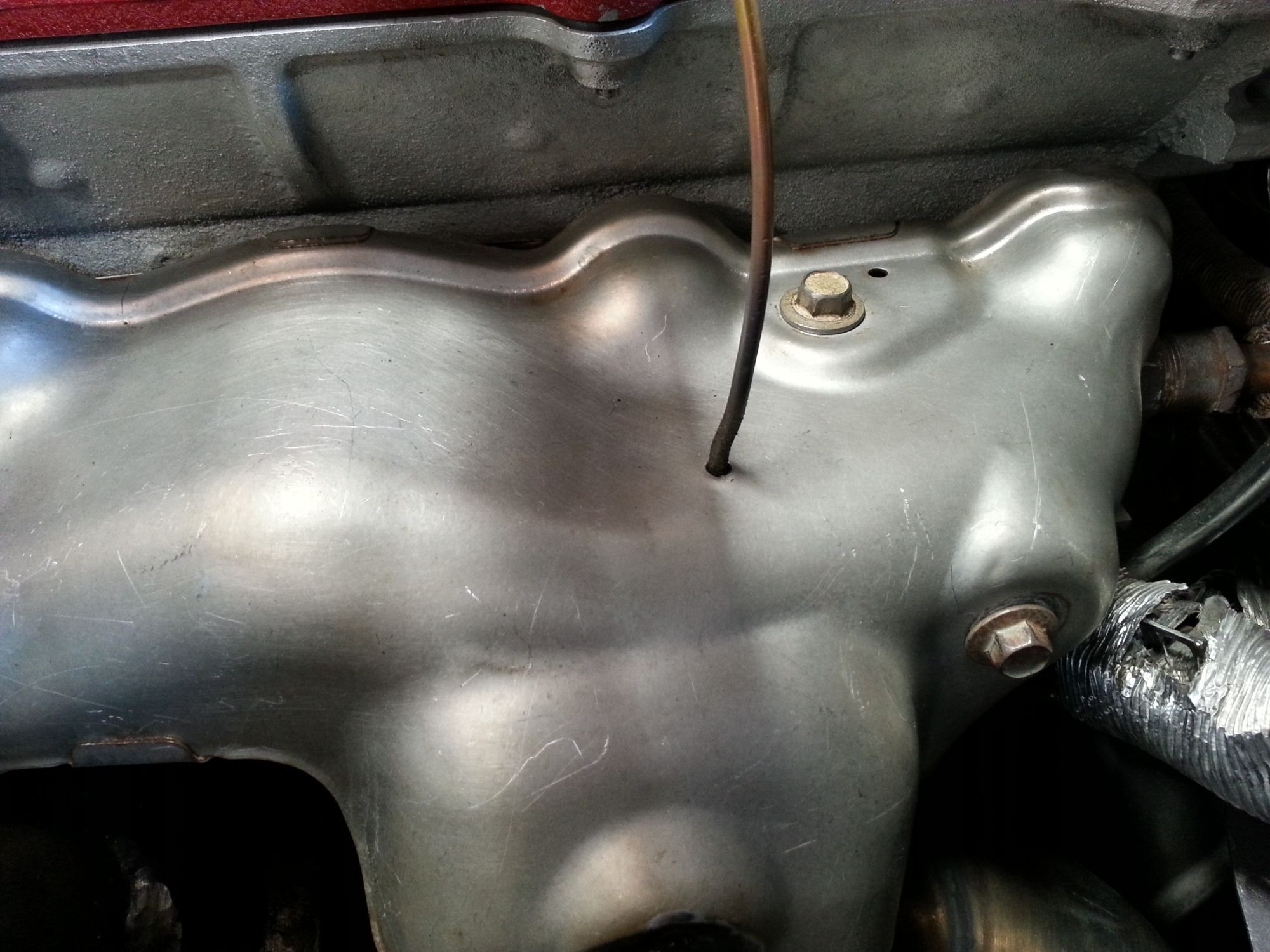

This just seems like one of those things you actually have to measure to have a good understand of what's happening with the whole system.
In the big picture, it doesn't really matter what it is. It's not like I have an option to change the A/R in my turbine housing. But none the less, I wanted to see what it was doing.
Also this isn't exactly apples to apples with a stock MSM. Mine has been machined to fit an TD05 16G turbine wheel. The Inducer is the same size but the Exducer is 5mm larger. 3" Artech all the way back.
Anyone care to guess at the results?
Reply
 1
1

1
Elite Member

Joined: Mar 2007
Posts: 5,300
Total Cats: 884
From: Santa Clara, CA
https://www.miataturbo.net/build-thr...4/#post1231551
--Ian
Reply
0
0
Thread Starter
Junior Member
iTrader: (5)
Joined: Oct 2011
Posts: 400
Total Cats: 23
From: San Diego, CA
FWIW, I logged Turbine Inlet Pressure (TIP), Turbine Outlet Pressure (TOP) and Compressor Outlet Pressure (COP) along with MAP in this post on my build thread. This is an FM2 manifold with GTX2863.
https://www.miataturbo.net/build-thr...4/#post1231551
--Ian
https://www.miataturbo.net/build-thr...4/#post1231551
--Ian
Reply
0
0


Elite Member
Joined: Mar 2007
Posts: 5,300
Total Cats: 884
From: Santa Clara, CA
Less than that, you need to look at absolute pressures, not gauge pressures.
20 psi gauge is 240 kpa, 30 psi gauge (parallax error on the video, so I can't quite tell what it says exactly) is 308. That's 1.3:1. If you assume there's 10 kpa drop in the intercooler, then it's more like 1.2:1
--Ian
20 psi gauge is 240 kpa, 30 psi gauge (parallax error on the video, so I can't quite tell what it says exactly) is 308. That's 1.3:1. If you assume there's 10 kpa drop in the intercooler, then it's more like 1.2:1
--Ian
Reply
0
0

Elite Member
Joined: Mar 2007
Posts: 5,300
Total Cats: 884
From: Santa Clara, CA
BTW, when you do this, it helps to put a needle valve in the pressure line between the manifold and the gauge/sensor and just barely crack it open. That acts as a pneumatic low-pass filter and takes a lot of of the high-frequency noise out of the signal.
--Ian
Reply
0
0
Thread Starter
Junior Member
iTrader: (5)
Joined: Oct 2011
Posts: 400
Total Cats: 23
From: San Diego, CA
Less than that, you need to look at absolute pressures, not gauge pressures.
20 psi gauge is 240 kpa, 30 psi gauge (parallax error on the video, so I can't quite tell what it says exactly) is 308. That's 1.3:1. If you assume there's 10 kpa drop in the intercooler, then it's more like 1.2:1
--Ian
20 psi gauge is 240 kpa, 30 psi gauge (parallax error on the video, so I can't quite tell what it says exactly) is 308. That's 1.3:1. If you assume there's 10 kpa drop in the intercooler, then it's more like 1.2:1
--Ian
And YES. You should definitely test it out. I've read that EFRs can actually run at or lower thatn 1:1.
Reply
0
0
Elite Member
Joined: Mar 2007
Posts: 5,300
Total Cats: 884
From: Santa Clara, CA
AIUI, most modern turbos will run in "overlap" where the ratio is slightly less than 1:1 when they're at their ideal efficiency point. My 2863 does it up to about 4500 RPM.
--Ian
Reply
0
0

Thread
Thread Starter
Forum
Replies
Last Post
Zaphod
MEGAsquirt
47
Oct 26, 2018 11:00 PM
nbdooey
Miata parts for sale/trade
9
Aug 30, 2017 09:50 PM


