


New hood louver


 New hood louver (lots o' pics)
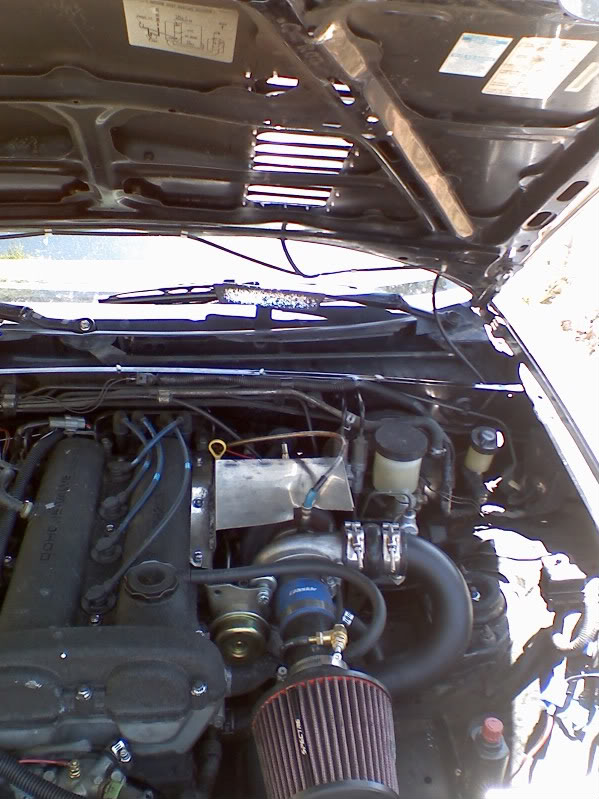
So I had my local friend fab me up a hood louver right over the turbo so that (maybe) the underhood temperatures would be lower after a hard drive. Here's the final product. Don't mind the rock chips 
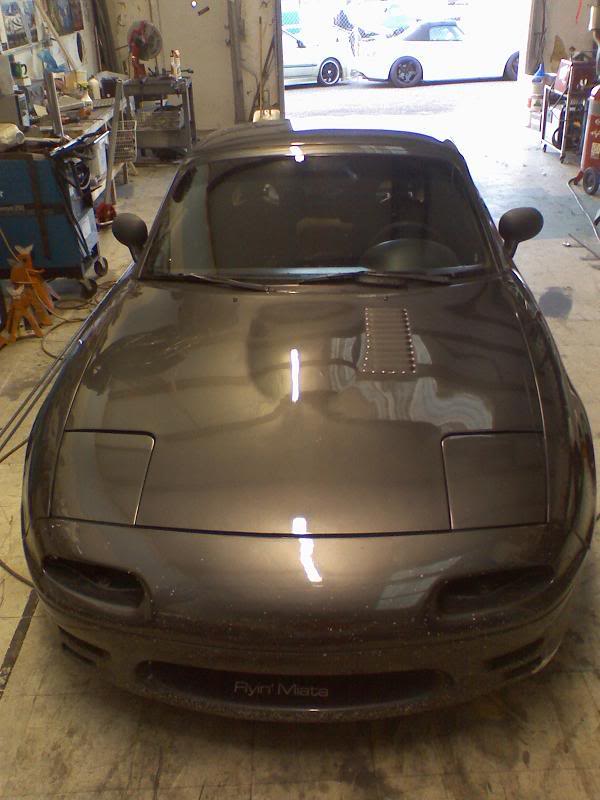
So far, so good. Considering I still have the bowser heatshield on (modded to fit the turbotony dp), there's a lot of heat coming out. I'm going to cut the heatshield so that the turbo can be fully exposed to the louver and see what happens.
As requested:
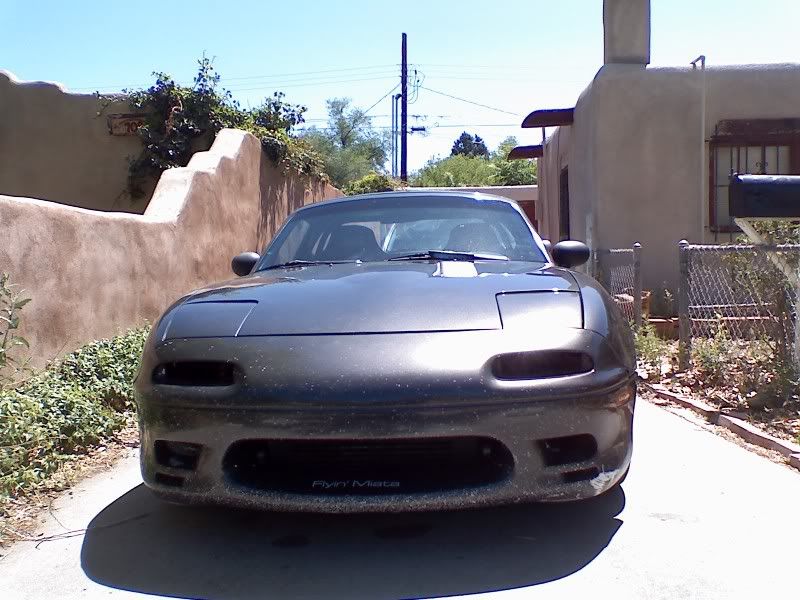
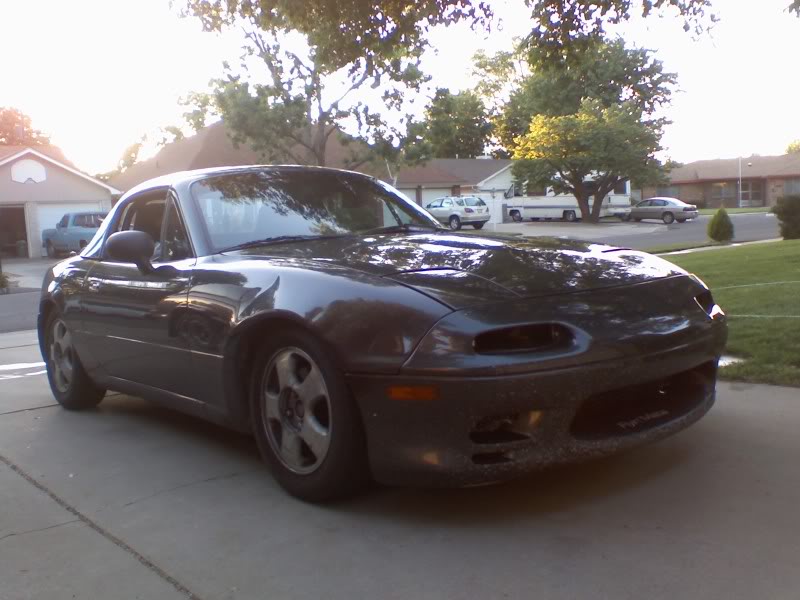
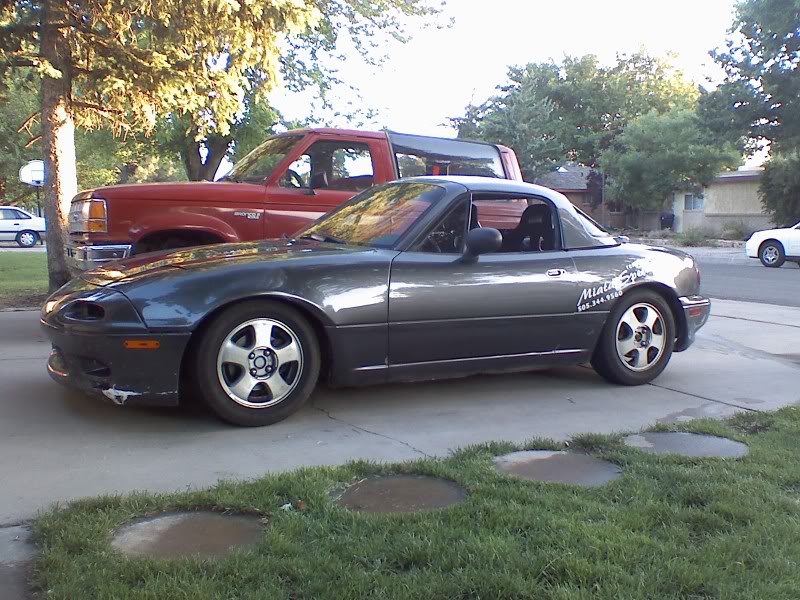
How she sits now
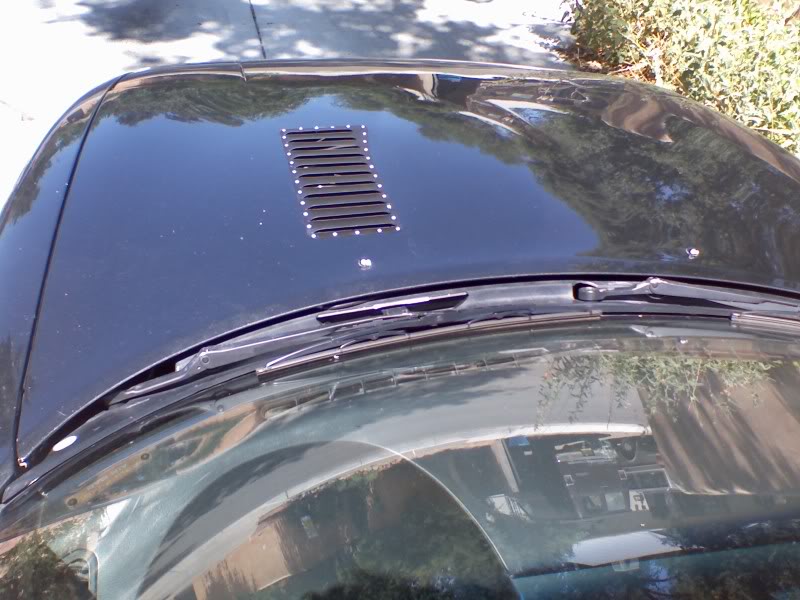
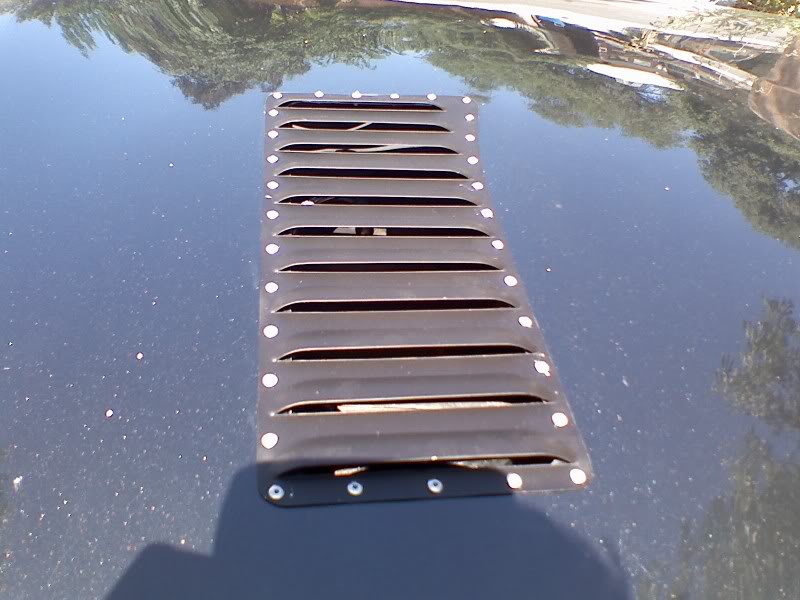
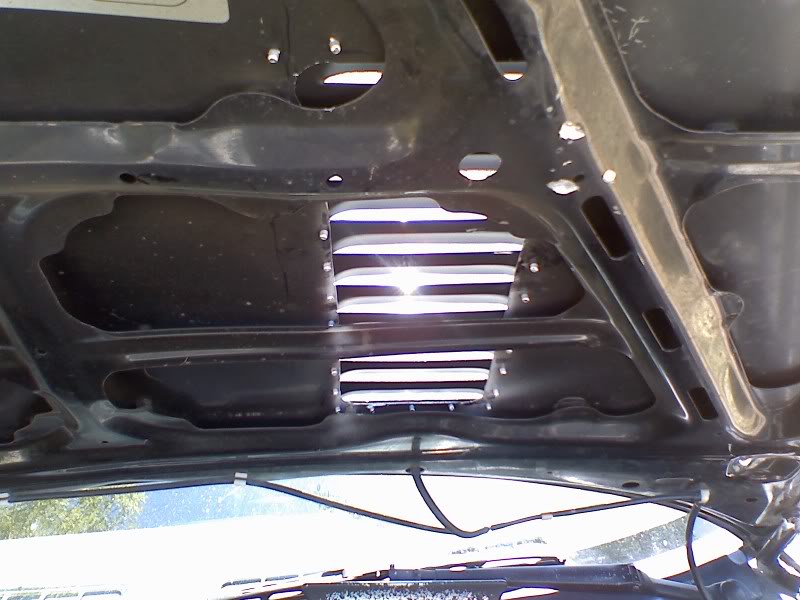
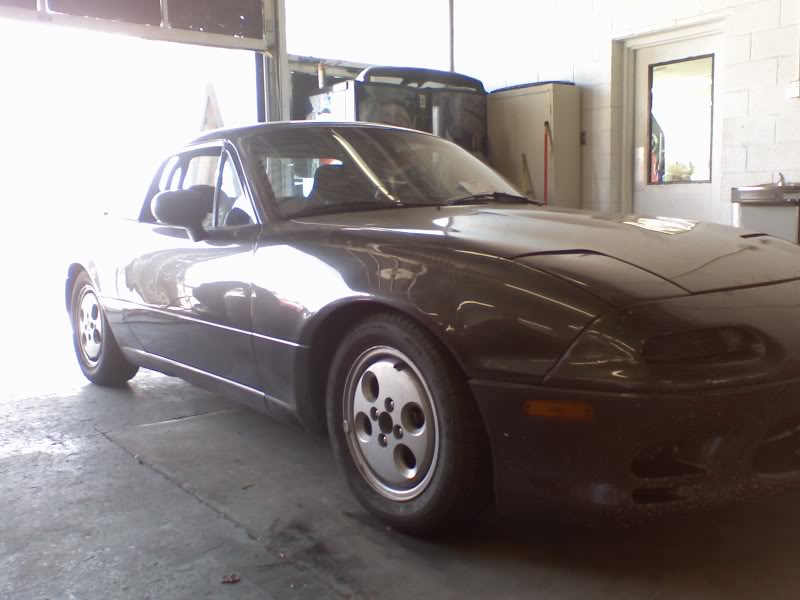
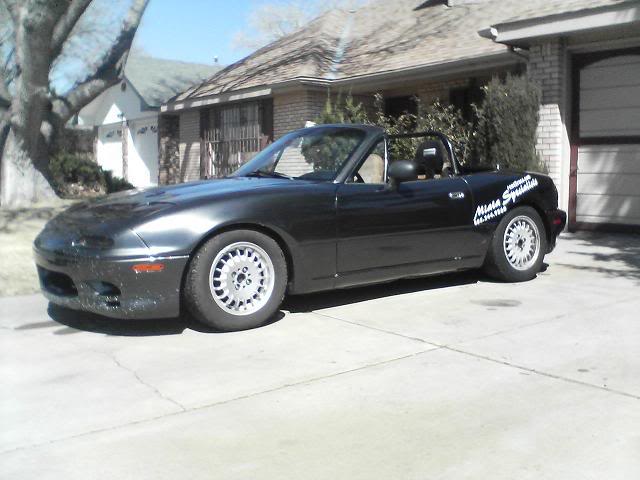
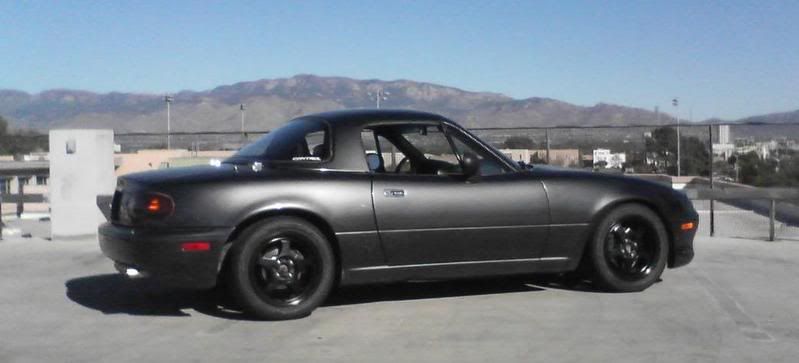
And past setups ...
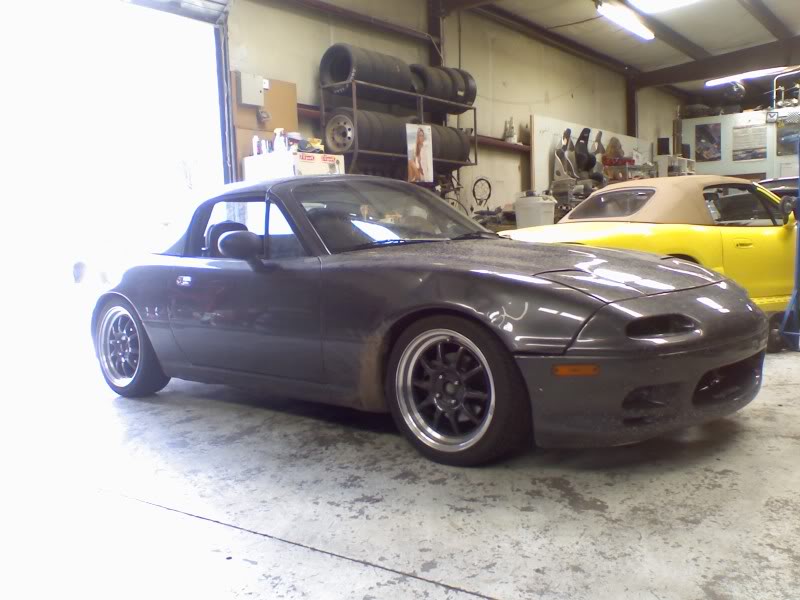
So far, so good. Considering I still have the bowser heatshield on (modded to fit the turbotony dp), there's a lot of heat coming out. I'm going to cut the heatshield so that the turbo can be fully exposed to the louver and see what happens.
As requested:
How she sits now
And past setups ...
Last edited by db84drteg; May 31, 2008 at 02:47 AM. Reason: Added pictures
Reply
 1
1

1



Reply
0
0

Joined: Jun 2006
Posts: 29,085
Total Cats: 375
From: Republic of Dallas
tape some 2 inch long yarn strands to the vent and see which way the air goes. Most vents in that location suck air in at speed.
Reply
0
0


Newb
Joined: May 2008
Posts: 13
Total Cats: 1
From: SoCal
If so, then why do all ALMS racecars have louvers on their hoods/fenders. The louver isn't at the base of the windshield where their's a high pressure area. The louver in that location (depending on the shape -its hard to see from the pic) most likely will draw air out as the air goes over the louver creates a low pressure suction at the opening of the vents, sucking air out.
0.02
Reply
0
0
Joined: Jun 2006
Posts: 29,085
Total Cats: 375
From: Republic of Dallas
Not a very accurate way to measure aerodynamics.
If so, then why do all ALMS racecars have louvers on their hoods/fenders. The louver isn't at the base of the windshield where their's a high pressure area. The louver in that location (depending on the shape -its hard to see from the pic) most likely will draw air out as the air goes over the louver creates a low pressure suction at the opening of the vents, sucking air out.
0.02
If so, then why do all ALMS racecars have louvers on their hoods/fenders. The louver isn't at the base of the windshield where their's a high pressure area. The louver in that location (depending on the shape -its hard to see from the pic) most likely will draw air out as the air goes over the louver creates a low pressure suction at the opening of the vents, sucking air out.
0.02
Reply
0
0

I was watching a deal on "this week in F1" where the show went to the red bull tunnel where Adrian Newey was using yarn. You should call him up and tell him that he's doing it wrong...after you kill yourself for being an armchair-------. You're about as useful as a football bat.
 Dammit Hustler, Like Bubba the love Sponge says, "I love you in a non ------ way" bro.
__________________
Best Car Insurance | Auto Protection Today | FREE Trade-In Quote
Reply
0
0
I was watching a deal on "this week in F1" where the show went to the red bull tunnel where Adrian Newey was using yarn. You should call him up and tell him that he's doing it wrong...after you kill yourself for being an armchair-------. You're about as useful as a football bat.
Reply
0
0


Joined: Jun 2005
Posts: 19,338
Total Cats: 574
From: Fake Virginia
Hustler, man, start your own thread. I keep trying to read about stuff thats on topic and you come in and post some random copy-and-paste from somewhere that doesn't mean a damn thing. We're all very proud of your weird non-sequiturs but they're pretty much in every thread at this point.
Reply
1
1
Newb
Joined: May 2008
Posts: 13
Total Cats: 1
From: SoCal
I was watching a deal on "this week in F1" where the show went to the red bull tunnel where Adrian Newey was using yarn. You should call him up and tell him that he's doing it wrong...after you kill yourself for being an armchair-------. You're about as useful as a football bat.
I am well aware of the use of string in wind tunnels. If you havn't been living under a rock for the past 10 years, it should be considered common knowledge and not required to state it. The point being, that although string helps to show the flow of air over a surface and to make sure that the air dosn't detach from the body curvature, it does nothing to show the airflow over the body (above the surface) -which is why they use smoke in wind tunnels (again, pretty commonly-held knowledge). The point I was making was that due to the size of the louvers, string will not show a conclusive result of how the air will flow into the louver, and thus is not an appropriate test of the airflow over and out of the louver.
I work with a lot of aerodynamicists. Heck, SWIFT is less than 5 miles from my house and i've been to their wind tunnel on a few occasions.
Please stop the immature slandering and bashing and grow up.
Reply
0
0

+1 more pics of the louvers, and the car. Also, if that car is ever out in the rain.. cutting the heatshield to expose the turbine might not be a great idea. Looks good btw.
Reply
0
0
Joined: Jun 2006
Posts: 29,085
Total Cats: 375
From: Republic of Dallas
Wow... Theirs quite a bit of immaturity in miataturbo.net
I am well aware of the use of string in wind tunnels. If you havn't been living under a rock for the past 10 years, it should be considered common knowledge and not required to state it. The point being, that although string helps to show the flow of air over a surface and to make sure that the air dosn't detach from the body curvature, it does nothing to show the airflow over the body (above the surface) -which is why they use smoke in wind tunnels (again, pretty commonly-held knowledge). The point I was making was that due to the size of the louvers, string will not show a conclusive result of how the air will flow into the louver, and thus is not an appropriate test of the airflow over and out of the louver.
I work with a lot of aerodynamicists. Heck, SWIFT is less than 5 miles from my house and i've been to their wind tunnel on a few occasions.
Please stop the immature slandering and bashing and grow up.
I am well aware of the use of string in wind tunnels. If you havn't been living under a rock for the past 10 years, it should be considered common knowledge and not required to state it. The point being, that although string helps to show the flow of air over a surface and to make sure that the air dosn't detach from the body curvature, it does nothing to show the airflow over the body (above the surface) -which is why they use smoke in wind tunnels (again, pretty commonly-held knowledge). The point I was making was that due to the size of the louvers, string will not show a conclusive result of how the air will flow into the louver, and thus is not an appropriate test of the airflow over and out of the louver.
I work with a lot of aerodynamicists. Heck, SWIFT is less than 5 miles from my house and i've been to their wind tunnel on a few occasions.
Please stop the immature slandering and bashing and grow up.
Yes, I'm immature.
Hustler, man, start your own thread. I keep trying to read about stuff thats on topic and you come in and post some random copy-and-paste from somewhere that doesn't mean a damn thing. We're all very proud of your weird non-sequiturs but they're pretty much in every thread at this point.
Reply
0
0


Newb
Joined: May 2008
Posts: 13
Total Cats: 1
From: SoCal
And apparently ignorant as well.
If you read my post, it stated the difference between why smoke and string is used. Which stated that smoke is used to show the path of airflow above the surface of the body -which means that smoke would not show the airflow into the vent.
One way smoke might work to show airflow out of the vent is for it to go in the radiator (and if it didnt dissipate) the high pressure under the hood and low pressure from behind the vent would result in smoke venting from the louver.
Again, i'm not recommending to test with smoke as it is completely unnecessary (since I must state the obvious), my point was, that by the looks of the louver, I would doubt that even if you put the string at the trailing edge of the top of the louver, it would just flap in the wind - not sucking into the vent, nor concluding that air is escaping the vent. For this purpose, I can't imagine a way to attach the string in a way that it will conclude if the louver is working or not as I do not see the string sucking into the vent or act in a way to conclude how the air is flowing.
If you read my post, it stated the difference between why smoke and string is used. Which stated that smoke is used to show the path of airflow above the surface of the body -which means that smoke would not show the airflow into the vent.
One way smoke might work to show airflow out of the vent is for it to go in the radiator (and if it didnt dissipate) the high pressure under the hood and low pressure from behind the vent would result in smoke venting from the louver.
Again, i'm not recommending to test with smoke as it is completely unnecessary (since I must state the obvious), my point was, that by the looks of the louver, I would doubt that even if you put the string at the trailing edge of the top of the louver, it would just flap in the wind - not sucking into the vent, nor concluding that air is escaping the vent. For this purpose, I can't imagine a way to attach the string in a way that it will conclude if the louver is working or not as I do not see the string sucking into the vent or act in a way to conclude how the air is flowing.
Reply
1
1


