


2.0L ITB NB 10th anniversary


Thread Starter
Former Vendor
Joined: Mar 2019
Posts: 124
Total Cats: 16
 2.0L ITB NB 10th anniversary
This 10th-anniversary NB got in our workshop because on our last trackday in Anneau Du Rhin the timing belt got destroyed by some dirt of the track.
We supposed the valves also got broken because of other camshafts and higher compression, but luckily nothing else got broken.
It is a 1.8L bored to 2.0L with an ITB and very aggressive camshafts. On the dyno it produces 230 natural aspirated horsepower at 7800rpm.
Because of that power and a shorter final drive in combination with a 6-speed gearbox and a shortshifter it is really much fun to drive.
Specs:
- 1.8L BP bored to 2.0L with 85.5mm pistons
- Jenvey ITB
- Mishimoto X-Line radiator for Honda Civic
- Reverie RH carbon airbox with custom ram-air hose
- König K 5000 seats
- OZ Ultraleggera 15 inch


Best regards
Guido from SPS
We supposed the valves also got broken because of other camshafts and higher compression, but luckily nothing else got broken.
It is a 1.8L bored to 2.0L with an ITB and very aggressive camshafts. On the dyno it produces 230 natural aspirated horsepower at 7800rpm.
Because of that power and a shorter final drive in combination with a 6-speed gearbox and a shortshifter it is really much fun to drive.
Specs:
- 1.8L BP bored to 2.0L with 85.5mm pistons
- Jenvey ITB
- Mishimoto X-Line radiator for Honda Civic
- Reverie RH carbon airbox with custom ram-air hose
- König K 5000 seats
- OZ Ultraleggera 15 inch
Best regards
Guido from SPS
Reply
 2
2

2




How are all of these natural aspirated BP engines making 200-230 hp?
why do we so rarely see this in the states? or is this just the very few, coming from the same shop?
How long are these big 85.5mm BP engines lasting?
More importantly to me, how are they making this power with a tiny Honda type radiator, when we are over here using HUGE multi pass radiators and still having heat issues?
why do we so rarely see this in the states? or is this just the very few, coming from the same shop?
How long are these big 85.5mm BP engines lasting?
More importantly to me, how are they making this power with a tiny Honda type radiator, when we are over here using HUGE multi pass radiators and still having heat issues?
Reply
0
0
Thread Starter
Former Vendor
Joined: Mar 2019
Posts: 124
Total Cats: 16
Hey guys,
at first we use the following camshafts:
camshaft details | CAT CAMS performance camshafts
The valves and valve sizes are stock.
I can also give You a dyno sheet for this engine:
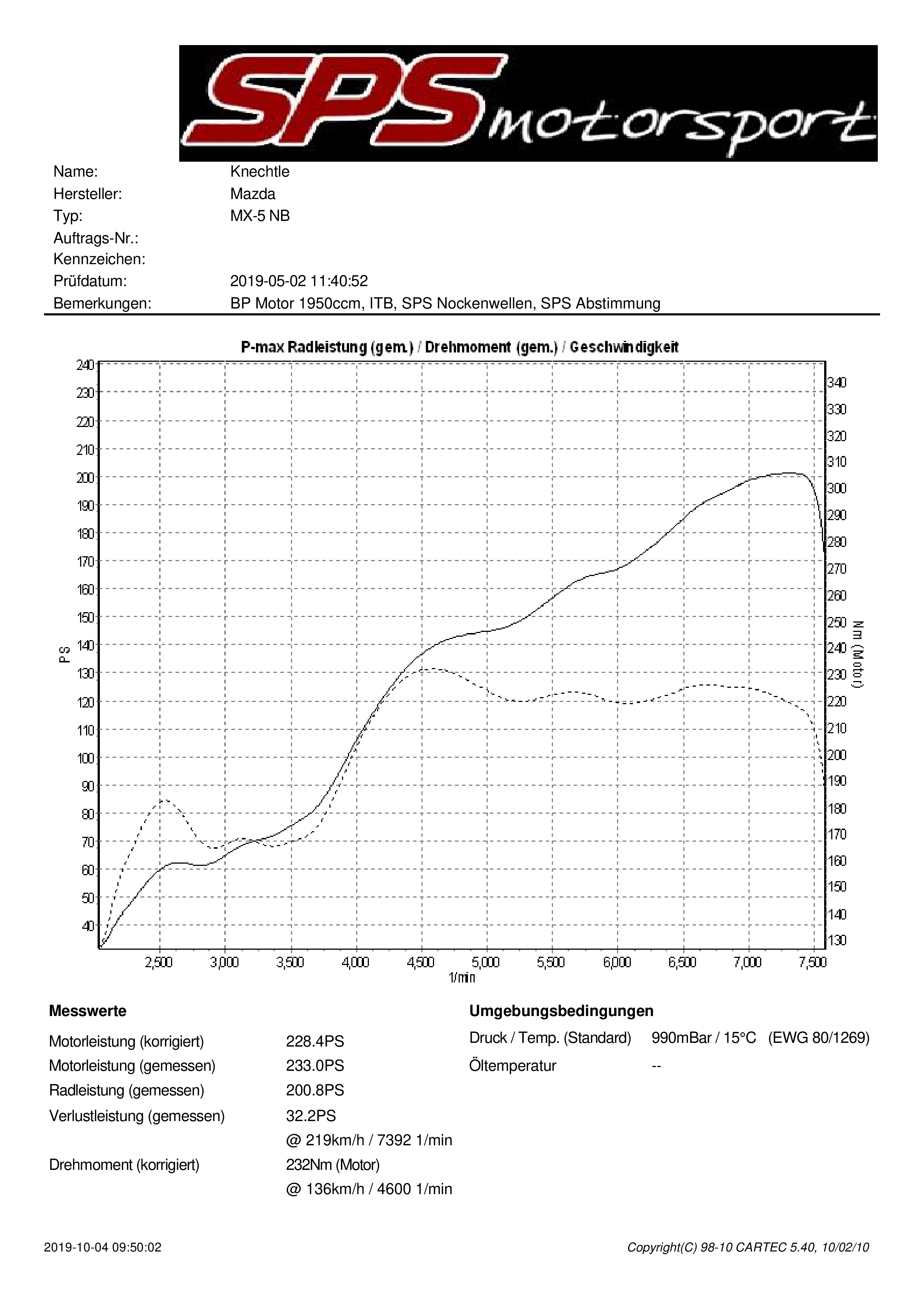
These 85.5mm engines we just use for N/A applications. For boosted applications on street we go 84.5mm and for track only 84mm. We didn't have issues with these diameters.
We also use relocation kits for the cooling system to balance the temperature in the cylinder head. I can't tell You why the Mishimoto radiator for the civic works that well. It just works.
We always recommend an oil cooler if You go that far with power. N/A applications and boosted as well.
Best regards
Guido from SPS
at first we use the following camshafts:
camshaft details | CAT CAMS performance camshafts
The valves and valve sizes are stock.
I can also give You a dyno sheet for this engine:
These 85.5mm engines we just use for N/A applications. For boosted applications on street we go 84.5mm and for track only 84mm. We didn't have issues with these diameters.
We also use relocation kits for the cooling system to balance the temperature in the cylinder head. I can't tell You why the Mishimoto radiator for the civic works that well. It just works.
We always recommend an oil cooler if You go that far with power. N/A applications and boosted as well.
Best regards
Guido from SPS
Reply
0
0

Junior Member
Joined: Mar 2018
Posts: 288
Total Cats: 38
As an FYI: Americans typically mention wheel horsepower, Europeans do a correction on that and use an estimated engine horsepower. Based on the dyno chart above, this car has 200 horsepower at the wheels.
Reply
0
0
That makes a little more sense about the flywheel hp..but in general, I thought that BP engines with that kind of power, are rated in hours of use, in regards to engine lifespan.
How long are these engines lasting for you guys?
How long are these engines lasting for you guys?
Reply
0
0
That is a very large camshaft with long duration and high lift.
To save everyone else clicking the link:
Duration 0.1mm is 293, 285
Duration 1.0mm is 259, 252
Lift 13.0mm, 12.50mm
Valve springs have 72lbs of closed seat pressure, 180lbs fully open? Am I reading that correctly? If so, that is a LOT!
@miata2fast
To save everyone else clicking the link:
Duration 0.1mm is 293, 285
Duration 1.0mm is 259, 252
Lift 13.0mm, 12.50mm
Valve springs have 72lbs of closed seat pressure, 180lbs fully open? Am I reading that correctly? If so, that is a LOT!
@miata2fast
Reply
0
0
Thread Starter
Former Vendor
Joined: Mar 2019
Posts: 124
Total Cats: 16
Block, pistons, piston rings don't make more problems or break much earlier than stock if everything is alright with oil, oil pressure, oil temperature, etc.
The weakest point is the conrod bearing. These bearings get much stress with high rpms of course. The more often you run the engine at the limit, the sooner you have to change the conrod bearings. (The blue NA reaches 15.000 miles with one set of ACL bearings, then the engine gets new bearings from us. Just to keep damages away.)
But this is not to much work.
Best regards
Guido from SPS
The weakest point is the conrod bearing. These bearings get much stress with high rpms of course. The more often you run the engine at the limit, the sooner you have to change the conrod bearings. (The blue NA reaches 15.000 miles with one set of ACL bearings, then the engine gets new bearings from us. Just to keep damages away.)
But this is not to much work.
Best regards
Guido from SPS
Reply
0
0


Thread Starter
Former Vendor
Joined: Mar 2019
Posts: 124
Total Cats: 16
Hey guys,
the management we use is a MS3 from MS-Labs.
The head is completely customized. Porting of intake and exhaust ports, customizing of the combustion chamber, different valve seats and of course other camshafts.
Best regards
Guido from SPS
the management we use is a MS3 from MS-Labs.
The head is completely customized. Porting of intake and exhaust ports, customizing of the combustion chamber, different valve seats and of course other camshafts.
Best regards
Guido from SPS
Reply
0
0

Thread
Thread Starter
Forum
Replies
Last Post
nickt93
Miata parts for sale/trade
6
Oct 22, 2012 06:48 PM


