


Electrons vs. molecules: Electric Power Steering Conversion


They're already started showing up in pull it yards in my area, Can probably get one for under $50.00 as they probably wouldn't even know what it was.
Reply
 0
0

0

Reply
0
0

Newb
Joined: Apr 2012
Posts: 12
Total Cats: 0
LOL, you're right. Just tell them it's vapor emission part. Be sure to grab all the wiring though. I think if setup similar to original design and wiring, there shouldn't be any electrical issues with the pump running.
Reply
0
0

Elite Member
Joined: Jul 2005
Posts: 6,420
Total Cats: 84
That's part of it. The other part is that an alternator looks like a current source, which is quite slow to changing its output current in response to a change in system voltage. So if the battery is low and drawing a lot of current, then you disconnect the battery abruptly, the current from the alternator will be momentarily be too high and the system voltage will spike; this can be as high as >35V. It won't be as bad if the battery is charged and drawing very little current, and the system electrical loads are heavy, to absorb the excess current.
Reply
0
0

Thread Starter

Joined: Jun 2009
Posts: 3,227
Total Cats: 1,707
From: Istanbul, Turkey
OK guys, my nifty amp clamp has arrived in the mail today, and I am thus able to provide some solid data.
The pump draws between 6.7 and 7 amps at idle, meaning with no steering input, regardless of whether the wheels are pointing straight ahead or not. (The fact that the pump would be "idle" with no steering movement regardless of the position of the wheels is common knowledge, but I wanted to put it out there, anyway)
With steering input, the current draw varies between 12ish to 24 A, depending on how fast the steering input is.
For instance:
Merely changing lanes on the freeway would be about 12 A, while driving the twisties would require about 16 - 18 A. parking lot maneuvers would require bursts of about 24 Amps.
Things get interesting if I hold the wheel at full lock like an idiot. It quickly climbs past the 50 A mark, reaches 60+, and maxes out at 65 A or so. The highest I have seen is 68 Amps.
That, however, is very brief, but I am very happy about my decision to install a high output alternator, nevertheless.
As long as full lock (not momentary full lock, but holding it there) is avoided, the system purrs along at a maximum of 24 - 25 amps at times of very fast steering input.
All in all, I am very happy with the results.
Oh, guess what.. Rear defroster (on the soft top) only draws 7.6 A. I swear I thought such a huge resistor assembly would be at the 30 Amp range.
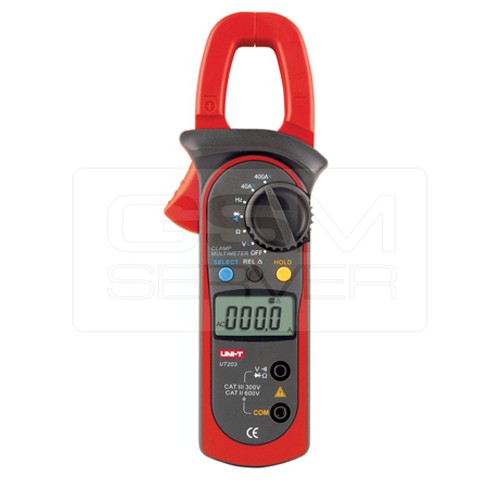
And, this is the amp clamp I bought.. It's damn cheap, works great, and a must have for the sorts of answers I have been looking for.
The pump draws between 6.7 and 7 amps at idle, meaning with no steering input, regardless of whether the wheels are pointing straight ahead or not. (The fact that the pump would be "idle" with no steering movement regardless of the position of the wheels is common knowledge, but I wanted to put it out there, anyway)
With steering input, the current draw varies between 12ish to 24 A, depending on how fast the steering input is.
For instance:
Merely changing lanes on the freeway would be about 12 A, while driving the twisties would require about 16 - 18 A. parking lot maneuvers would require bursts of about 24 Amps.
Things get interesting if I hold the wheel at full lock like an idiot. It quickly climbs past the 50 A mark, reaches 60+, and maxes out at 65 A or so. The highest I have seen is 68 Amps.
That, however, is very brief, but I am very happy about my decision to install a high output alternator, nevertheless.
As long as full lock (not momentary full lock, but holding it there) is avoided, the system purrs along at a maximum of 24 - 25 amps at times of very fast steering input.
All in all, I am very happy with the results.
Oh, guess what.. Rear defroster (on the soft top) only draws 7.6 A. I swear I thought such a huge resistor assembly would be at the 30 Amp range.
And, this is the amp clamp I bought.. It's damn cheap, works great, and a must have for the sorts of answers I have been looking for.
Reply
0
0


Joined: Sep 2005
Posts: 34,414
Total Cats: 7,531
From: Chicago. (The less-murder part.)
Placing some distance between the pump and the alternator (which is the primary current source for the engine electrical system while the car is running) will mitigate this.
The rise-time of the pump's current demand is an unknown.
The hysteresis and rise/fall times of the alternator's regulator is an unknown.
Thus, by buffering the pump from the alternator with a length of lossy cabling, and putting the battery between, them, we can offset this effect, particular when he takes the steering to lock and jumps the current draw to 60+A.
By comparison, the relatively massive cabling in the alternator - battery - chassis - engine loop should keep the voltage drop on that side of the system minimal.
Reply
0
0
Thread Starter
Joined: Jun 2009
Posts: 3,227
Total Cats: 1,707
From: Istanbul, Turkey
But,
* You would have to retain the stock reservoir to make life easier for yourself.
* Why would you want to subject the electric pump and its plastic reservoir to the heat from the exhaust system?
* There are already a few readily accessible places in the engine bay, such as my chosen location, and behind the headlight on the driver side. You could even install it inside the front bumper. I have heard of a guy who installed it in the trunk even.
This pump unit is used by Renault Kangoo, Renault Clio, Citroen Saxo and Peugeot 106.
The only difference among these applications is the orientation. My application uses a horizontal reservoir. Others have identical pumps, motors and outlets, but they have different reservoirs that enables the installer to choose an upright orientation.
Here is a link for the manufacturer's website:
HIDROSAN STEERING :: HDS Steering Pumps :: Production, Maintenance and Services
You can clearly see the fact that same setup is used with different tanks depending on application in most cases.
Oh, I paid $216 for a new pump. That's 400 TL, roughly converted to $. The owner gave me the pump at wholesale price, because he was intrigued by my project, and wanted to help somewhat. Retail price is 1050 TL, which is roughly $567.
Reply
0
0
I would figure the big driver of doing this was so you could fit a no-compromises turbo manifold and still have power steering. Basically you'd do it to have a PS pump be anywhere besides the stock location.
Reply
0
0
Thread Starter
Joined: Jun 2009
Posts: 3,227
Total Cats: 1,707
From: Istanbul, Turkey
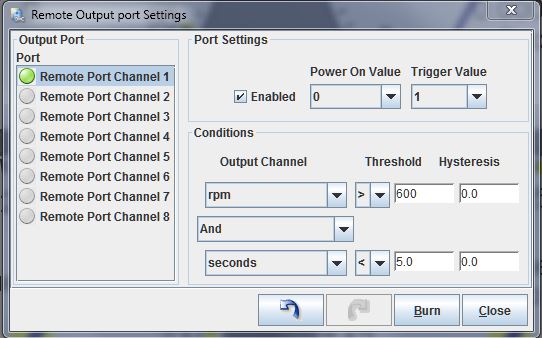
Please take a look at the output settings and tell me if I have this right guys..
Basically, I want the pump off while cranking, and only come on about 5 seconds after the engine fires, and if the RPM is greater than 600.
This output will be connected to the "-" side of the relay trigger. Relay trigger "+" will be taken from IGN.
EDIT: whoops.... second condition at the bottom should read "seconds > 5.0" I will correct that.
Basically, I want the pump off while cranking, and only come on about 5 seconds after the engine fires, and if the RPM is greater than 600.
This output will be connected to the "-" side of the relay trigger. Relay trigger "+" will be taken from IGN.
EDIT: whoops.... second condition at the bottom should read "seconds > 5.0" I will correct that.
Reply
0
0

Joined: Sep 2005
Posts: 34,414
Total Cats: 7,531
From: Chicago. (The less-murder part.)
Reply
0
0
Thread Starter
Joined: Jun 2009
Posts: 3,227
Total Cats: 1,707
From: Istanbul, Turkey
Reply
0
0
Thread Starter
Joined: Jun 2009
Posts: 3,227
Total Cats: 1,707
From: Istanbul, Turkey
Reply
0
0
Joined: Sep 2005
Posts: 34,414
Total Cats: 7,531
From: Chicago. (The less-murder part.)
Reply
0
0
Thread Starter
Joined: Jun 2009
Posts: 3,227
Total Cats: 1,707
From: Istanbul, Turkey
That's why I will add the hysteresis value you have suggested.
You know, this is proving to be great learning experience for me.
Reply
0
0
Joined: Sep 2005
Posts: 34,414
Total Cats: 7,531
From: Chicago. (The less-murder part.)
My other thought was that the pump probably isn't needed when the vehicle is completely stopped and you are in neutral with your foot off the clutch.
You are fortunate that the NBs do not conjoin the clutch and neutral wiring like the NAs did- they come into the ECU on two discrete lines.
I might change the conditions which drive the output. Instead of RPM and time, use:
VSS > 0
*or*
Clutch switch = depressed.
Thus, when you are sitting at idle at a stop, the pump is off. When you depress the clutch to shift into gear, the pump comes on. Any time the car is moving, the pump will also be on.
Who knows- maybe this will make things worse, having the pump cycle on and off while at idle. But it addresses your earlier concern about having the pump run all the time during the winter months.
You are fortunate that the NBs do not conjoin the clutch and neutral wiring like the NAs did- they come into the ECU on two discrete lines.
I might change the conditions which drive the output. Instead of RPM and time, use:
VSS > 0
*or*
Clutch switch = depressed.
Thus, when you are sitting at idle at a stop, the pump is off. When you depress the clutch to shift into gear, the pump comes on. Any time the car is moving, the pump will also be on.
Who knows- maybe this will make things worse, having the pump cycle on and off while at idle. But it addresses your earlier concern about having the pump run all the time during the winter months.
Reply
0
0
Thread Starter
Joined: Jun 2009
Posts: 3,227
Total Cats: 1,707
From: Istanbul, Turkey
Reply
0
0
Thread Starter
Joined: Jun 2009
Posts: 3,227
Total Cats: 1,707
From: Istanbul, Turkey
My other thought was that the pump probably isn't needed when the vehicle is completely stopped and you are in neutral with your foot off the clutch.
You are fortunate that the NBs do not conjoin the clutch and neutral wiring like the NAs did- they come into the ECU on two discrete lines.
I might change the conditions which drive the output. Instead of RPM and time, use:
VSS > 0
*or*
Clutch switch = depressed.
Thus, when you are sitting at idle at a stop, the pump is off. When you depress the clutch to shift into gear, the pump comes on. Any time the car is moving, the pump will also be on.
Who knows- maybe this will make things worse, having the pump cycle on and off while at idle. But it addresses your earlier concern about having the pump run all the time during the winter months.
You are fortunate that the NBs do not conjoin the clutch and neutral wiring like the NAs did- they come into the ECU on two discrete lines.
I might change the conditions which drive the output. Instead of RPM and time, use:
VSS > 0
*or*
Clutch switch = depressed.
Thus, when you are sitting at idle at a stop, the pump is off. When you depress the clutch to shift into gear, the pump comes on. Any time the car is moving, the pump will also be on.
Who knows- maybe this will make things worse, having the pump cycle on and off while at idle. But it addresses your earlier concern about having the pump run all the time during the winter months.
What I was trying to say is, I would like the pump to be off till the engine starts. That way, I would not be draining precious current from the battery before cranking the car.
Reply
0
0


