


Turbo Size - I'm not convinced





Maybe I did over simplify it; the main reason is due to air quality, like akaryrye put it.
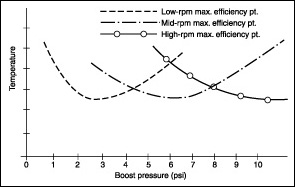
With a small turbo, the maximum efficiency point peaks early, and the temperatures will be lowest at low boost pressures. Once the pressure ratio increases and/or mass flow increases the temperatures quickly increase as the efficient drops below 60%. To keep temperatures down, thus ensuring high power outputs, a larger compressor is necessary.
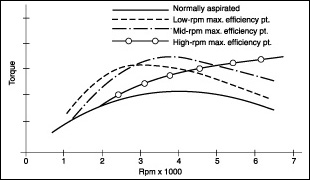
Likewise, as the max efficiency point occurs at higher and higher rpm, cooler temperatures also occur. Cooler temperatures mean denser air, which keeps torque peaks at higher rpm. This is why a 2554 setup will always make more peak torque than me at low rpms, but I always tend to make more from 4K above with a greater peak HP.
10psi is 10psi, but the larger compressor will be more efficient as the mass flow increases.
With a small turbo, the maximum efficiency point peaks early, and the temperatures will be lowest at low boost pressures. Once the pressure ratio increases and/or mass flow increases the temperatures quickly increase as the efficient drops below 60%. To keep temperatures down, thus ensuring high power outputs, a larger compressor is necessary.
Likewise, as the max efficiency point occurs at higher and higher rpm, cooler temperatures also occur. Cooler temperatures mean denser air, which keeps torque peaks at higher rpm. This is why a 2554 setup will always make more peak torque than me at low rpms, but I always tend to make more from 4K above with a greater peak HP.
10psi is 10psi, but the larger compressor will be more efficient as the mass flow increases.
Reply
 0
0

0

As the piston approaches TDC of the exhaust stroke it's pushing out the last bit of exhaust and getting ready to pull in a fresh charge of air. However, the engine does not actually "push" all the exhaust out. There's still a combustion chamber's worth bare minimum. It's really more though because there's also the area from the head gasket, valve reliefs in the pistons, etc. I'd say probably 1/10 of that cylinders displacement is not swept out and is filled with high pressure exhaust gasses after the exhaust stroke. So what happens when the intake valve opens? Cool air flows in right? Nope. The exhaust is actually at a higher pressure than the intake on a turbocharged engine. The exhaust actually tried to flow out the intake valves until the piston begins moving down, which causes pressure to drop and that's what causes the intake charge to flow in.
Ideally we would have a vacuum in the chamber at the end of the exhaust stroke and as soon as we open the intake valve the charge would 100% fill the chamber. However, this is not the case. Because there are risidual exhaust gases, you get less charge in. The hot exhaust gases expand and take up space during the intake stroke. The smaller the turbine you run, the higher the back pressure on the exhaust, the higher the residual exhaust pressure before the intake stroke, the more the exhaust gases in the cylinder during the intake stroke to expand and take up space, the less charge you get.
That's a bit oversimplified, but that's the main reason why back pressure hurts power. Of course the more exhaust left over, the hotter the more the cool intake charge is heated, the more likely you are to knock. So ignition timing is also effected which in itself affects the entire system.
Reply
0
0

Thread Starter
Joined: Apr 2008
Posts: 2,023
Total Cats: 19
From: Outside Portland Maine
Indeed, as I explained this before in another thread. I'll explain here so everyone understands exactly WHY back pressure is bad.
As the piston approaches TDC of the exhaust stroke it's pushing out the last bit of exhaust and getting ready to pull in a fresh charge of air. However, the engine does not actually "push" all the exhaust out. There's still a combustion chamber's worth bare minimum. It's really more though because there's also the area from the head gasket, valve reliefs in the pistons, etc. I'd say probably 1/10 of that cylinders displacement is not swept out and is filled with high pressure exhaust gasses after the exhaust stroke. So what happens when the intake valve opens? Cool air flows in right? Nope. The exhaust is actually at a higher pressure than the intake on a turbocharged engine. The exhaust actually tried to flow out the intake valves until the piston begins moving down, which causes pressure to drop and that's what causes the intake charge to flow in.
Ideally we would have a vacuum in the chamber at the end of the exhaust stroke and as soon as we open the intake valve the charge would 100% fill the chamber. However, this is not the case. Because there are risidual exhaust gases, you get less charge in. The hot exhaust gases expand and take up space during the intake stroke. The smaller the turbine you run, the higher the back pressure on the exhaust, the higher the residual exhaust pressure before the intake stroke, the more the exhaust gases in the cylinder during the intake stroke to expand and take up space, the less charge you get.
That's a bit oversimplified, but that's the main reason why back pressure hurts power. Of course the more exhaust left over, the hotter the more the cool intake charge is heated, the more likely you are to knock. So ignition timing is also effected which in itself affects the entire system.
As the piston approaches TDC of the exhaust stroke it's pushing out the last bit of exhaust and getting ready to pull in a fresh charge of air. However, the engine does not actually "push" all the exhaust out. There's still a combustion chamber's worth bare minimum. It's really more though because there's also the area from the head gasket, valve reliefs in the pistons, etc. I'd say probably 1/10 of that cylinders displacement is not swept out and is filled with high pressure exhaust gasses after the exhaust stroke. So what happens when the intake valve opens? Cool air flows in right? Nope. The exhaust is actually at a higher pressure than the intake on a turbocharged engine. The exhaust actually tried to flow out the intake valves until the piston begins moving down, which causes pressure to drop and that's what causes the intake charge to flow in.
Ideally we would have a vacuum in the chamber at the end of the exhaust stroke and as soon as we open the intake valve the charge would 100% fill the chamber. However, this is not the case. Because there are risidual exhaust gases, you get less charge in. The hot exhaust gases expand and take up space during the intake stroke. The smaller the turbine you run, the higher the back pressure on the exhaust, the higher the residual exhaust pressure before the intake stroke, the more the exhaust gases in the cylinder during the intake stroke to expand and take up space, the less charge you get.
That's a bit oversimplified, but that's the main reason why back pressure hurts power. Of course the more exhaust left over, the hotter the more the cool intake charge is heated, the more likely you are to knock. So ignition timing is also effected which in itself affects the entire system.
Reply
0
0

I'm Miserable!
Joined: Feb 2009
Posts: 18
Total Cats: 0
From: Southwestern Michigan
A certain presure in the intake manifold is a certain pressure in the intake manifold (assuming the temperature in the intake manifold is the same at that pressure). The largest part of your power loss is turbine efficiency as explained by several of the answers that you have gotten. The turbo is working harder to compress that air with the smaller unit thus the thermal efficiency has gone down and back pressure in the exhaust has gone up.
Reply
0
0

Rofl it is complicated in a way but so damn simple u will smack urself when u get it man. just reread what we said and hopefully it will click and u will be able to see it. i dont see how anyone could improve on the xplanations given here.
Reply
0
0
Thread Starter
Joined: Apr 2008
Posts: 2,023
Total Cats: 19
From: Outside Portland Maine
Theory: Bigger turbo creates more power per PSI because of backpressure, not simply because of the actual size of the compressor. In the end, backpressure is related to compressor size, but it's not simply because of the compressor size that a bigger turbo creates more power for a given level of boost.
Reply
0
0

Thread
Thread Starter
Forum
Replies
Last Post


