


Just Built a Jim Stim


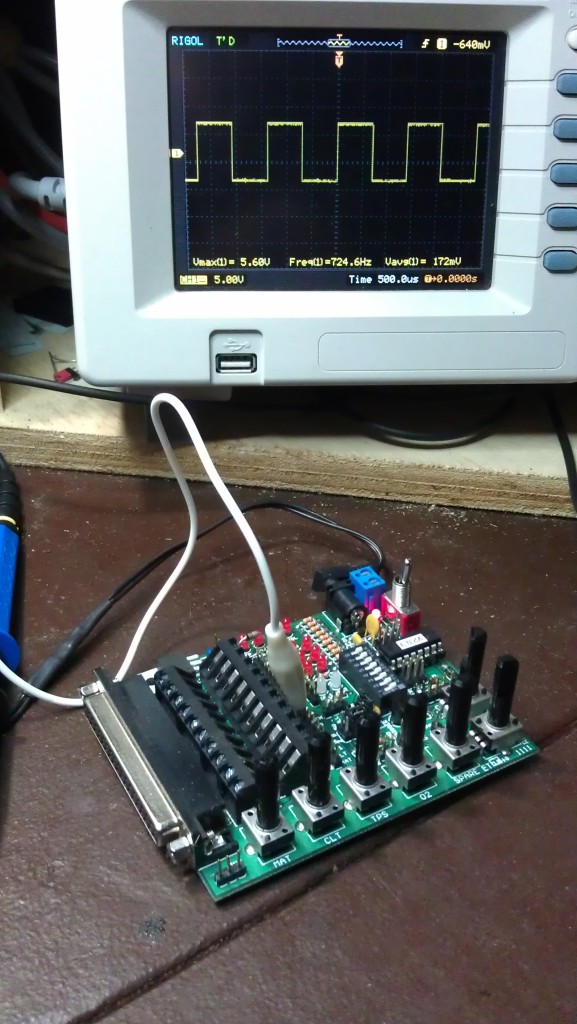
I've never solder anything and want to do my own MS3X. I followed the advice from the forums and tried out the Jim Stim. Soldering really isn't too hard with a little practice I have learned.
Next up is the JimStimX and then BoomSlang before I tackle the big boy the MS3X itself.
Next up is the JimStimX and then BoomSlang before I tackle the big boy the MS3X itself.
Reply
 0
0

0






Joined: Sep 2005
Posts: 34,402
Total Cats: 7,523
From: Chicago. (The less-murder part.)


Reply
0
0

Soldering is a really useful, highly applicable skill. And its not that hard with practice. When my brother "didn't see" my ******* wheel and pedal setup plugged into the PS3 and ripped that bitch a new one I spent an hour permanantly soldering the pedal wires into the wheel. Same for the old wore out controller connection on my PS2.
Reply
0
0
Soldering is a really useful, highly applicable skill. And its not that hard with practice. When my brother "didn't see" my ******* wheel and pedal setup plugged into the PS3 and ripped that bitch a new one I spent an hour permanantly soldering the pedal wires into the wheel. Same for the old wore out controller connection on my PS2.
Reply
0
0
So question Experts of Electronics. What size and type of solder do you use?
I purchased a 60/40 Rosin Core .061" by Alpha Fry from Amazon. I think it's too big and feel the .20" or .31" would be a better choice. I'm wondering what your opinion is as well as where you purchase your solder. I found 63/37 Kester .031" but it's a 1 lb spool for $40 shipped. I think that would be enough solder for life!
I purchased a 60/40 Rosin Core .061" by Alpha Fry from Amazon. I think it's too big and feel the .20" or .31" would be a better choice. I'm wondering what your opinion is as well as where you purchase your solder. I found 63/37 Kester .031" but it's a 1 lb spool for $40 shipped. I think that would be enough solder for life!
Reply
0
0

Junior Member
Joined: Nov 2009
Posts: 459
Total Cats: 31
From: Jax Fl
It's mostly preference, I like most prefer a thinner solder for most jobs (.032) but there are some out there who like the thick stuff.
Composition of the solder will boil down to a few things like what you are soldering and how durable the joint needs to be. As a hobbyist though, I recommend a nice rounded solder that will work well for all sorts of applications. A fairly new hobby electronics company has been getting pretty big called sparkfun. There are better retailers out as well so feel free to look around.
http://www.sparkfun.com/products/10243
Mix: 96.35% Sn (Tin), 3.0% Ag (Silver), 0.5% Cu (Copper), 0.15% Sb (Antimony).
In my opinion the thing any beginner should be worried about when getting into soldering is having a decent enough iron to get the job done. Throw those 15watt radioshack pencil irons in the trash. A nice entry level soldering station is only $50-$100.
Composition of the solder will boil down to a few things like what you are soldering and how durable the joint needs to be. As a hobbyist though, I recommend a nice rounded solder that will work well for all sorts of applications. A fairly new hobby electronics company has been getting pretty big called sparkfun. There are better retailers out as well so feel free to look around.
http://www.sparkfun.com/products/10243
Mix: 96.35% Sn (Tin), 3.0% Ag (Silver), 0.5% Cu (Copper), 0.15% Sb (Antimony).
In my opinion the thing any beginner should be worried about when getting into soldering is having a decent enough iron to get the job done. Throw those 15watt radioshack pencil irons in the trash. A nice entry level soldering station is only $50-$100.
Last edited by Tw34k; Dec 22, 2011 at 01:35 PM.
Reply
0
0

Junior Member
Joined: Nov 2009
Posts: 459
Total Cats: 31
From: Jax Fl
 The scope is a Chinese brand Rogol DS1052E 50MHz entry level model. I purchased it due to its ability to easily be hacked into a 100MHz model with a terminal window and a serial cable.
Reply
0
0
Joined: Sep 2005
Posts: 34,402
Total Cats: 7,523
From: Chicago. (The less-murder part.)
Copied and pasted from my diatribe on solder in DIY's "kit" thread:
Now, I will differ slightly on the matter of solder. Silver-bearing solder, and especially the lead-free variety, just isn't as good as the old stuff. The absolute best solder for general-purpose electronics work is what's known simply as 63/37 (63% tin, 37% lead).
Why is this? Because it's idiot-proof. 63/37 has the lowest melting point of all solder alloys, and more importantly, it has virtually no plastic range. Most solder alloys go through a gradual phase change from liquid to solid as they cool, and so there's a point where, if you move the parts at all, you wind up with a crappy, crystalline-looking joint which is likely to break. 63/37 is unique in that it transitions from a liquid to a solid almost in a single step, so the chance of producing a bad joint is reduced.
60/40 is the more traditional blend for electronics work, and it's fine, too. Still has a low melting point, you just have to be more careful with it as it solidifies.
Also, don't screw around with the fancy "clear flux" or "no-kleen" ****. You want plain ole' rosin core, icky-brown-flux solder.
Diameter-wise? .062" seems to still be the most common, and this was fine back in the days of tabbbed point-to-point wiring inside console radios (eg: the 60s.) For delicate stuff, you want something in the vicinity of .020" to .032". You have to feed a lot more of it in to cover large joints (like the legs of TO220 FETs) however it makes things a lot easier on small parts, especially those damn TO-92 transistor pads on the 3.0 board. (I don't know why they designed the pads that way. TO-92s are a lot easier to solder when the pads are spaced out in a triangular shape.)
If you live in an area where Radio Shack is the only option, they only have one solder that you'll want: http://www.radioshack.com/product/in...erValue=Solder It's a 60/40 blend at .032", so it's not perfect, but it's good enough.
Why is this? Because it's idiot-proof. 63/37 has the lowest melting point of all solder alloys, and more importantly, it has virtually no plastic range. Most solder alloys go through a gradual phase change from liquid to solid as they cool, and so there's a point where, if you move the parts at all, you wind up with a crappy, crystalline-looking joint which is likely to break. 63/37 is unique in that it transitions from a liquid to a solid almost in a single step, so the chance of producing a bad joint is reduced.
60/40 is the more traditional blend for electronics work, and it's fine, too. Still has a low melting point, you just have to be more careful with it as it solidifies.
Also, don't screw around with the fancy "clear flux" or "no-kleen" ****. You want plain ole' rosin core, icky-brown-flux solder.
Diameter-wise? .062" seems to still be the most common, and this was fine back in the days of tabbbed point-to-point wiring inside console radios (eg: the 60s.) For delicate stuff, you want something in the vicinity of .020" to .032". You have to feed a lot more of it in to cover large joints (like the legs of TO220 FETs) however it makes things a lot easier on small parts, especially those damn TO-92 transistor pads on the 3.0 board. (I don't know why they designed the pads that way. TO-92s are a lot easier to solder when the pads are spaced out in a triangular shape.)
If you live in an area where Radio Shack is the only option, they only have one solder that you'll want: http://www.radioshack.com/product/in...erValue=Solder It's a 60/40 blend at .032", so it's not perfect, but it's good enough.
Reply
0
0


Thanks Guys! Great write up Joe. Idiot proof is exactly what I'm going for. I didn't get a solder station but I did buy a 35 Watt Weller and a 0.03" x 0/9mm Conical tip.
Reply
0
0
Joined: Sep 2005
Posts: 34,402
Total Cats: 7,523
From: Chicago. (The less-murder part.)
I waffle back and forth on this.
.032 is fine for through-hole parts. At the lab, we have .020 and .015 at the surface-mount bench, and while those are great for small parts, they're slightly tedious for use with big stuff as you have to feed a lot more of it in.
Anything in this range will be fine for 99% of uses.
.032 is fine for through-hole parts. At the lab, we have .020 and .015 at the surface-mount bench, and while those are great for small parts, they're slightly tedious for use with big stuff as you have to feed a lot more of it in.
Anything in this range will be fine for 99% of uses.
Reply
0
0


