


Miata Flat Underbody


Thread Starter
Senior Member
Joined: Oct 2011
Posts: 646
Total Cats: 62
From: The Race Track & St Pete FL

It came on a pallet with a wood bottom, (2) 12 foot long steel C channel on the length and cardboard top and bottom of the sheet.
Im guessing what I have cut is about 30 lbs.
Here it is mostly finished, next up is the splitter/front diffuser
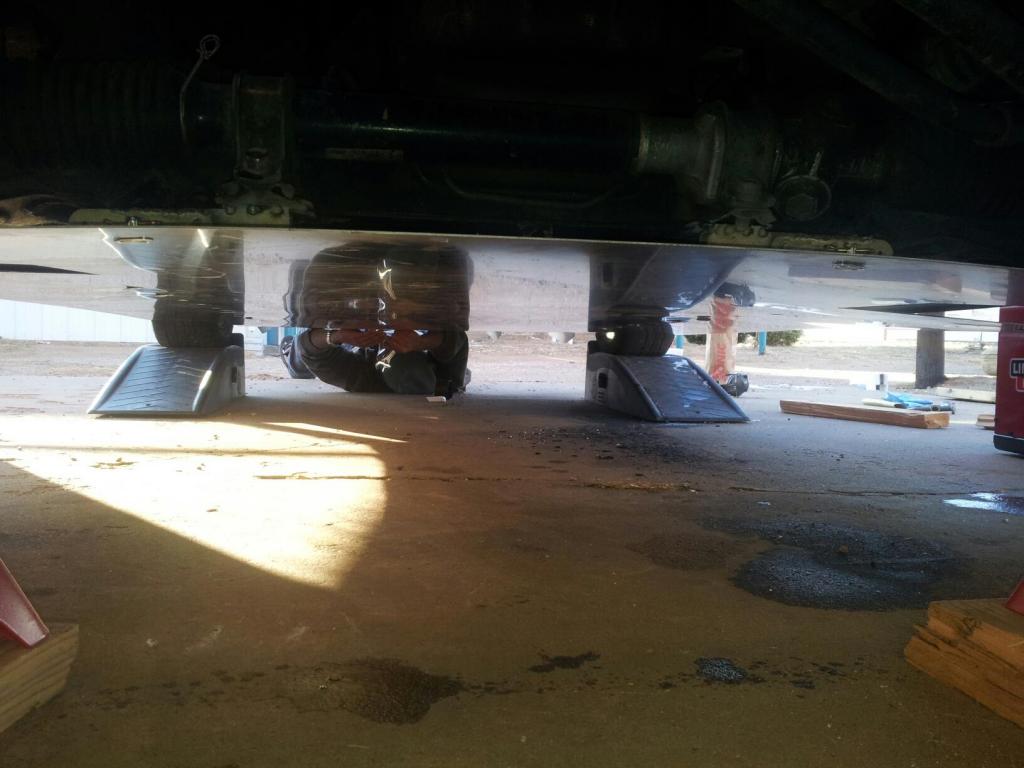
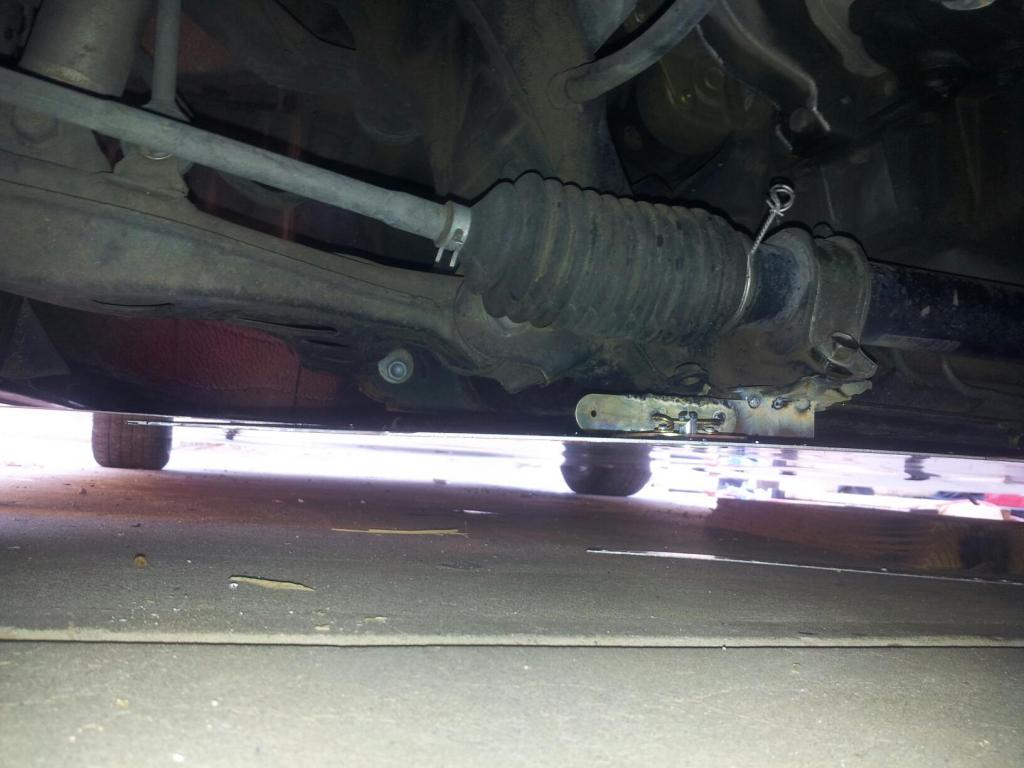
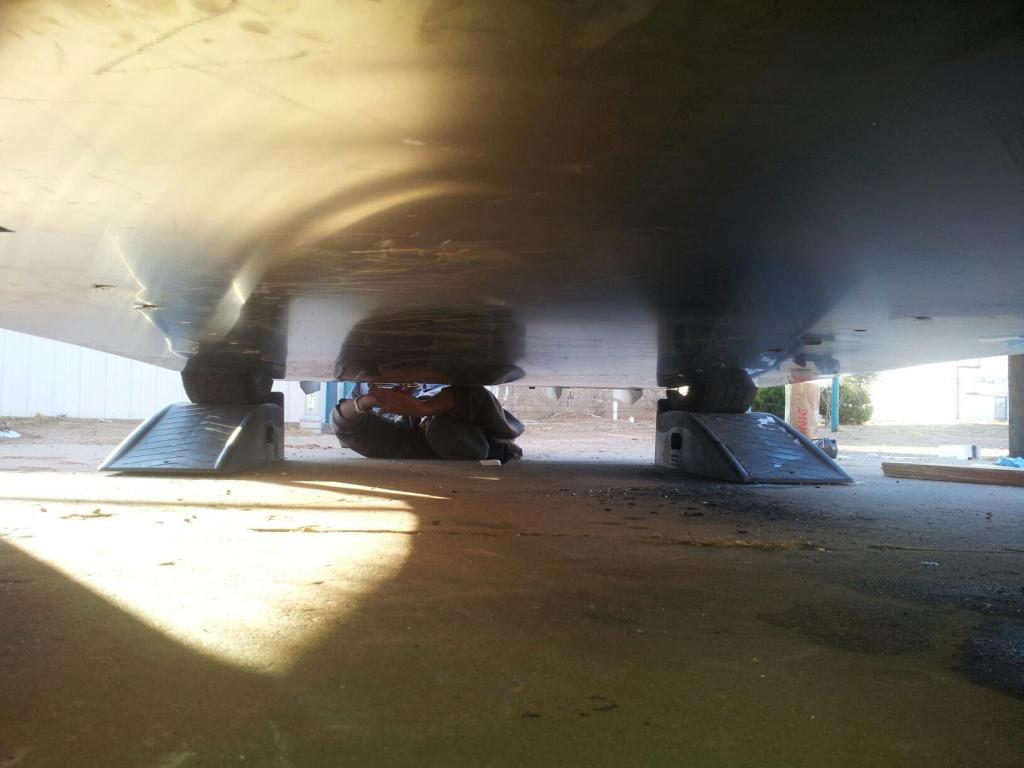
Im guessing what I have cut is about 30 lbs.
Here it is mostly finished, next up is the splitter/front diffuser
Reply
 1
1

1



Thread Starter
Senior Member
Joined: Oct 2011
Posts: 646
Total Cats: 62
From: The Race Track & St Pete FL
There is a about a 1" gap between the panel and the steering box, which will have a opening in the front air dam to channel the air into this space.
The air trapped under the hood will be going out vents in the hood, I haven't got to working on yet due to the cold temps outside. I will be mocking it up to match the vents on the German Touring Car. I also have a 1" hood spacer with the rear hood seal removed.
To give an idea of how much air is going through the channel (4 inch space between the frame rails) I will put wind speed guage in there then drive to 60, 80, then 100 mph. I'm guessing 5 to 1 would be a goal for now(100 mph speed with 20 mph air speed)
Reply
0
0


Assuming you are intending to use the car competetively, it's key to make things as light as possible. 30+ lbs is a lot for the flat panel, before even adding brackets and hardware.
For reference, my flat underbody is 11 lbs including all hardware and brackets.
(I just did a redesign for the brackets and hardware to save weight - now <200 grams total)
Not trying to detract at all from what you're doing, I'm really encouraged to see people getting deep into aero development for miatas. Just trying to inspire you/everyone to try to make the best pieces they can.
-Ryan
For reference, my flat underbody is 11 lbs including all hardware and brackets.
(I just did a redesign for the brackets and hardware to save weight - now <200 grams total)
Not trying to detract at all from what you're doing, I'm really encouraged to see people getting deep into aero development for miatas. Just trying to inspire you/everyone to try to make the best pieces they can.
-Ryan

Last edited by ThePass; Jan 14, 2013 at 02:42 AM.
Reply
0
0
Thread Starter
Senior Member
Joined: Oct 2011
Posts: 646
Total Cats: 62
From: The Race Track & St Pete FL
If you are going through the trouble to make a flat bottom, you're doing so to go fast in a competetive environment. If you want to go fast in a competetive environment, weight is the enemy. Therefore, it's key to make things as light as possible. 30+ lbs is a lot for the flat panel, before even adding brackets and hardware.
For reference, my flat underbody is 11 lbs including all hardware and brackets
(I just did a redesign for the brackets and hardware to save weight - now <200 grams total)
Not trying to detract at all from what you're doing, I'm really encouraged to see people getting deep into aero development for miatas. Just trying to inspire you/everyone to try to make the best pieces they can.
-Ryan
For reference, my flat underbody is 11 lbs including all hardware and brackets
(I just did a redesign for the brackets and hardware to save weight - now <200 grams total)
Not trying to detract at all from what you're doing, I'm really encouraged to see people getting deep into aero development for miatas. Just trying to inspire you/everyone to try to make the best pieces they can.
-Ryan
Reply
0
0

Junior Member

Joined: Apr 2010
Posts: 113
Total Cats: 4
From: Essex, UK
This is a very bad idea that will hinder more than help. if you remove the rubber strip, the hood actually sucks air in and hinders flow through the rad.
All you need is a vent just in front of the engine.
All you need is a vent just in front of the engine.
Last edited by StarletRick; Jan 15, 2013 at 07:16 AM.
Reply
1
1

Since the topic of aluminum is going on. Has anyone heard of 3003? I don't have much knowledge on metals. I bought a sheet of 3003 that I need bent and every fabrication shop I talk to has no clue what I'm talking about.
Reply
0
0

Newb
Joined: Aug 2009
Posts: 15
Total Cats: 2
From: Lodi, CA
Not nearly as popular as the 50xx, 60xx, and 70xx aluminums. "Applications: cooking utensils, decorative trim, awnings, siding, storage tanks, chemical equipment."
Reply
0
0


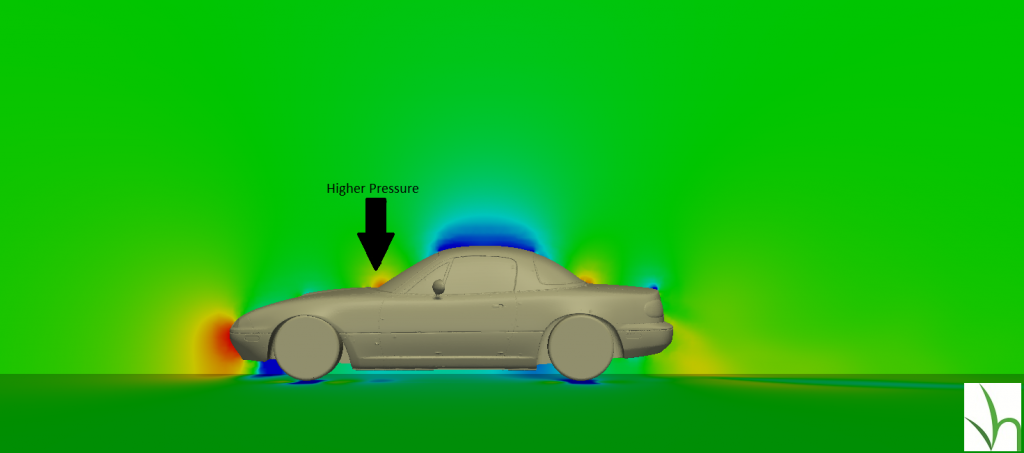
+1 The air at the base of the windshield is very high pressure and will enter through the rear of the hood and into the engine bay. Look at race cars for inspiration and their outlets through the hood just behind the radiator. Ricer fanbois do many things wrong and lifting the rear of the hood is one of them. Don't use them for inspiration.
Reply
0
0

Junior Member
Joined: Mar 2012
Posts: 111
Total Cats: 8
Reply
-1
-1

Then they need to properly isolate the parts that are melting from the heat source. By raising the rear of the hood, you increase pressure under the hood and decrease the amount of heat that can escape. Unless your firewall directly underneath the hood is the issue, it will hurt things.
Reply
0
0

Junior Member
Joined: Dec 2012
Posts: 74
Total Cats: 45
From: Indianapolis
Then they need to properly isolate the parts that are melting from the heat source. By raising the rear of the hood, you increase pressure under the hood and decrease the amount of heat that can escape. Unless your firewall directly underneath the hood is the issue, it will hurt things.
Reply
3
3
Junior Member
Joined: Dec 2012
Posts: 74
Total Cats: 45
From: Indianapolis
Reply
0
0
How do so many aero theads divert into trying to explain to someone that hood risers are utterly useless? By how many times its been gone over by now, I'm surprised it even comes up any more.
-Ryan
-Ryan
Reply
2
2

Reply
0
0
Thread Starter
Senior Member
Joined: Oct 2011
Posts: 646
Total Cats: 62
From: The Race Track & St Pete FL
I guessing its a 3D flow model. Do you have any CAD models of any Dive Planes (Canards). One other thing I was wondering is, If the Dive Plane is to low. Will the vortices shove more air under the car or will it do its job better by keeping the air from going under the car from the side?
Last edited by 1993ka24det; Jan 15, 2013 at 03:08 AM.
Reply
0
0
Junior Member
Joined: Dec 2012
Posts: 74
Total Cats: 45
From: Indianapolis
I guessing its a 3D flow model. Do you have any CAD models of any Dive Planes (Canards). One other thing I was wondering is, If the Dive Plane is to low. Will the vortices shove more air under the car or will it do its job better by keeping the air from going under the car from the side?
"Will the vortices shove more air under the car or will it do its job better by keeping the air from going under the car from the side?"
It depends like all generic aerodynamic questions lol. You can design aero bits that can cause vortices that "seal" the sides to prevent air from spilling under the car. The vortices will act like skirts to seal the bottom
 If you have an actual design you are thinking of, I might be able to give you a better answer than depends.
Reply
0
0


