


Radiator Hood Vent


Senior Member
Joined: Dec 2012
Posts: 624
Total Cats: 81
From: Charlotte, NC

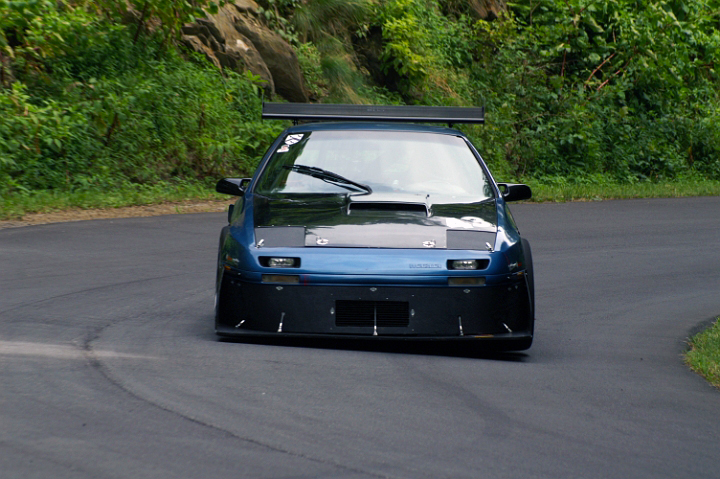
Just for reference, here's a frontal pic of my RX7. I was worried I'd be too small on ducted inlet size. It has a typical rabbit mesh covering the opening. With a 383 cu. in V8 in the engine bay, I couldn't get the car over the other side of 180°F after making repeated 7200 RPM pulls uphill. Inlet opening is right at 1/3 of the radiator surface area, and had no outlet ducting.
Reply
 1
1

1

Junior Member
Joined: Jun 2013
Posts: 122
Total Cats: -10
From: Raleigh, NC
Just for reference, here's a frontal pic of my RX7. I was worried I'd be too small on ducted inlet size. It has a typical rabbit mesh covering the opening. With a 383 cu. in V8 in the engine bay, I couldn't get the car over the other side of 180°F after making repeated 7200 RPM pulls uphill. Inlet opening is right at 1/3 of the radiator surface area, and had no outlet ducting.
Reply
0
0


Just finished the inlet ducting for my new radiator/intercooler positions. Ducting is designed in pieces with quick track-side service/access to surrounding things in mind. Everywhere two pieces meet and where the ducting meets a heat exchanger is tightly sealed with adhesive-backed closed-cell foam strips.
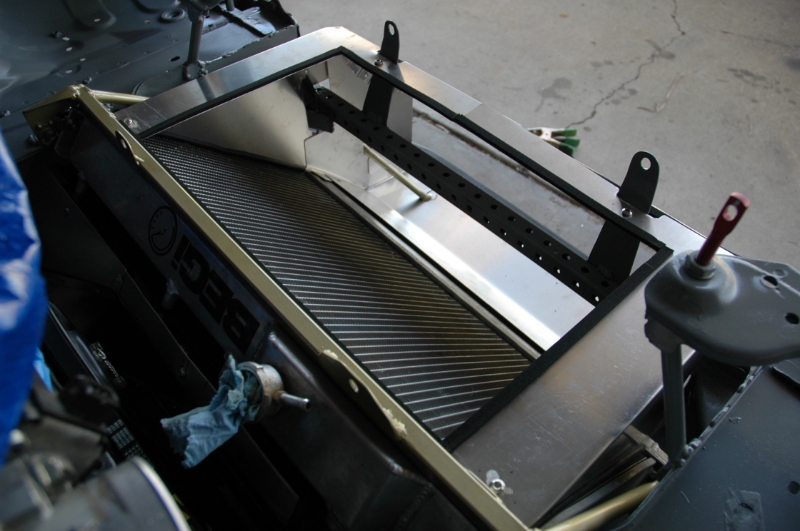
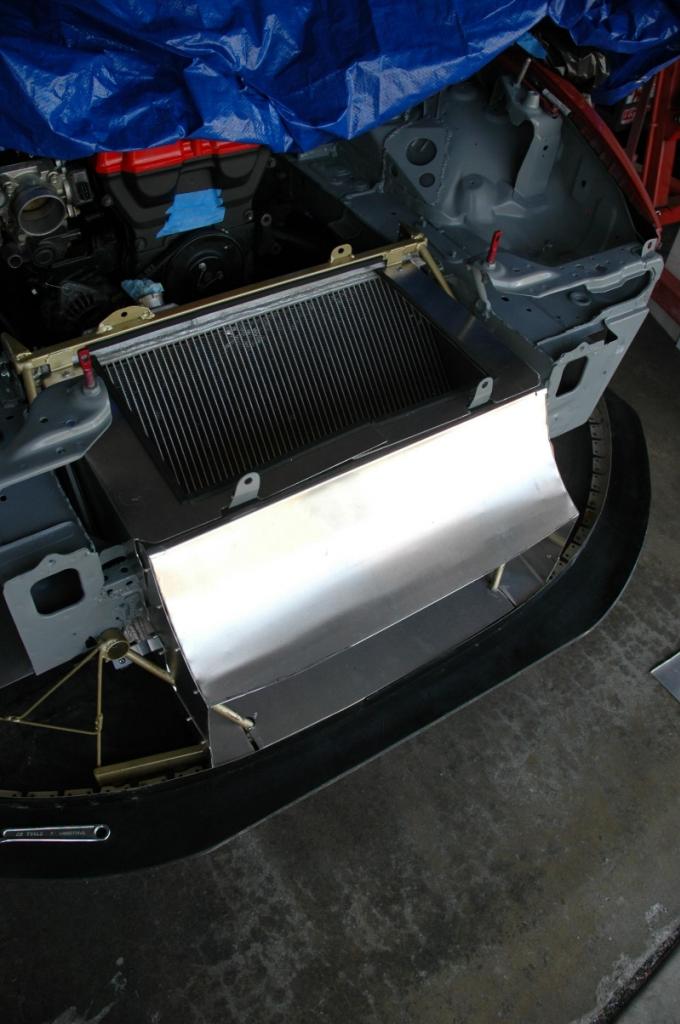
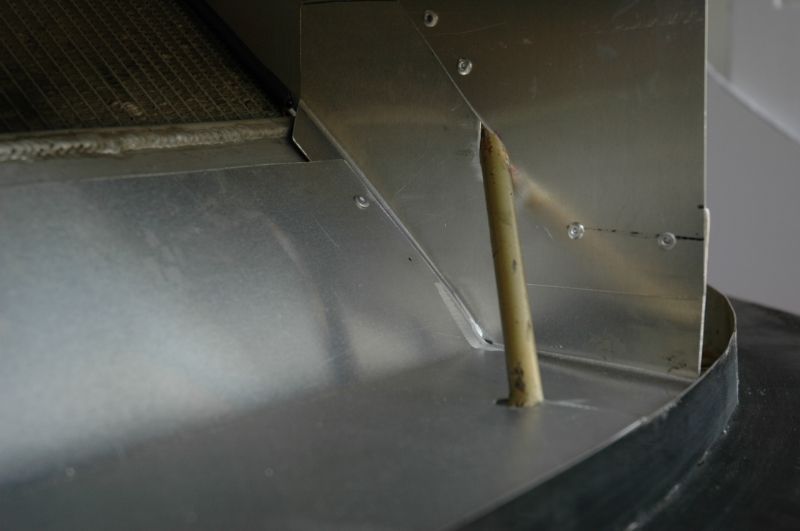
Working on oil cooler inlet for the new oil cooler position, then will move on to ducting all the outlets for everything.
-Ryan
Working on oil cooler inlet for the new oil cooler position, then will move on to ducting all the outlets for everything.
-Ryan

Last edited by ThePass; Apr 18, 2014 at 06:32 PM.
Reply
1
1
Regarding the hood vent, you've already done the biggest thing to make it more possible and effective to properly duct the radiator on an N/A car out of the hood and that is to tilt the radiator further forward. Now you just build a duct, pretty simple. You've got enough photo content of super/race cars and how they route that duct, just copy.
The only bit you have to be a little clever about is how you choose to join whatever portion of the duct attaches to the hood with whatever portion remains fixed to the radiator, but there's plenty of ways to accomplish that detailed in said pics.
-Ryan
The only bit you have to be a little clever about is how you choose to join whatever portion of the duct attaches to the hood with whatever portion remains fixed to the radiator, but there's plenty of ways to accomplish that detailed in said pics.
-Ryan
Reply
0
0
Junior Member
Joined: Jun 2013
Posts: 122
Total Cats: -10
From: Raleigh, NC
I'm confused by your radiator layout, do you have the top of heat exchanger tilted back so the airflow comes in along the top (parallel to the face)?
Last edited by ecc3189; Apr 21, 2014 at 10:01 AM. Reason: I is good at grammar...
Reply
0
0


-Ryan
Reply
0
0

So the air will go in through your inlet duct and pass through the upper intercoolee and exit out an opening in the hood while the air going through the dmradiator that is tilted back will exit where exactly?
Reply
0
0
Junior Member
Joined: Jun 2013
Posts: 122
Total Cats: -10
From: Raleigh, NC
Oh so the intercooler traps the air on the top and it either has to go up through the intercooler and out of the hood or down through the radiator and under the car?
Reply
0
0


I suspect into the engine bay "like" an OEM radiator ...???????
Reply
0
0
Junior Member
Joined: Jun 2013
Posts: 122
Total Cats: -10
From: Raleigh, NC
this is why I love this site, all sorts of new(to me) ideas. I hate how miatas don't have the space for parallel heat exchangers and this is a cool solution. Too bad it prevents you from bringing the air after the radiator up through the hood
Reply
0
0

Junior Member
Joined: Jan 2013
Posts: 59
Total Cats: 9
I think the question was posed knowing that he's got a full flat undertray on the car, which is a bit of a departure from OEM.
I suspect that the plan is that the air passing through the radiator will go under the car between the bottom of the car and the undertray, exiting out the top of the diffuser, but I could be wrong. Or maybe it exits behind the front wheels?
I suspect that the plan is that the air passing through the radiator will go under the car between the bottom of the car and the undertray, exiting out the top of the diffuser, but I could be wrong. Or maybe it exits behind the front wheels?
Reply
0
0
I think the question was posed knowing that he's got a full flat undertray on the car, which is a bit of a departure from OEM.
I suspect that the plan is that the air passing through the radiator will go under the car between the bottom of the car and the undertray, exiting out the top of the diffuser, but I could be wrong. Or maybe it exits behind the front wheels?
I suspect that the plan is that the air passing through the radiator will go under the car between the bottom of the car and the undertray, exiting out the top of the diffuser, but I could be wrong. Or maybe it exits behind the front wheels?
 the radiator's exit is ducted just as much as the inlet; it's being routed out of the fenders behind the front wheels. No air under the car this way. Those who have seen my front fender setup will understand how this will work pretty well
The pic probably would've made more sense with the intercooler in place, but it's currently "under construction" - I'm learning to TIG aluminum for this project so that I can modify the outlets on the intercooler and fab new intake piping for this new setup.
-Ryan
Last edited by ThePass; Apr 22, 2014 at 12:22 AM.
Reply
0
0
Junior Member
Joined: Jun 2013
Posts: 122
Total Cats: -10
From: Raleigh, NC
I really like the layout for this. I would love to see the ducting to the rear of the fenders just to see how it routes around everything. Apart from the bracing for the hood pins and the cross member you added for the IC mount, did you have to do any other reinforcement? I'm planning to use cheap temporary ducting for my first track event so I haven't nailed down a permanent design in sheet metal yet.
Reply
0
0


there is PLENTY of room for parallel heat exchangers.
You could stack an oil cooler, intercooler, a/c condensor, and radiator without any issue if you wanted.
Reply
0
0
Junior Member
Joined: Jan 2013
Posts: 59
Total Cats: 9
Bingo the radiator's exit is ducted just as much as the inlet; it's being routed out of the fenders behind the front wheels. No air under the car this way. Those who have seen my front fender setup will understand how this will work pretty well
The pic probably would've made more sense with the intercooler in place, but it's currently "under construction" - I'm learning to TIG aluminum for this project so that I can modify the outlets on the intercooler and fab new intake piping for this new setup.
-Ryan
the radiator's exit is ducted just as much as the inlet; it's being routed out of the fenders behind the front wheels. No air under the car this way. Those who have seen my front fender setup will understand how this will work pretty well The pic probably would've made more sense with the intercooler in place, but it's currently "under construction" - I'm learning to TIG aluminum for this project so that I can modify the outlets on the intercooler and fab new intake piping for this new setup.
-Ryan
Reply
0
0
Junior Member
Joined: Jun 2013
Posts: 122
Total Cats: -10
From: Raleigh, NC
Other cars don't have this problem since they are tall enough to have space to put the IC completely under the radiator so they don't share air.
Not saying any of the setups I've seen on here don't work great, I just want to find the setup that makes the most logical sense in my head from a drag vs. cooling balance. The only reason I've not considered top mount intercoolers is the height of the mass but really an IC and piping isn't that much weight and I'm guessing ThePass lost that weight in cutting the rad support up there
Reply
0
0
Oil cooler ducting is on my work bench right now, should have it done in the next couple days then I can take pics. Setup is common among super cars - dedicated duct inlet on the front of car into angled oil cooler, outlet routed to side of front bumper just ahead of the front wheel well. Not saying any of the setups I've seen on here don't work great, I just want to find the setup that makes the most logical sense in my head from a drag vs. cooling balance. The only reason I've not considered top mount intercoolers is the height of the mass but really an IC and piping isn't that much weight and I'm guessing ThePass lost that weight in cutting the rad support up there
I am sure the center of mass of the rad/IC has shifted an inch or two higher, but overall I don't think it's too bad considering the oem metal removed as well as how significantly lower the radiator and all of its water weight sits now.
-Ryan
Last edited by ThePass; Apr 22, 2014 at 11:19 AM.
Reply
0
0


