When you click on links to various merchants on this site and make a purchase, this can result in this site earning a commission. Affiliate programs and affiliations include, but are not limited to, the eBay Partner Network.
This one is for children of the eighties. Weezer has a new album of covers, one of which is A-Ha's Take On Me. The video is pretty cool, since it is an homage to the original, fairly ground-breaking MTV video. For extra street cred, the "lead singer" is Finn Wolfhard (of Stranger Things fame). It also features an Apple ][e, one of which I still have in storage (complete with dual floppy drives and a green-screen monitor).
^ Way cool. I had no idea that Weezer was still active, to be honest.
On an unrelated note, you know how in the outer parts of Houston, every third building is either a church or a liquor store? I feel as though we may be approaching a similar phenomenon on the west side of Chicago, but with craft breweries:
Here in TV Land, we have a lot of really old hardware still active in mission-critical applications.
One of the older and more crotchety systems which I maintain is a 1980s vintage routing controller. For perspective, it uses 10base-2. For those under 40, that means Ethernet over 50 ohm coax, with BNC connectors. Basically one step above typing out packets onto paper and inserting them into a pneumatic tube.
The routers which it controls have (mostly) been upgraded to more modern hardware, but the control system itself (and the control panels which it services) is one of those "It would cost $400k to replace, and it's still working just fine" scenarios.
This particular system has a limitation of four alphanumeric characters for each source or destination. As a result, we have a very odd and nearly incomprehensible language here at the TV station based on this mnemonic shortcoming.
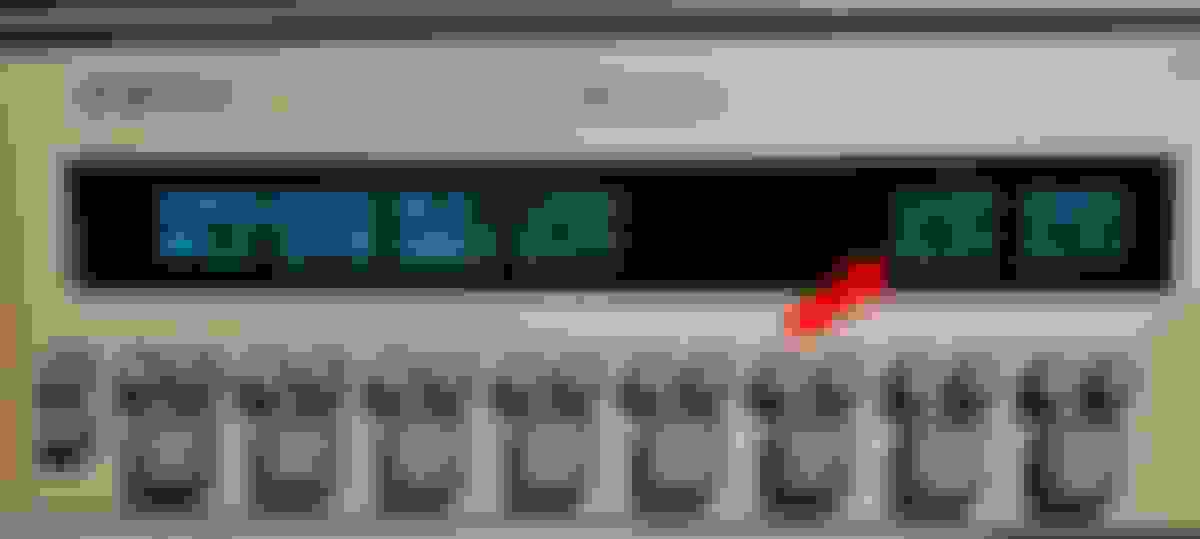
Today, after 2.5 years working here, I came across a destination name which I'd never seen before:
Yes, we literally have a router output channel named ****.
It stands for CLTV, circuit I, Transcoder.
I'm kind of amazed that this has not been the cause of a harassment lawsuit. And yet, at the same time, I am unable to come up with an alternate naming convention which works in this scenario, given all of the other mnemonic-shorthands which have already been applied.
I remember hosting some LAN parties on 10base 2. I still have some thin BNC connectors in my bin of networking stuff that I am too much of a hoarder to toss out.
Here in TV Land, we have a lot of really old hardware still active in mission-critical applications.
One of the older and more crotchety systems which I maintain is a 1980s vintage routing controller. For perspective, it uses 10base-2. For those under 40, that means Ethernet over 50 ohm coax, with BNC connectors. Basically one step above typing out packets onto paper and inserting them into a pneumatic tube.
...
^^ Hell Joe, at least it's not using the old yellow/orange 10base-5 cable with vampire taps.
I was just getting bagged on for having a very small amount of vamp clamps in one tiny bin at work.
Though, i'm not sure anyone knows how to use them because in the 5 years i've been working there i've never bought more and i have never spotted one in the field.
I was just getting bagged on for having a very small amount of vamp clamps in one tiny bin at work.
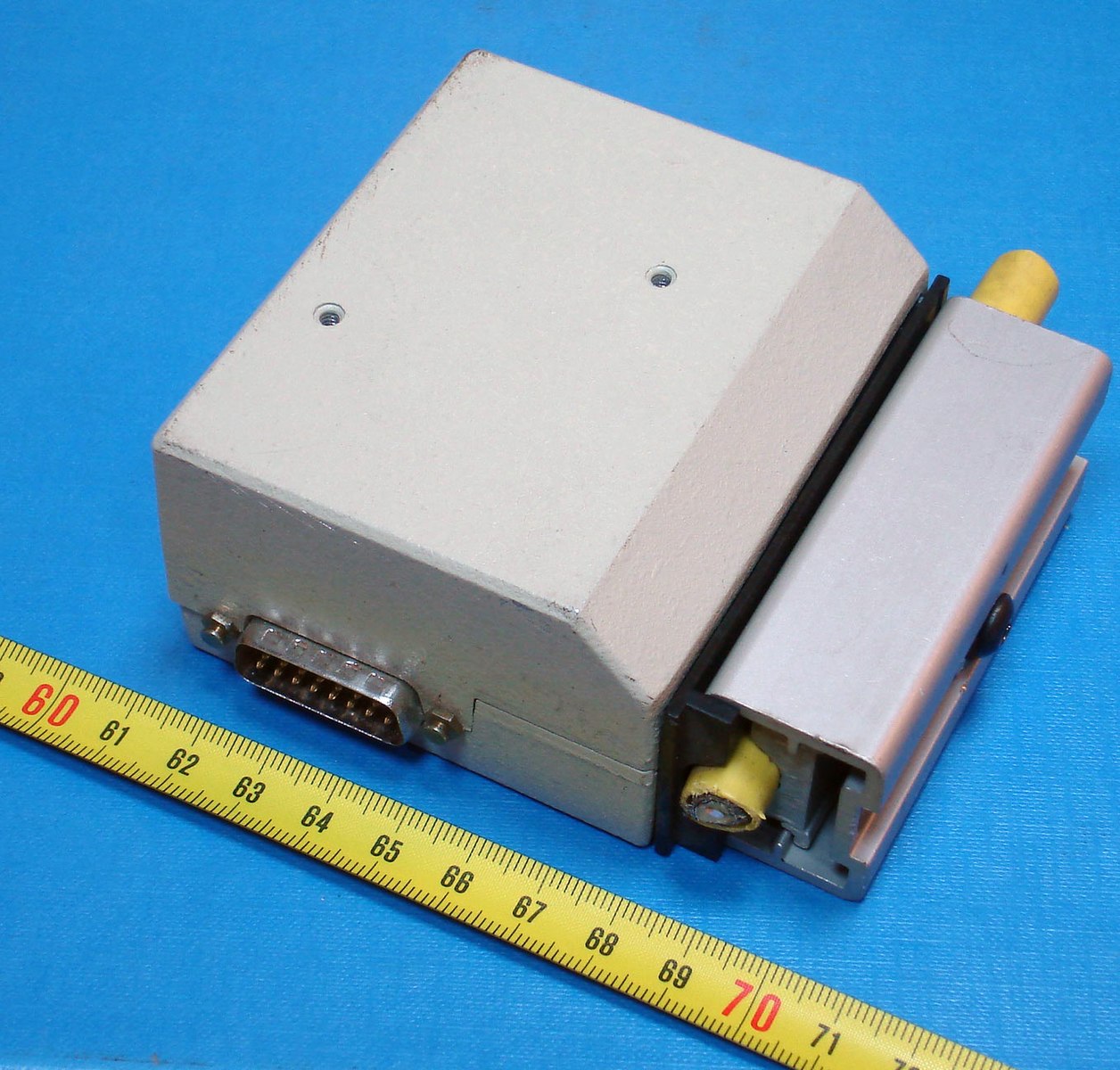
10base5 vampire taps are a little different:
Basically it has two needles in it, one being insulated on part of its length, so that it can clamp down and provide connectivity to both the inner and outer conductors in a thick (3/8" or so) coaxial cable. They also contain a bunch of the transceiver electronics.
I think I still have a box with a bunch of 10base2 cabling in it somewhere.
10base5 vampire taps are a little different:
...
--Ian
Egads! I installed literally hundreds of those transceivers when I worked at LMSC (Sunnyvale) back in the 80's-90's. Originally the big old DEC H4000's and then later, those sexy little Cabletron ST500's. lolz
I'm still mulling over the fact that it took Joe so long being there to find the ****.
Anyone here ever use the EAD connector? It was a modification of the usual 10b2 scheme which eliminated the need for the BNC T connector. Consisted of a wall-socket which looked a bit like a token-ring outlet, which had a normalling connector that passed the signal through when nothing was plugged in, but broke the normal and routed the signal out through a twin-coax (not twinax, but two coaxes) cable to a BNC male plug to the PC. The beauty here was that if the cable got unplugged from the wall, the rest of the network would continue to operate normally.
They were relatively expensive, and I never got to install one.
This one is for children of the eighties. Weezer has a new album of covers, one of which is A-Ha's Take On Me. The video is pretty cool, since it is an homage to the original, fairly ground-breaking MTV video. For extra street cred, the "lead singer" is Finn Wolfhard (of Stranger Things fame). It also features an Apple ][e, one of which I still have in storage (complete with dual floppy drives and a green-screen monitor).
I'd rather listen to the real song and watch the real video, since they are better and not a carbon copy by a shitty never-was band...
I like to think that the engineer who originally proposed that design meant it as a joke, and was utterly horrified when it wound up being ratified as a standard.
Ever set up a token ring? They used a "MAU" (media access unit) which looks similar to a 10baseT hub except that because token ring requires a ring, the MAU needs to detect when a cable is plugged in and flip a bunch of relays to either include the loop of wire in that cable in the ring or not. If you had iffy cabling the relays would start flapping back and forth and make an awful racket.
Token ring also used funky hermaphroditic connectors. No male or female, you could plug any connector into any other connector.



 3
3