When you click on links to various merchants on this site and make a purchase, this can result in this site earning a commission. Affiliate programs and affiliations include, but are not limited to, the eBay Partner Network.
The "new" new engine was all together, and the plan was to pop it in place in one piece - engine turbos, manifolds, downpipe, gearbox, hell even the driveshaft would go in all at once.
The turbo assembly is almost bigger than the engine...
All went in without a hitch...
It IS a tight fit.
Not much room for anything else in there.
(There goes my dream of a SC-TC-TC setup)
The whole thing spills over on the chassis shelf...
All jokes aside, the guy who gave me this turbo as a gift told me we could easily add a THIRD turbo on this thing if I wanted to.
Also, they have a large selection of turbines, vanes, shafts, anything turbo related on hand.
He said it's not a problem to customize either turbo; anything from spool to top end can be manipulated, we can play with shaft rpm, basically do whatever we want.
It is an impressive place with thousands upon thousands of parts, testing equipment, stuff I have never seen before...
Experimenting with this thing will be fun.
Now that the engine and everything else that needed to be in the car were in place, it was time to cut the hood...
I did not tell my wife about this part till it was too late to change my mind.
There's protective plastic film there, and I taped the hell out of it just to be sure.
Drilled the corners,
And just went for it.
The cut was cleaner than I anticipated...
Not bad, really..
Here's the bottom view.
The bracing had to be cut away, too..
Cutting away the bracing was not something I was looking forward to.
One slip of the high speed blade, and the hood would be ruined.
The solution was inserting a piece of 1.5 mm thick steel sheet between the brace and the hood skin.
That was pretty good insurance.
Then I drilled the mounting holes.
The idea is finishing this vent frame with no visible hardware.
The frame has stainless steel studs welded on its bottom, and there is a second frame on the bottom, M6 nuts will secure everything in place.
I used the bottom frame piece as a template for the holes.
Next step was trial fitting the final cardboard prototype on the hood.
I came up with a rather strange system involving long extension nuts and 25 mm set screws going through holes in the frame assembly.
I will install much shorter set screws in the extension nuts, and tighten the long and short set screws against each other. That will ensure they will not back off.
The T shaped part on the louver is an adjustable linkage connector. That's how they will move.
Anyway. it looked good.
Now, imagine this thing in body color.
I am currently working on the mechanical setup of the vent thingie.
It will be vacuum operated, and have really smooth action with an in line vacuum restrictor.
There will be a stop delay relay, so the louvers will remain open for three minutes after I turn the engine off.
Please do not laugh at me for the crude bellcrank idea.
This is how I start figuring things out, and believe me the final design will be pretty elegant.
Not only the vent is in the correct spot in terms of pressure zones, it is practically right above all the hot stuff.
I actually drove the car with the hood cut.
Even without any louvers, heat extraction is damn impressive.
I can see my coolant temps plummet as soon as I get up to 40 mph or above.
One interesting side effect is the distorted view of the car right in front of me when I stop.
The rising heat waves create a pretty cool illusion.
Overall, I am deliriously happy with this whole project.
This how it sits at the moment.
I will have the piping powdercoated in textured black just like the valve cover.
Everything works as intended so far.
I am taking baby steps with boost and rpm levels, but I have boost everywhere!
The damn thing produces boost right at idle if I get on it.
EGT levels are surprisingly low compared to my MP62 setup. (I left the EGT sensor in the same spot so I could compare results)
I still need to play around with HP - LP transition point, but I will wait till I switch to synthetic oil for that.
I still have SAE 30 break-in oil in the engine (changed it once already after the first 30 miles)
WUE needed to be adjusted, it remained too rich for too long with this setup. It's all good now.
The car is MUCH quieter, and that's a very good thing.
I am running the EBC in open loop at the moment. Just increasing boost in very small increments.
Not looking forward to learning closed loop EBC. That is pretty intimidating for me.
Please understand this is my first time delving into the world of turbos. This car had a supercharger for 10 years, and I had it tuned pretty well, and the car was very enjoyable.
I will, however, be the first one to admit it is more spirited, moves with ease, and accelerates effortlessly with the turbo setup.
The more I fine tune my VE table, the better, more responsive and lively it gets. (I have not even touched my fuel and spark maps, they are the same as the SC setup)
My oil lines are routed THROUGH the engine.
There is a "tunnel" right behind the timing belt rear cover, that's the tunnel I used.
All I had to do was drill a couple holes on my sandwich plate, tap them for the custom hoses I had a hydraulic shop make for me, and the rest was easy...
.
This is a spectacular build! Much experimentation in the unknown... Full marks for pulling this all together.
One item you may want to reconsider however is the oil feed lines to the turbos.
You have tapped off the unfiltered side of the oil filter base to feed the turbos. Unfiltered oil from the pump exits the block and enters the oil filter through the ring of holes just inside the filter o-ring. Filtered (clean) oil exits the oil filter through the threaded center mount. So, as configured in your photo, the unfiltered oil feeds the turbos... likely not a good idea...
Well, crap.
Engine started running on 3 cylinders for no apparent reason, and one of the programmable outputs stopped responding. Comes on with key on and stays on, no matter what I change in settings.
I checked for spark and the coil is firing.
On my way to the garage to investigate...
Apparently, #1 water nozzle was leaking out instead of spraying in the runner, and #1 plug fouled.
I really do not know if these two are related, but the engine was running excessively rich for a while, too..
As for the programmable output, turns out the optocoupler module crapped out. Has an internal short.
Good thing turbos go offline when something like this goes wrong.
I bypassed the optocoupler for now, and installed a NPN transistor with a flyback diode, it's good as new.
Repaired he water nozzle leak while I was there.
I discovered a bothersome issue... LP bypass vacuum actuator is a little on the weak side.
Found that while I was testing all the actuators today. (I had bench tested them before)
I'll either replace that actuator, or install a helper spring if I can't source the proper can.
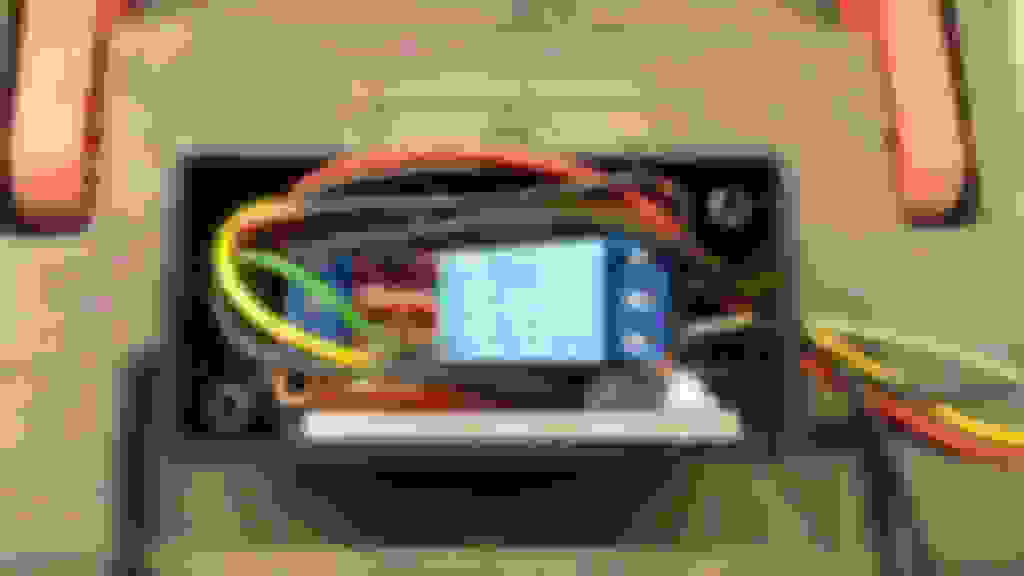
So, instead of some ignition module, I decided I should use an NPN transistor like Dimitris suggested, but further isolate my MS from any load/mishap by utilizing an optocoupler, as well.
Half this project is paranoia, I swear.
Here's what I did.
I made an aluminum heat sink for the transistor, and secured the said transistor with a RIVET! (Gotta be a first)
Configured the optocoupler for lowside, closed the lid, and I was done.
The optocoupler draws 40 mAh. That's pretty much neglectable...
Would you mind sharing a link to that module?
I ask because the big blue thing in the middle is most certainly a mechanical relay. It should work perfectly in this application, it's just that you have aroused my curiosity as to what claims the seller is making.
Last edited by Joe Perez; Dec 22, 2018 at 11:07 AM.











 6
6