


How (and why) to Ramble on your goat sideways





Reply
 0
0

0



Reply
0
0

So my sister informed me via Facebook today that my dog died last night. She was an old girl (15 years) and had been living at my sister's place down in Florida for a number of years, as my life has been one airport after another for so long. To be honest, I'm surprised she help up this long- Lexi was a very obese little chihuahua. But despite her age, she was so playful and filled with bouncing-off-the-walls energy that she might as well have been a puppy. Every time I flew home to visit, she'd practically explode when I walked through the door.
That kind of made it worse, actually. She didn't seem like an old dog...

I know this is a cat forum, and I've never even fessed up to dog ownership before today, I just thought I'd share.
That kind of made it worse, actually. She didn't seem like an old dog...
I know this is a cat forum, and I've never even fessed up to dog ownership before today, I just thought I'd share.
I'm a dog owner, too. (Well, I do not "own" them. We live together.)

Reply
0
0



Oh well, shock came out, swapped the spring and it's all buttoned up now. Only thing left is do drivers side and cut off the old endlink that has fused to both the lower arm and swaybar. Such joy

Reply
0
0

Find my guide man. Took me 20 mins to do each spring 2nd time i did it.
Reply
0
0



Reply
0
0

Joined: Sep 2005
Posts: 34,402
Total Cats: 7,523
From: Chicago. (The less-murder part.)
From the Nature is Weird file, I present Cymothoa exigua, or the tongue-eating louse:
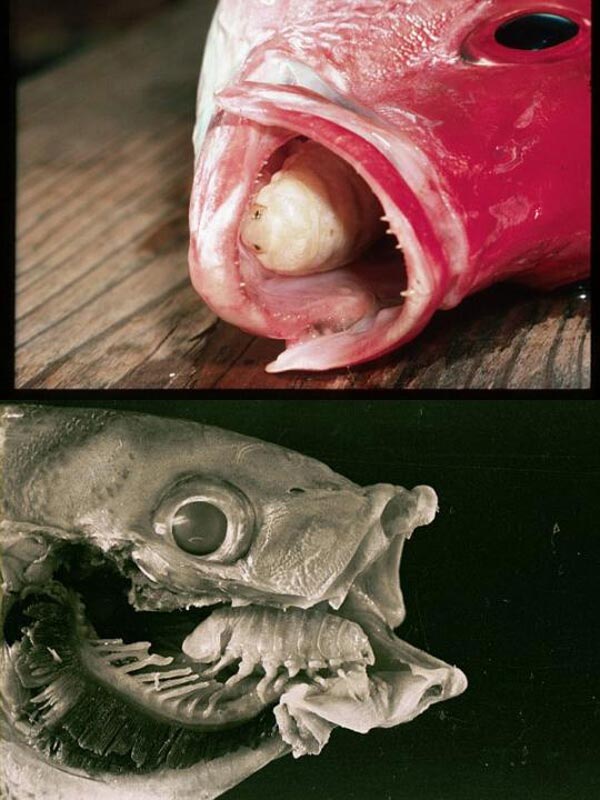
This parasite enters a fish through the gills, and then attaches itself at the base of the fish's tongue. Once anchored, it extracts blood through its claws, eventually causing the tongue to atrophy from lack of blood. After the tongue rots away and falls off, the parasite then replaces the fish's tongue by attaching its own body to the muscles of the tongue stub. Subsequent to this, the parasite actually functions as a sort of prosthetic tongue, allowing the fish to feed normally while continuing to feast on its blood.
This parasite enters a fish through the gills, and then attaches itself at the base of the fish's tongue. Once anchored, it extracts blood through its claws, eventually causing the tongue to atrophy from lack of blood. After the tongue rots away and falls off, the parasite then replaces the fish's tongue by attaching its own body to the muscles of the tongue stub. Subsequent to this, the parasite actually functions as a sort of prosthetic tongue, allowing the fish to feed normally while continuing to feast on its blood.
Reply
0
0



Reply
0
0
Finally pulled the trigger to get a second supercharger.
Got a deal on a good used unit, and thought it would be wise to have a spare since these things are getting harder and harder to come by.
Not a whole lot of support over here, gotta think long term.
Got a deal on a good used unit, and thought it would be wise to have a spare since these things are getting harder and harder to come by.
Not a whole lot of support over here, gotta think long term.
Reply
0
0

Joined: Jun 2005
Posts: 19,338
Total Cats: 574
From: Fake Virginia
From the Nature is Weird file, I present Cymothoa exigua, or the tongue-eating louse:
This parasite enters a fish through the gills, and then attaches itself at the base of the fish's tongue. Once anchored, it extracts blood through its claws, eventually causing the tongue to atrophy from lack of blood. After the tongue rots away and falls off, the parasite then replaces the fish's tongue by attaching its own body to the muscles of the tongue stub. Subsequent to this, the parasite actually functions as a sort of prosthetic tongue, allowing the fish to feed normally while continuing to feast on its blood.
This parasite enters a fish through the gills, and then attaches itself at the base of the fish's tongue. Once anchored, it extracts blood through its claws, eventually causing the tongue to atrophy from lack of blood. After the tongue rots away and falls off, the parasite then replaces the fish's tongue by attaching its own body to the muscles of the tongue stub. Subsequent to this, the parasite actually functions as a sort of prosthetic tongue, allowing the fish to feed normally while continuing to feast on its blood.

Reply
0
0


