When you click on links to various merchants on this site and make a purchase, this can result in this site earning a commission. Affiliate programs and affiliations include, but are not limited to, the eBay Partner Network.
Because of reasons, I was recently looking at the Sony PXW-FX9 camera body.
Now, under the Specs, they of course list a bunch of large numbers, like how it has 15 stops of dynamic range.
But the one that caught my eye was ISO Sensitivity. In the "extended" mode, it's listed as 320 to 102,400.
ISO a hundred and two thousand.
Why even bother printing numbers at this point? Why not just say "This camera can photograph dark matter which is beyond the edge of the observable universe" and leave it at that?
You can buy a Sony A7 and get the same DR with ISO to 204,800 -- save your station a lot of cash.
SLR bodies don't work with the sort of platforms we use. The additional mechanical and electrical hookups you get with a modular body are kinda necessary.
Ack - Interior Department fail, not surprisingly.
I have a T-shirt I bought in Banff - shows a silhouette of hikers, says “Bring a compass. It’s awkward when you have to eat your friends.”
Ack - Interior Department fail, not surprisingly.
I have a T-shirt I bought in Banff - shows a silhouette of hikers, says “Bring a compass. It’s awkward when you have to eat your friends.”
Have actually been to that campground. My in-laws owned a house in Tahoe-Donner. Awesome fun lake in the summertime. Goes without saying to avoid Donner in the winter...
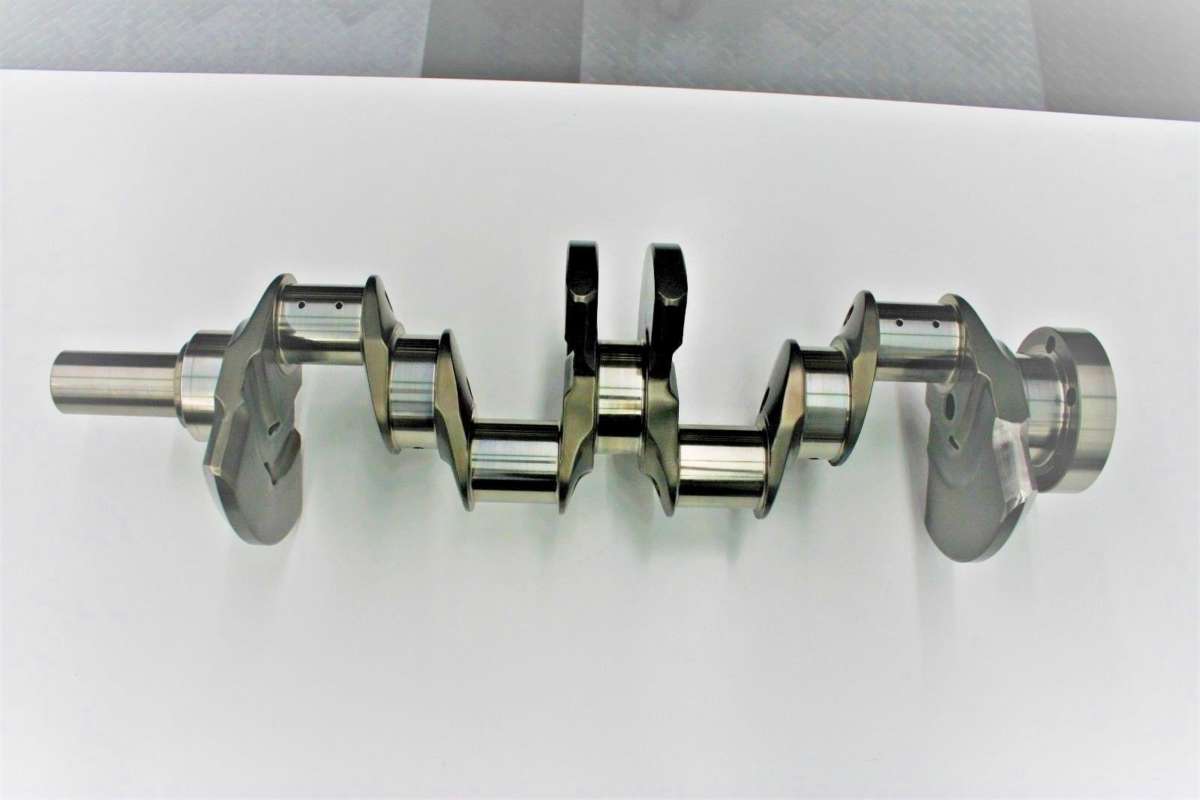
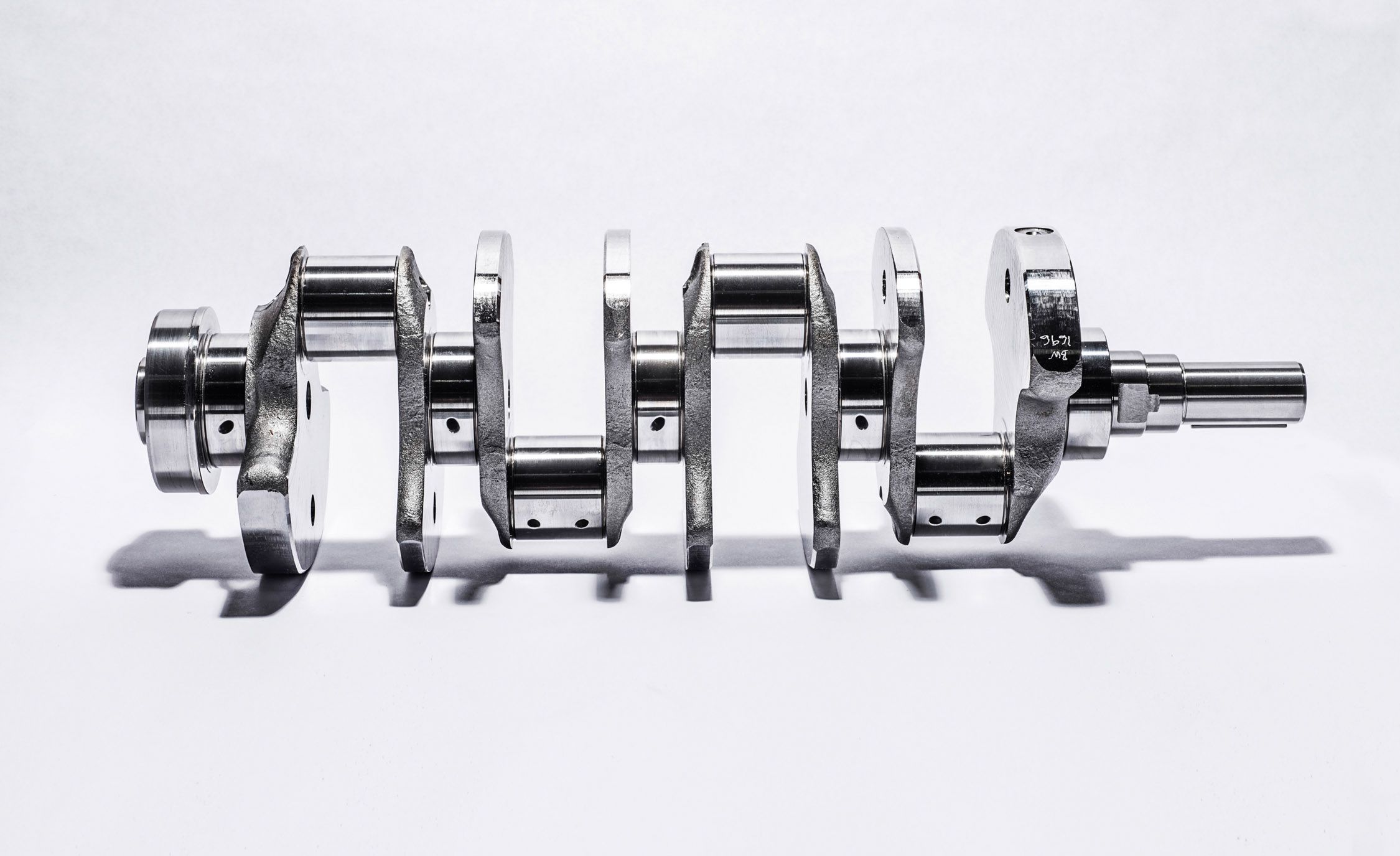
Today I found out there's two ways to do flat plane cranks in 90° V8's. Fortunately I caught the cam firing order oopsie before chips were made.
Am so interested in all of this. Please share moar, such as where you sourced the camshaft, if you're de-stroking, estimated numbers, what ECU....anything you can share.
They have impressive specs in every way other than resolution. They are natively 1920x1080, which is exactly what you want in a TV camera used live (absent post-processing). Anything higher than that results in a poorer final product, as it'll have to be downscaled in real-time in order to fit into the broadcast standards. So, as odd as it may seem to the artsy-types, 4k and 24p are worse than 1080i59 when you're live.
But...
(there's always a but, isn't there?)
The sensor. Or, more precisely, the sensors, plural.
Here in TV land, we're still using three discrete monochrome image sensors behind a tri-chromatic prism array for image capture. This setup made huge amounts of sense in the tube era, and also in the analog solid-state era. It just wasn't possible to fabricate single-plane RGB sensors that didn't suck back then.
But here we are in this age of enlightenment in which gender is an imaginary construct and single-sensor cinema cameras are outperforming 65mm film as an acquisition format, and I am literally only just now wondering why us dumb ole' TV folks are still beam-splitting.
Granted, the 35mm sensors which cinema cameras use wouldn't work with the 2/3" lenses that we have tons of money already sunk into. But TV cameras have got to out-number cinema cameras by at least 1000:1 in the real world. If it's economically viable to produce a 35mm sensor for cinema use which performs better than film, how is it that nobody has thought to produce a 2/3" sensor using the same technology?
I'm not being deliberately obtuse here. This really has gotten me to wondering about this state of affairs.
Granted, the 35mm sensors which cinema cameras use wouldn't work with the 2/3" lenses that we have tons of money already sunk into. But TV cameras have got to out-number cinema cameras by at least 1000:1 in the real world. If it's economically viable to produce a 35mm sensor for cinema use which performs better than film, how is it that nobody has thought to produce a 2/3" sensor using the same technology?
I'm not being deliberately obtuse here. This really has gotten me to wondering about this state of affairs.
There you go Joe, your retirement. Break out the old drafting board and have at it!
They have impressive specs in every way other than resolution. They are natively 1920x1080, which is exactly what you want in a TV camera used live (absent post-processing). Anything higher than that results in a poorer final product, as it'll have to be downscaled in real-time in order to fit into the broadcast standards. So, as odd as it may seem to the artsy-types, 4k and 24p are worse than 1080i59 when you're live.
But...
(there's always a but, isn't there?)
The sensor. Or, more precisely, the sensors, plural.
Here in TV land, we're still using three discrete monochrome image sensors behind a tri-chromatic prism array for image capture. This setup made huge amounts of sense in the tube era, and also in the analog solid-state era. It just wasn't possible to fabricate single-plane RGB sensors that didn't suck back then.
But here we are in this age of enlightenment in which gender is an imaginary construct and single-sensor cinema cameras are outperforming 65mm film as an acquisition format, and I am literally only just now wondering why us dumb ole' TV folks are still beam-splitting.
Granted, the 35mm sensors which cinema cameras use wouldn't work with the 2/3" lenses that we have tons of money already sunk into. But TV cameras have got to out-number cinema cameras by at least 1000:1 in the real world. If it's economically viable to produce a 35mm sensor for cinema use which performs better than film, how is it that nobody has thought to produce a 2/3" sensor using the same technology?
I'm not being deliberately obtuse here. This really has gotten me to wondering about this state of affairs.
This is way out of my lane, but is there a good reason a camera could not be made with a 35mm sensor and a fixed, internal lens to cheat the current lenses to the larger 35mm format? Then one would be using existing of the shelf tech in a new body to what I imagine would be a higher quality end product. Aligning beams sucks.
I'd imagine the ISO would suffer putting all three colors on that tiny sensor at 1080, which might be what has driven the development so far. IE no matter what the tech improvement is on the silicon, to make a combines sensor the ISO would be less than the beam split version, so the momentum of the industry prevails.
With current imaging tech, there's a tradeoff related to sensor size. Larger sensors deliver better quality images (lower noise, more processing capabilities, better heat dissipation), but at a cost of requiring more glass in the optics and producing an image with a smaller depth of field at any given focal length/aperture. From the article, it sounds like the depth of field traditionally used for studio TV production is quite a bit wider than that used for still photography, and so the smaller 2/3" sensor makes sense. That's only 1/6th the area of a 35mm film-sized sensor, so you're not going to get the same video quality out of a single sensor solution there. Splitting it into three chips for three different colors effectively triples the sensor area (vs cramming red, green, and blue pixels onto the same chip).
Theoretically it also allows you to apply optical image manipulation techniques (filters, say) to the three different colors separately, but I have no idea if anyone actually does that.
I honestly miss film for some things. Like go back and watch Cheers -- the quality is top notch (at least before they switched to shitty 80s cameras). even Seinfeld.
But it only has a DR of about 8 stops -- so you'll never have those amazing dark scenes you see in a lot of shows today.
plus we simply know how to light a scene much better than in the past.
With current imaging tech, there's a tradeoff related to sensor size. Larger sensors deliver better quality images (lower noise, more processing capabilities, better heat dissipation), but at a cost of requiring more glass in the optics and producing an image with a smaller depth of field at any given focal length/aperture.
Oh, yeah. I totally get that.
And I'm not saying we should be using 35mm (or even 4/3") sensors in TV.
I'm asking why nobody has thought to manufacture a color 2/3" sensor, with a native 1920x1080 resolution, using the same tech as the SLRs and the cinema cameras.
The pixel density would be about the same, so all of the other specs should also come out roughly identical. A full-frame sensor is about 4 times larger in both directions than a 2/3" sensor, and by sheer luck, the really good ones (the 8k sensors) also happen to have about 4 times the resolution in both directions.
So, just cut the die for a full-frame 8k sensor into 16 pieces, and make those into 2/3" 1920x1080 sensors. Put that sensor the same distance away from the lens mount that the 3 CCD sensors are in a typical prismatic camera, and you can use the same glass and get the same performance out of it.
As an aside, an anecdote: While it's true that we like large depth of field when shooting ENG, we actually go way in the opposite direction inside the studio. The current trend is to put the absolute minimum amount of light up as necessary (it's actually dimmer in a modern news studio than it is in a typical office), put the lens fairly close to the desk, and run the iris wide open, in order to achieve a nice sense of depth. This is one reason why we still spend the money for 2/3" cameras and glass in major markets, even though these days there are half-inch and 1/3" cameras which otherwise perform just as well. The lenses I have on the wireless stedicams are 4.5-54mm @ f/1.8. And we actually use them at 4.5 quite a lot up in Studio 4.
/3" sensors are trash for still photography. I was looking at the Sony RX100 viii, which has an even larger 1" sensor, and even there I couldn't handle the poor DR and image quality when pixel peeping at RAW files from it. I was going to buy the FujiFilm X-S10 instead to get at least a crop-sensor size. But I don't think I buy any as I really don't photo much anymore.
this is the one of the best 2/3" cameras you can buy, and at 100% the detail just isn't there when the lighting is poor.
Why do mirrors only cause images to be reversed left to right, but not top to bottom?
They don't, they cause images to flipped in vs out.
Our brains don't really work that way, though, they want to see it as if it's an image of the world taken from the viewpoint of the mirror. That viewpoint is 180 degrees away from our viewpoint, as rotated around an axis in the plane of the mirror. The choice of the axis of rotation is irrelevant, but since rotation alone won't deliver the flipping (in vs out), to get the resulting image you need to then flip the rotated image on a line that's 180 degrees from the axis of rotation but still in that plane.
So you can either view it as an image that's rotated 180 degrees vertically and then flipped horizontally, or you can view it as an image that's rotated 180 degrees horizontally and then flipped vertically. Both give the same result, but the former is more natural to the way the world works for humans, so it's what we (incorrectly) assume is happening when the mirror flips in and out.










 3
3